


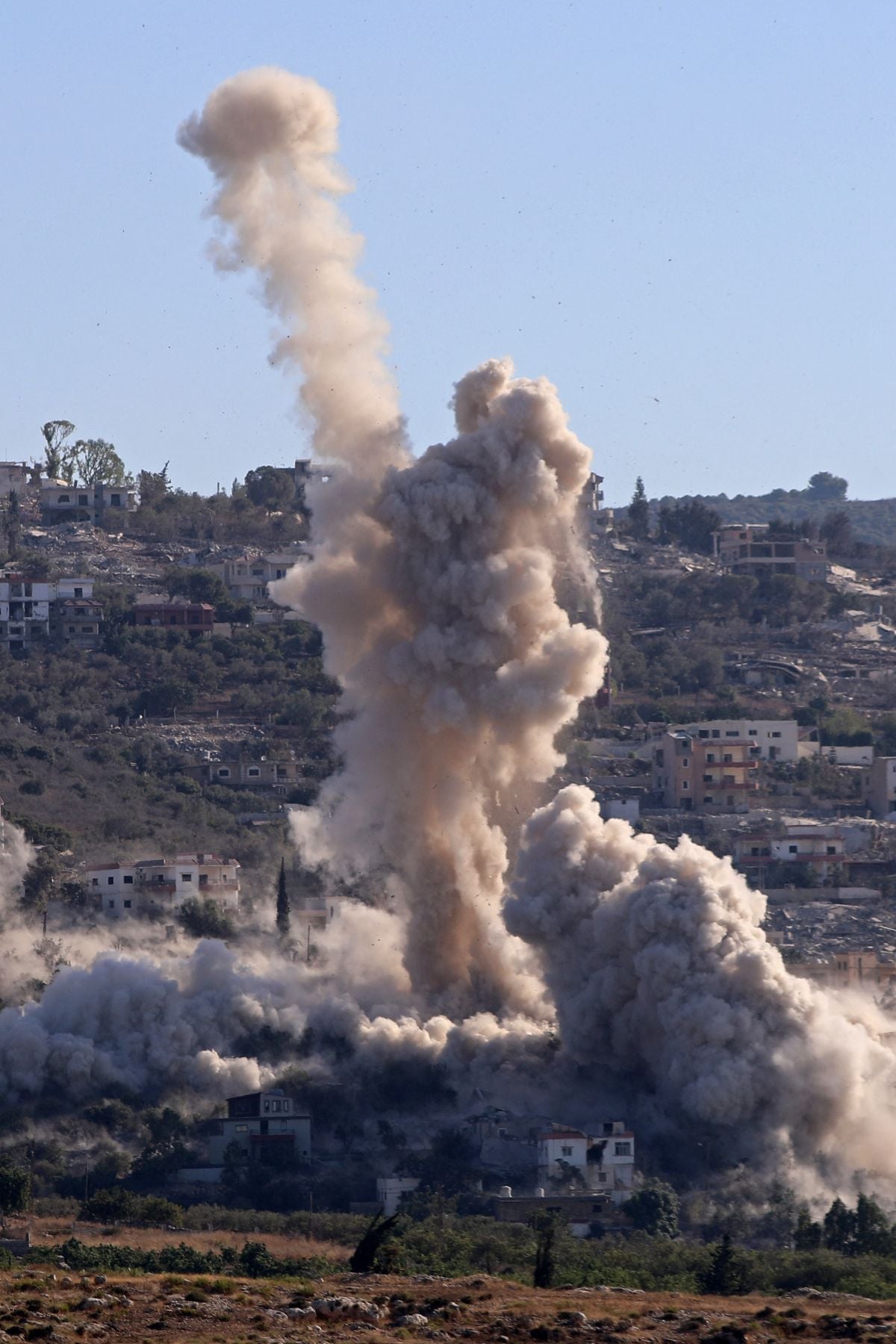
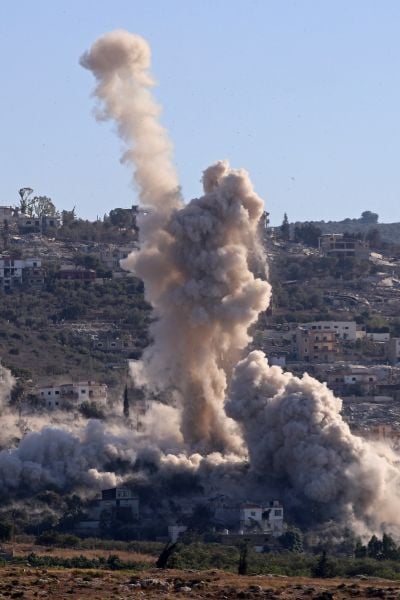
Smoke rises from the site of an Israeli detonation in Mansouri (Sour), on Sept. 8, 2026. (Credit: Kawnat Haju/AFP)






SOUTH LEBANON — The international organization Human Rights Watch (HRW) on Wednesday said that Hezbollah had used cluster munitions during two attacks on the city of Metula (close to the border with Lebnaon) on March 4 and 15, during the first two weeks after the re-escalation of Israel's war on Lebanon on March 2. No civilians were reportedly injured in these attacks.
Cluster munitions are banned under the Convention on Cluster Munitions, adopted in Oslo in May 2008, mainly because they are indiscriminate. These weapons disperse a large number of small explosive charges over a wide area. Some may fail to detonate on impact and remain dangerous for years or even decades, HRW notes. The Israeli army had previously been accused of using such weapons extensively during the 2006 war and sporadically in 2024 and 2026.
"Cluster munitions should never be used under any circumstance, and their use could constitute a war crime," said Patrick Thompson, a researcher at HRW. "Not only are they inherently indiscriminate, but unexploded submunitions can kill and injure civilians long after hostilities have ceased."
In another report published on the same day, HRW also denounced the use of white phosphorus by Israeli forces in southern Lebanon and called to "strengthen international law" governing these weapons.
Hezbollah denies 'possessing such munitions'
Before publishing the report, HRW researchers traveled to Metula in May, where they analyzed impact zones and interviewed four witnesses, according to the organization. HRW notes that Hezbollah had claimed responsibility for attacks on Metula on March 4 and 15 on social media. Questioned by the organization, Hezbollah nonetheless denied "using or even possessing such munitions."
Specifically, the March 4 attack reportedly struck a residential street in the southern part of the city. A resident interviewed by the organization said his two cars were destroyed, 12 windows were shattered, and two water pipes were severed. According to him, the Israeli army recorded "about 50 craters." Although the road had been mostly repaired by the time HRW visited, the organization identified "seven craters consistent" with cluster munition impacts, mainly due to their small size and distribution. That same day, an Israeli police spokesperson announced from Metula that a fragmentation munition had reached "the north of the country," without specifying the location. He also published a photo showing what appeared to be an unexploded BRB1 submunition, according to HRW.
On March 15, "several almost simultaneous explosions" were reported "near the entrance" of the city, according to a resident cited by HRW, who noted that the army had "asked residents to stay home for 24 hours while de-mining took place." HRW said it identified a crater consistent with a submunition impact and geo-located a video showing about 30 small explosions in the area. No civilian injuries or major damage to infrastructure were reported.
Although Lebanon is a party to the 2008 Convention, the treaty does not formally bind Hezbollah as a non-state armed group, HRW reports. However, the group is "subject to international humanitarian law and the obligation to distinguish between civilians and military targets," the organization stressed. "The use of cluster munitions in civilian areas is a flagrant violation of international law," said Thompson. "Hezbollah and all parties to the conflict must respect the laws of war."
In a second report published Wednesday, HRW and the International Human Rights Clinic at Harvard Law School also denounced "recent use of white phosphorus by Israeli forces in Lebanon" and called for strengthening international law governing these weapons.
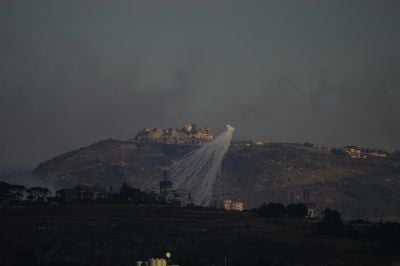
Entitled "Uncontrolled Burn: The Inhumane Effects of White Phosphorus Munitions and the Need for Stronger Law," the 45-page report documents 23 verified incidents of white phosphorus use by Israel in southern Lebanon between March and May 2026. It is based on legal analysis, open-source research, and 16 interviews, according to HRW. "White phosphorus munitions can cause excruciating burns, leading to lasting physical, psychological, and socioeconomic harm," warned Bonnie Docherty, senior arms adviser at HRW. She called on states to condemn their use and ensure that international law addresses "the unacceptable human costs of these weapons."
When used over populated areas, white phosphorus can have "indiscriminate effects" and pose a "long-lasting danger to civilians," according to the report. Nonetheless, these munitions are not specifically covered by Protocol III of the 1980 Convention on Certain Conventional Weapons (CCW), as that protocol addresses weapons "primarily designed" to cause fires and burn people. White phosphorus is officially designed mainly to provide smoke or illumination for military operations.
HRW and the Harvard Clinic also invoked the Martens Clause, which stipulates that in the absence of a specific treaty, civilians and combatants remain protected by the principles of humanity and the dictates of public conscience. White phosphorus can "burn tissue down to the bone, and particles left in a wound can reignite upon contact with oxygen." Such injuries, which are particularly serious and difficult to treat, are considered "incompatible with the principles of humanity" by the organizations.
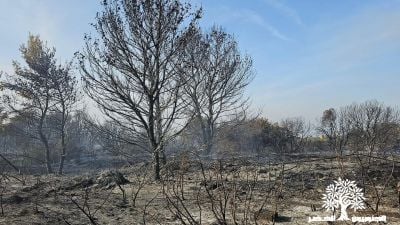
"Diplomats, doctors, U.N. investigators, and others have expressed outrage at the cruel wounds caused by white phosphorus munitions," Docherty said. "States have adopted treaties banning toxic gases and blinding lasers because they were inhumane and contrary to public conscience. They should do the same for white phosphorus munitions."
The issue is also being discussed within the framework of the CCW, whose decisions require consensus. Russia and other states opposed to strengthening international law have blocked some proposals aimed at further discussions on the humanitarian consequences of incendiary weapons, the report says.
States favoring stricter regulation should also raise the issue at the CCW Review Conference scheduled for Nov. 16 to 20 in Geneva. "The ultimate goal should be the adoption of robust international law that fills current legal gaps and stigmatizes the use of white phosphorus munitions," Docherty concluded. "A complete ban on the production, transfer, and use of these weapons would have the greatest humanitarian benefits."

 7 p.m. recap: Netanyahu seeks mastermind behind Flydubai incident; Washington sanctions 2 French nationals; Ben Gvir's 'I want to kill you' threat