



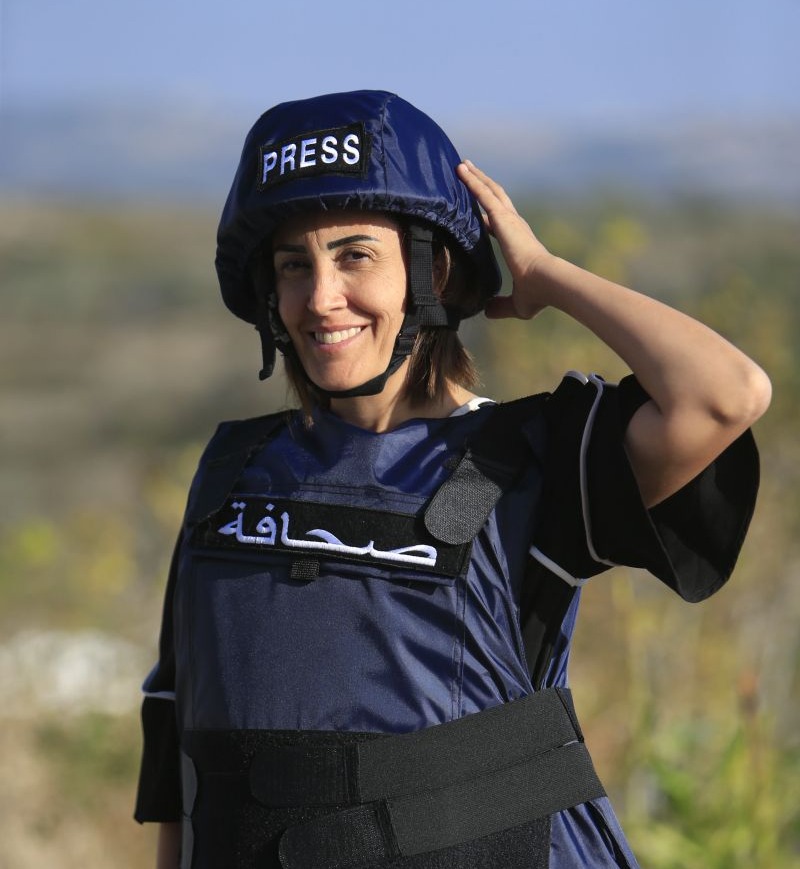
Journalist Amal Khalil. Photo taken from her LinkedIn account.






BEIRUT — President Joseph Aoun and Prime Minister Nawaf Salam on Thursday condemned Israel’s targeting of journalists in south Lebanon, after it killed Al-Akhbar journalist Amal Khalil in a strike on Tiri, in the Bint Jbeil district, on Wednesday, despite a cease-fire.
Khalil was covering Israeli attacks on Tiri with photographer Zeinab Faraj when an Israeli drone strike on a car in the afternoon, followed by a second that buried her under the rubble of a house where she had taken shelter.
Israel prevented the Lebanese Army and the Lebanese Red Cross from reaching the area for several hours before eventually accessing the site and recovering her body late in the evening after a prolonged search.
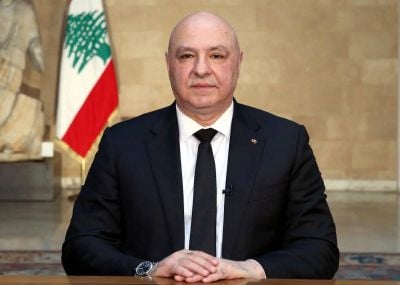
“Israel’s deliberate and direct targeting of journalists aims to conceal the truth about its aggression against Lebanon,” Aoun said in a statement. “These acts constitute crimes against humanity, punishable under international law, and should prompt the international community to intervene and put an end to them.”
Aoun offered condolences to Khalil’s family and to the staff of Al-Akhbar, a newspaper close to Hezbollah, and wished a speedy recovery to Faraj, who was injured in the same attack and underwent surgery at Tibnin Governmental Hospital.
'War crimes'
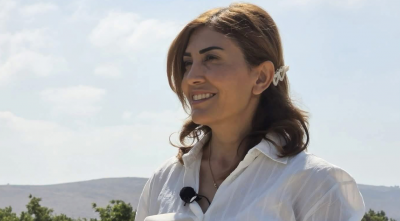
Salam said that “targeting journalists, obstructing the arrival of rescue teams and even striking their positions again after those teams arrived constitute war crimes.”
“Israel’s targeting of journalists in the South, while they are carrying out their duties, is no longer an isolated incident but a proven policy that we condemn and reject,” Salam wrote on X. “Lebanon will spare no effort to ensure these crimes are prosecuted before the competent international bodies.”
On Wednesday, despite a truce that Lebanon is expected to seek to extend by one month, the Israeli army carried out several deadly strikes in south Lebanon and continued demolition operations in the border area it aims to turn into a “buffer zone.”
‘Blatant disregard for international law’
After a strike targeted a vehicle in front of them and killed two people, Amal Khalil and Zeinab Faraj could not be evacuated. Subsequently, the Israeli army blocked ambulances, the Red Cross and the Lebanese Army from accessing the area. The two journalists reported witnessing several successive rescue attempts. A first Red Cross team was able to recover the bodies of the victims. A second attempt to evacuate the journalists was halted by an Israeli drone strike.
The Health Ministry issue a statement offering condolences to Amal Khalil’s family and the Lebanese media community. The statement described the event as “horrible and infamous.” It said that Israeli forces had targeted her after she sought refuge in a nearby house. “The ministry strongly condemns this heinous crime, which adds to the long list of crimes committed by the Israeli enemy against civilians, including journalists and rescuers, demonstrating a blatant disregard for international law and humanitarian values,” the statement said.
Coordinating movements with the army
Information Minister Paul Morcos paid tribute to the journalist in an interview with LBCI, and said contacts had been made — particularly with UNESCO and the U.N. Human Rights Council — to file a formal complaint with international bodies over Israeli attacks targeting journalists. He added that he would raise the issue again at a Cabinet meeting scheduled for 3 p.m., to pursue legal action.
Morcos also mentioned contacts with the U.N., the European Union, UNESCO and UNIFIL to “revive a mechanism allowing journalists to report their presence in dangerous areas,” while stressing that this “offers no real security guarantees.”
The Order of Editors also condemned the attack that killed Amal Khalil, noting that 27 journalists have been killed in Israeli strikes since the start of the conflict in October 2023. “We advise journalists to coordinate with the army and legitimate security forces in areas exposed to occupation [Israeli] attacks, as well as with UNIFIL and the Lebanese Red Cross, to avoid fatal risks,” the statement said.
‘Intent to silence the media’
Hezbollah condemned the killing of the journalist “while she was carrying out her duty in southern Lebanon,” describing it as “a clear war crime and an attempt to silence independent and national media.” The group also accused the Israeli army of preventing rescuers from immediately reaching the site of the strike, located in the buffer zone Israel is de facto establishing in southern Lebanon.
MP Ibrahim Moussawi, the party's MP who also chairs the parliamentary Media and Telecommunications Committee, also condemned the strike, saying he was “not surprised by this crime.” He called on “media institutions, humanitarian organizations and international legal bodies to condemn the Zionist aggression against Lebanon and to prosecute this enemy and its leaders before international tribunals and competent legal bodies.”
Hamas in Lebanon also “strongly condemned” the killing, calling it a “cowardly” attack. “This crime constitutes a blatant violation of press freedom and international law, aimed at silencing the truth,” the group said, adding that “targeting journalists will not stop the message of resistance or the pursuit of justice.”
The Free Patriotic Movement (FPM) called on Lebanese authorities to “launch large-scale diplomatic and media campaigns against Israeli crimes to prevent their recurrence and protect journalists, as well as rescuers and civil defense teams who remain vulnerable.” The Progressive Socialist Party (PSP) likewise denounced the “new crime committed by Israel,” which it said also obstructed rescue efforts “in flagrant violation of international law and conventions.”
The Israeli army has targeted several journalists during the recent escalation. At the end of March, it killed Ali Choeib, a correspondent for Al-Manar, as well as journalist Fatima Ftouni of Al-Mayadeen and her brother, a cameraman. Other strikes have also targeted ambulances and medical teams, killing rescuers.
A ten-day truce, set to expire Sunday, came into effect on April 17 following a first meeting between the ambassadors of Lebanon and Israel, two countries still technically at war. Hezbollah, which entered the regional conflict alongside Iran on March 2 by launching attacks on Israel, opposes these talks. Since then, Israeli strikes on Lebanon have killed 2,454 people and displaced more than one million, according to the latest official figures.

 1 p.m. recap: Third death in 2 days in Israeli-occupied south Lebanon, Salam comments on the Dahr al-Baidar case, Saudi Arabia bombs Yemen