











The coming weeks promise to be grim.
Either the Israeli army continues its offensive, invades southern Lebanon, at least up to the Litani, and at the same time exerts even stronger pressure on the Lebanese authorities to disarm Hezbollah and sign a peace agreement on Israel’s terms; or Hezbollah shows signs of “resistance” on the ground and, strengthened by this dynamic and by the likely survival of its Iranian patron, rebuilds itself at the expense of the Lebanese state.
In other words, either the scenario of a long term occupation, accompanied by strong internal tensions, with the risk of clashes between the militia and the army and the possible return of political assassinations; or that of a weakened militia seeking revenge but determined to maintain its hold over the Shiite community and continue playing a leading role in the country.
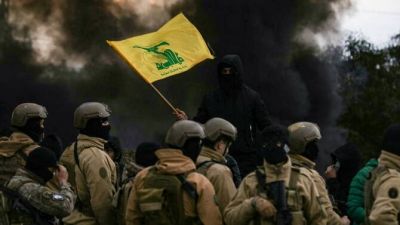
The first scenario appears far more likely than the second, but several factors could still shape Lebanon’s trajectory. We do not know whether the Israelis will easily conquer southern Lebanon, whether they intend to occupy it for the long term, whether they would agree to withdraw in the event of a peace agreement, what condition Hezbollah will be in at the end of this war, whether the Lebanese authorities will finally undertake serious efforts to disarm it, or ultimately whether they would accept signing a peace deal imposed by force.
Many uncertainties remain, but one certainty stands out: whatever the scenario, we will be the losers. By “we,” I mean all those who believed, even for a brief moment, that Lebanon could improve after the election of President Joseph Aoun and the appointment of Prime Minister Nawaf Salam.
We will have to deal with both a hard line Hezbollah and an all powerful Israel that will impose a new political, security, and demographic equation on a country already in pieces.
Let there be no illusion. Lebanon will not recover as long as Hezbollah, both its military and political branches, remains part of the equation. But while Israel may be able to break the “Party of God,” at an exorbitant cost for Lebanon, it cannot put an end to the Shiite militia. Its deep entanglement in society, institutions, and public life means that only the state can dismantle it, which requires political resolve and time, two things we do not have. The more Israel seeks to crush Hezbollah, the higher the price Lebanon will pay. And the longer this drags on, the less political room Lebanese authorities will have to stop this war machine, which will destroy Lebanon before destroying Hezbollah, as was shown in its annihilation of Gaza.
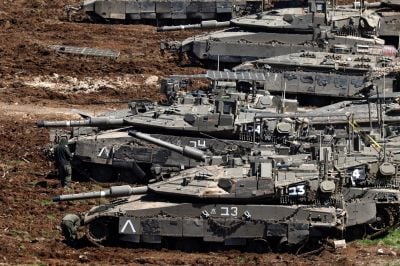
Once again, we find ourselves in the worst possible situation. We are exhausted, disheartened and desperate. Furious at everyone, starting with Hezbollah and Israel and all those who loudly support them. Trapped and powerless. But this time we cannot settle for that conclusion. Because we are partly responsible for what is happening to us. We helped create our own powerlessness. And we have grown so used to saying that this war, like the previous ones, was someone else’s that we forgot it was also our war.
This is not the moment to trade accusations and rehash responsibility, after decades of coexistence — whether forced or accepted — with Hezbollah that have led us here.
The question is simpler, regardless of the real or imagined plans of the various actors: what do we, as Lebanese, actually want?
Do we want to remain in a permanent state of war with Israel? To what end? If so, we must accept that Israel will wage war against us in return with far greater means than our own.
Do we want to defend our territory against an Israeli attack or occupation? If so, we must acknowledge that the last three wars were launched at Hezbollah’s initiative, not Israel’s, and that both the attacks and the occupation were the result, not the cause, of those interventions.
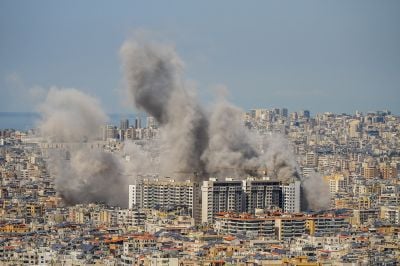
Do we want to stop being dragged into pointless wars that have brought nothing but misery? If so, we can no longer tolerate Hezbollah making the decision to wage war or peace in place of the state.
It is too easy to keep blaming others and to find countless reasons, even if many are valid, to avoid making a choice.
Yes, having Israel as a neighbor is a serious concern, especially when some of its leaders openly embrace an expansionist agenda.
Yes, disarming Hezbollah will be extremely difficult, particularly without stronger international support for the Lebanese Army. But the choice is simple: either we take our future into our own hands or we let Israel and Hezbollah shape it for us. The problem is that many Lebanese, both pro and anti-Hezbollah, have already made their choice, including at the highest levels of the state.
This article originally appeared in French on L'Orient-Le Jour and was translated by Sahar Ghoussoub.

 7 p.m. recap: Iran warns Egypt, Israeli soldiers vote in south Lebanon, Haret Hreik responds to Kataeb