



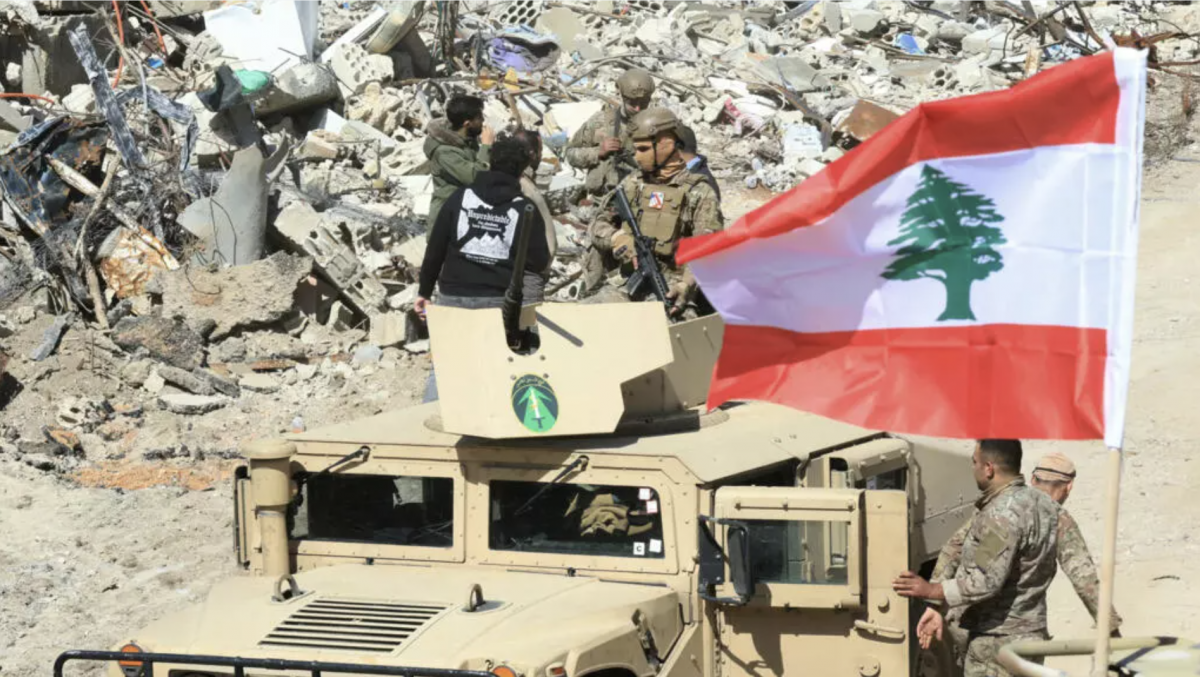
Soldiers of the Lebanese army patrol the southern village of Adaisseh, destroyed after the withdrawal of Israeli forces on Feb. 18, 2025. (Credit: Mahmoud Zayyat, AFP)






On Monday, March 2, after Hezbollah fired six rockets at Israel, triggering a new escalation, the Lebanese government declared the party's military and security activities illegal, calling on the army to implement the plan for state weapons monopoly "as soon as possible and by all possible means."
To this, army chief Gen. Rodolph Haykal responded that today "Israeli attacks targeting Lebanon and its citizens are hindering the army's plan implementation."
These remarks drew widespread criticism in Lebanon. And Israel, which has heavily bombed Lebanon since Monday, warned Lebanese President Joseph Aoun over the weekend: "You committed… to uphold the agreement and disarm Hezbollah, and that is not happening ... We will not allow our communities or our soldiers to be put in danger, and if we have to make a choice, it will be the Lebanese government and all of Lebanon that will pay the price."
Recall that Rodolph Haykal was unanimously appointed to his post on March 13, 2025. He is seen as someone with a solid background who inspires confidence in a deeply divided institution.
L'Orient Today explains the stakes behind the caution of the Lebanese Army.
The Hezbollah disarmament plan: promises, obstacles and stakes
The Hezbollah disarmament plan originated with the Nov. 27, 2024 cease-fire, brokered by the United States and France and accepted by the party, aimed at ending the cycle of violence with Israel. The agreement provided for the complete withdrawal of the Israeli army from southern Lebanon within 60 days, the deployment of the Lebanese Army to take charge of security, dismantling Hezbollah's military infrastructure, and the exclusive possession of arms by the Lebanese state, in accordance with United Nations Security Council Resolution 1701.
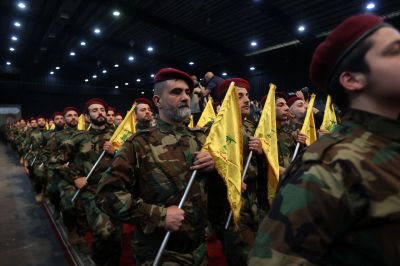
In January 2025, the army launched the first phase of the weapons monopoly plan, aimed at regaining control of weapons depots south of the Litani River. The second phase was presented on Feb. 16, 2025 at a Cabinet meeting, and targeted the region between the Litani and Awali rivers.
Gen. Haykal estimated that this phase could take between four and eight months to complete. Hezbollah, for its part, has continuously decried what it sees as "free concessions" to Israel.
The army between a peace mission and the risk of civil war
Behind Haykal's 'caution' lies a very real fear: that by opposing Hezbollah on the ground, dangerous tensions could arise within the ranks themselves.
Since its reconstitution after the Taif Agreement, which ended the Civil War (1975-1990), the Lebanese Army's mission has been to maintain civil peace, not to fight internal armed groups. It is socially diversified, with around 30 percent Shiite soldiers, and its personnel — soldiers paid between $200 and $250 a month (a quarter of their pre-2019 salary value) — live in a country where food prices have risen by about 20 percent since the 2019 crisis, further constraining its operational margin.
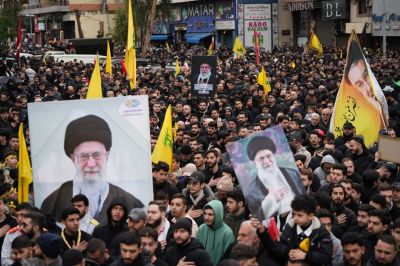
Any direct confrontation with Hezbollah could lead to defections and weaken the institution, as the army would risk fighting part of the population. This risk brings back memories of the Civil War's rifts, when Christian soldiers joined the Phalangist militias, and when the Lebanese Arab Army (AAL) was created as a dissident faction of the mostly Muslim Lebanese army, showing how any internal escalation can jeopardize the army's unity and stability.
The Hezbollah dilemma
As for Hezbollah, it must also deal with military and political constraints that limit its options. Greatly weakened by Israeli strikes since the 2024 war — which killed much of its political and military leadership — the movement now finds itself in a delicate position.
On the one hand, Hezbollah has no interest in provoking an internal conflict, which would further weaken its forces and could divide its popular base. Much of that base, which has been especially affected by recent Israeli warnings and evacuations, is now openly expressing its anger at Hezbollah's decision to reopen the front, further complicating the militia's political calculus.
On the other hand, Iran, Hezbollah's main ally and strategic sponsor, could push it to take a harder line to protect Iran's presence and influence in the region, even if that increases risks for Lebanese civilians.
The option of a ‘gradual’ approach for implementing the disarmament plan?
On March 3, following the government's decision to declare Hezbollah's activities illegal, the army set up checkpoints and arrested 12 members of the movement. But these measures are limited and fall far short of a decisive breakthrough.

Faced with this complex situation, the army has chosen a gradual, measured approach. It says it is gradually implementing the plan to monopolize weapons, starting with the north of the Litani, and is avoiding any direct confrontation with Hezbollah, aware the institution could be weakened by a clash.
At the same time, an alternative strategy is under study: deploying the army in Beirut's southern suburbs, Hezbollah's stronghold and currently evacuated due to Israeli orders, to control weapons depots under international supervision. This would aim to secure the return of civilians, reduce the risk of Israeli strikes, and demonstrate that the Lebanese state can exercise its weapons monopoly, while limiting the risk of internal escalation. Still, neither Hezbollah nor Israel has yet given their approval, and the army is proceeding with caution, weighing each decision to protect both the citizens and the military institution.
This gradual approach illustrates the army's core dilemma today: acting to restore state authority and a monopoly on weapons, while avoiding turning a regional conflict into a civil war, and keeping the army united in a country deeply divided along sectarian and political lines. It also reflects the limits of reducing a complex internal and regional crisis to a simple question of disarmament — a form of ontological reductionism that ignores Lebanon’s fragile political and social balance. All of this under Israel's threat of a conflict escalation.
