Hezbollah flags and banners hang over rubble in the city of Nabatieh, southern Lebanon, Nov. 29, 2024. (Illustrative photo by Matthieu Karam/L’Orient Today)






BEIRUT — Israel is pressuring the Lebanese Army to ramp up efforts to disarm Hezbollah, specifically by conducting searches of private properties in southern Lebanon, three Lebanese security officials and two Israeli officials told Reuters.
This demand, made in recent weeks, was rejected by a Lebanese military command, which fears it could spark civil unrest and derail a disarmament strategy which the army sees as cautious but effective, according to the Lebanese officials interviewed.
The army remains confident in its ability to declare the area south of the Litani River free of Hezbollah's weapons by the end of 2025. To achieve this goal, operations sweeping valleys and forests in the area have uncovered more than 50 tunnels and seized over 50 guided missiles as well as hundreds of other weapons, according to two Lebanese civilian sources briefed on the army’s operations.

However, the army’s plan does not include intruding into private properties, according to Lebanese security officials. Israel, on the other hand, considers the approach doomed to fail without such measures. All sources requested anonymity due to the sensitivity of the subject. The Lebanese Army declined to comment, in keeping with its usual policy toward the media.
House search demands made through the 'Mechanism'
Two Lebanese security officials specified that Israel demanded these searches in October during meetings of the "Mechanism," a U.S.-led committee that brings together Lebanese and Israeli officers and the United Nations Interim Force in Lebanon (UNIFIL) to verify enforcement of the cease-fire agreement.
Shortly after, Israel intensified ground operations and airstrikes in southern Lebanon, claiming to target Hezbollah rearmament attempts. These strikes have been interpreted as a clear warning: without more intrusive searches, a new major Israeli military campaign could be launched, according to Lebanese security officials. "They are demanding that we conduct house-to-house searches, and we will not do it... We are not going to do things their way," one source said.
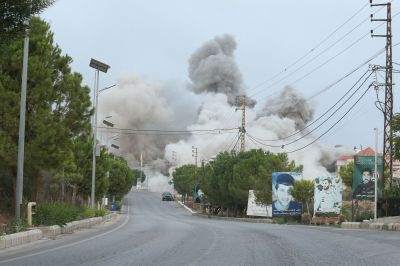
Hezbollah is greatly weakened by the Israeli incursion as well as Israeli and American attacks on its Iranian ally, but still retains considerable power within the Shiite community and in the context of Lebanon’s sectarian political system and social fabric.
The office of Israeli Prime Minister Benjamin Netanyahu did not respond to a request for comment. On Nov. 2 he had said: "We expect the Lebanese government to meet its commitments, namely to disarm Hezbollah, but it is clear we will exercise our right to self-defense in accordance with the cease-fire terms. We will not allow Lebanon to become a front against us again, and we will act if necessary."
Lebanon trying hard to avoid a confrontation
The Lebanese Army fears that southern residents would see such searches as a major move of caving to Israel, which occupied southern Lebanon for nearly 20 years until 2000, and invaded there again last year, according to security officials.
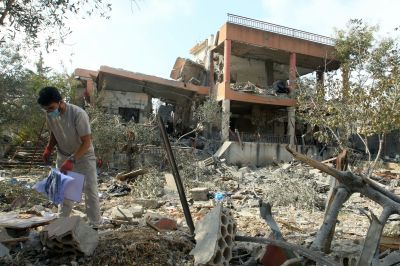
Beirut also fears Israel's ever-shifting list of demands could create a permanent risk of armed escalation and jeopardize efforts to stabilize a country already shaken by geopolitical and economic turmoil, the officials and a political source added.
Israeli officials say Hezbollah is stepping up rearmament efforts using private properties in the south and further north, and that the Lebanese Army is not opposing these efforts, using this as a pretext for its continued bombing campaigns in southern Lebanon.
Under the process established in the cease-fire agreement, Israel transmits intelligence on suspected Hezbollah depots to the "Mechanism," which passes it to the Lebanese Army for action. Israel "sometimes intervenes" directly, particularly against Hezbollah arms transfers or when Israel believes the Lebanese Army has not acted quickly enough, bombing these targets, an Israeli military official said.

The Lebanese Army has continued to deny the baseless Israeli accusations of its passivity or even collusion in the face of Hezbollah's activities in the south, saying instead that it has no knowledge of any new arms arsenals since the cease-fire agreement went into effect in November 2024. Lebanese security officials insist that new army checkpoints in the south are preventing Hezbollah from moving weapons.
Hezbollah too denies any rebuilding in the south. The party says it has not opposed sweep operations conducted by the Lebanese Army in the area, and has not fired at Israel since last year's cease-fire. It is refusing to fully disarm so long as Israel continues its attacks on Lebanon unabated.
From Israel's perspective, an Israeli military official said Hezbollah aims to remain a dominant force in Lebanon — a goal shared by Iran.
Hezbollah this week issued a public statement asserting its "legitimate right" to defend Lebanon against Israel.