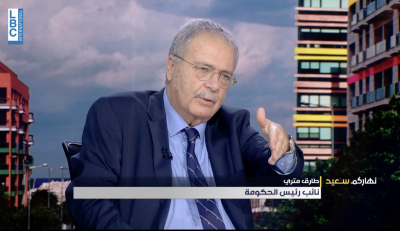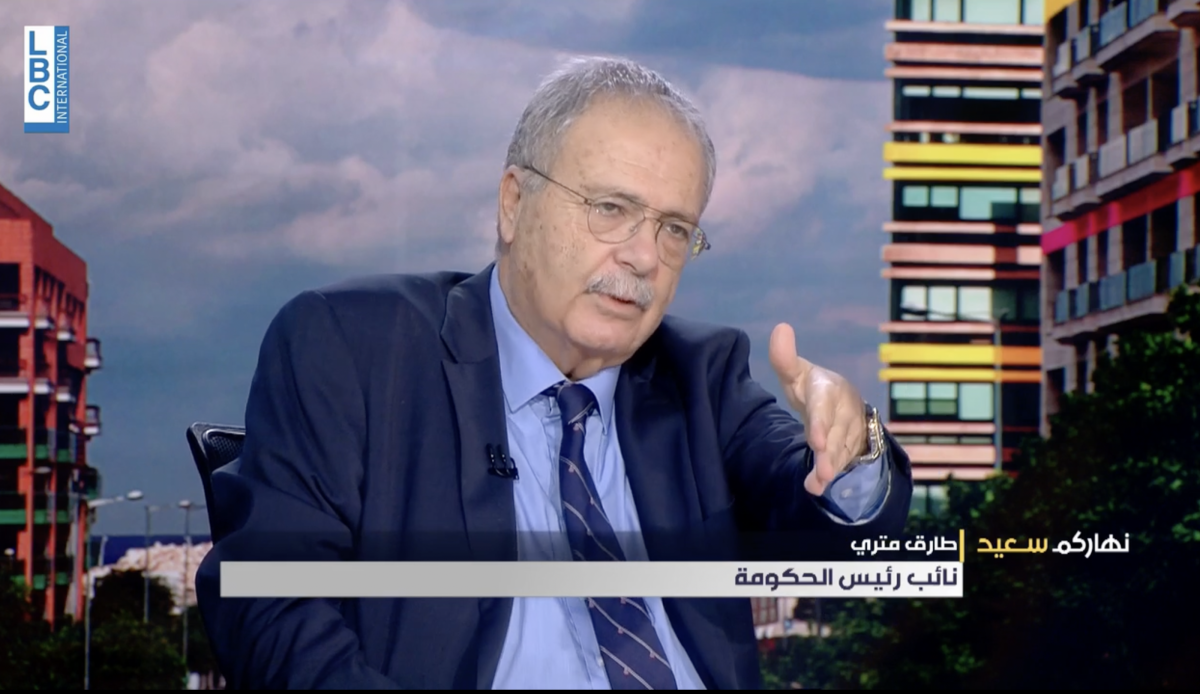
Screenshot of the interview with Lebanese Deputy Prime Minister Tarek Mitri on the local channel LBCI, Nov. 7, 2025






Lebanese Deputy Prime Minister Tarek Mitri stated that Israel “does not need pretexts to continue its attacks” and suggested that these strikes could be a way for Israel to negotiate to its advantage with Lebanon, “as in Gaza”, during an interview Friday evening on the local channel LBCI. In the same interview, he dismissed the idea that the Israeli state would “launch a large-scale war on Lebanon in the next two to three weeks.”
Israel has intensified its deadly strikes in southern Lebanon and the Bekaa Valley over the past few weeks, raising fears of a major military escalation. Reports from Israel indicate that Hezbollah is rearming and receiving financial support from Iran, at levels similar to those before the last war, which had significantly weakened the party.
A cease-fire came into effect on Nov. 27, 2024, after more than 4,000 deaths in Lebanon, according to official figures.
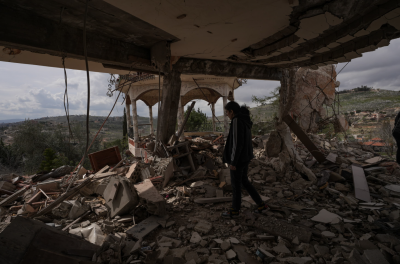
Mitri also noted that “official Lebanon, as well as Hezbollah, has respected the cease-fire, while Israel has continued its aggressions, sometimes classified as violations of the agreement, other times as operations targeting officials, centers, or weapons and ammunition depots,” adding that “the number of violations is high and has exceeded five thousand.”
Since the cease-fire agreement, Hezbollah has fired only once toward Israeli territory, on Dec. 2, 2024, causing no casualties. In contrast, Israel has killed more than 300 people in Lebanese territory over the same period, including over 100 civilians, according to a tally based on data from the Lebanese Ministry of Health and the UN. Israel asserts that it seeks to prevent Hezbollah from rebuilding its forces.
Tarek Mitri also regretted that Israel “does not present potential violations on the Lebanese side to the cease-fire mechanism committee,” as required under the agreement.
‘Border control’
“We had previously received indirect messages indicating that Israel wants to establish contact at the political level, but it was answered that negotiations take place at the level of the agreement mechanism and not at the political level,” Mitri said.
The Deputy Prime Minister added that Western diplomats are encouraging the resumption of negotiations, and some have proposed including civilians alongside military officials in the Lebanese delegation. However, Parliament Speaker Nabih Berri insisted that there was no need to create a new negotiation entity, since the mechanism committee already exists, noting that negotiations with Israel, which President Joseph Aoun considers inevitable, could take place through this committee with the possible participation of civilian or military experts.
Following the presentation to the Council of Ministers last Thursday of the report on Hezbollah’s disarmament south of the Litani River by Army Commander General Rodolph Haykal, Tarek Mitri stated that “the army’s report, documented with figures, confirms its full control over the area south of the Litani River, except for regions occupied by Israel.”
He recalled that General Haykal “repeatedly affirmed that Israeli attacks hinder the army’s implementation of its plan,” which, following the Council of Ministers decision on Sep. 5, foresees the disarmament of Hezbollah by the end of the year south of the Litani, before proceeding with other phases of the plan across the rest of the country.
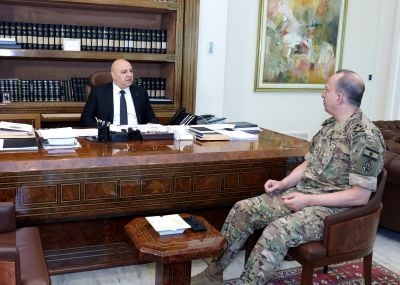
“North of the Litani River, the army continues its efforts to combat arms and drug trafficking, dismantle terrorist groups, and destroy weapons depots, which reflects a significant advance in control and stabilization operations,” noted Tarek Mitri. He also explained that “holding a conference to support the army had been considered in the past, but discussions on this recently lost momentum; it is therefore necessary to remind our friends of the importance of reactivating this support.” The international conference in support of the army is expected to take place by the end of 2025.
The Deputy Prime Minister also welcomed “progress in border control and the reduction of arms and drug trafficking to and from Lebanon, particularly in the Lebanese-Syrian border areas,” noting the cooperation of the new Syrian authorities, with whom he coordinates relations on behalf of the Lebanese government. These authorities, regularly supported by Saudi Arabia in this area, report seizures of weapons or narcotics near the Lebanese border.