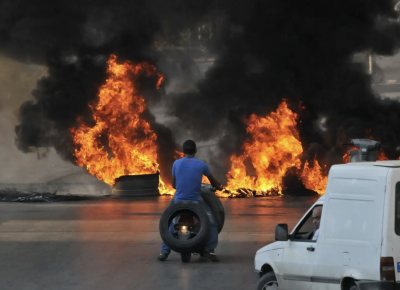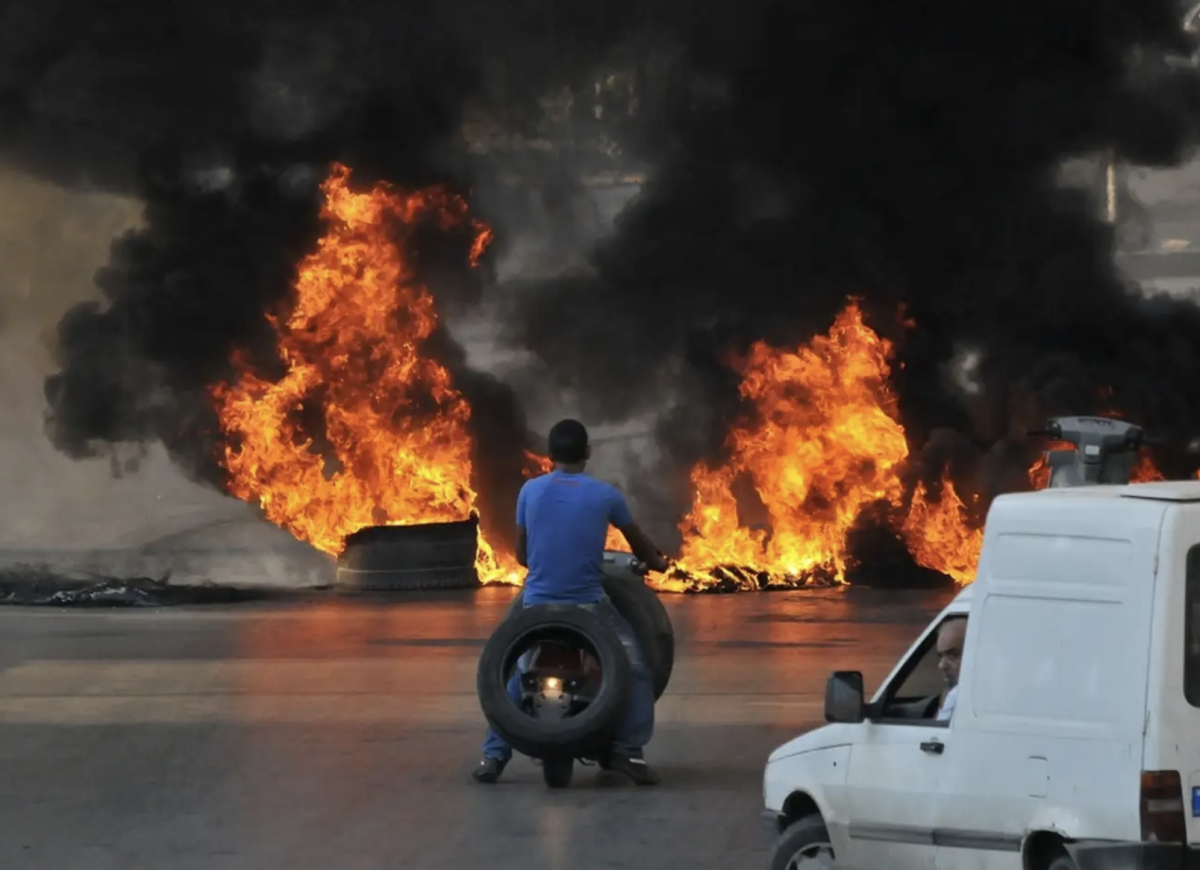
Tires set on fire in Saida during clashes between Salafists and Lebanese soldiers, on June 23, 2013 in southern Lebanon. Archive photo Ibrahim Chalhoub/AFP






The wheel turns. The significant weakening of Hezbollah, alongside the legitimization of a Syrian government rooted in Sunni Islamism, brings back into focus a painful episode in Lebanon’s contemporary history: the clashes in Saida’s Abra neighborhood in June 2013, which pitted Salafists led by the Lebanese Sheikh Ahmad al-Assir against the Lebanese Army.
With the fall of the Assad regime in December 2024, the Sunni Islamists are once again accusing Hezbollah of having participated in the fighting in Abra, or even of having instigated it. This is at a time when the new Syrian authorities are negotiating with Beirut for the release of their nationals, whom they see as unjustly imprisoned during the Syrian Civil War.
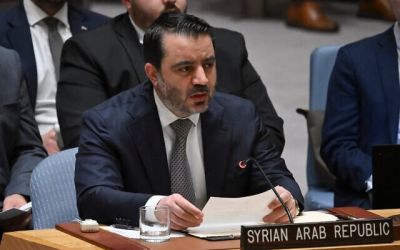
According to Karim al-Mufti, a political science researcher, the goal is clear. “For the Sunni Islamists, now in a position of strength with a party from their ranks in power in Syria [President Ahmad al-Sharaa, who overthrew the Assad regime], it is about rehabilitating their image by emphasizing the fight against Hezbollah.”
The latter, meanwhile, emerged significantly weakened from its last war with Israel and is under pressure from both the Lebanese authorities and the international community to surrender its weapons.
Thus, 12 years after the clashes — which occurred against the backdrop of Hezbollah’s intervention in Syria alongside Assad and heightened Sunni-Shiite tensions in Lebanon — Assir’s lawyer, Mohammad Sablouh, accused the Military Court on Oct. 21 of acting on Hezbollah’s orders in sentencing those found guilty of the clashes.
This controversy came as a public hearing for Fadl Shaker, a famous Lebanese singer and former Salafist, is scheduled for Dec. 15.
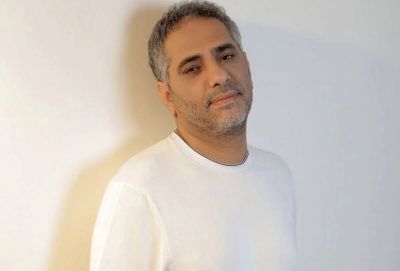
Convicted in absentia to 22 years in prison for providing logistical and financial support to Assir and his men during the Abra clashes, he surrendered himself to the authorities on Oct. 5 after years on the run in the Ain al-Hilweh Palestinian refugee camp.

Sheikh Assir’s lawyer thus accused General Mounir Shehadeh, former president of the Military Court, of allegiance to Wafiq Safa, head of Hezbollah’s liaison unit, a week ago.
This exchange took place on the Bi essm al-chaab talk show (“In the Name of the People”) on MTV, hosted by journalist Riad Tawk, who is known for his opposition to Hezbollah.
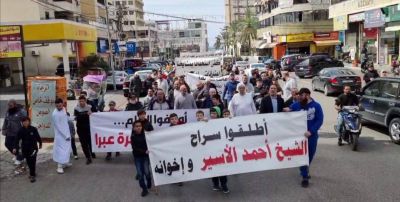
‘The Military Court answers to Hezbollah’
Speaking to L’Orient-Le Jour, Sablouh stated that “the Military Court answers to the force that rules the country, in this case, in recent years, Hezbollah.”
He said Shehadeh, who headed the Military Court from July 2020 to December 2021, told him that “the orders do not come from us, but from above,” and added that Safa had once directly intervened in a case, though not related to Assir.
During the talk show, Shehadeh vehemently denied these accusations and rejected having made such statements. Contacted by L’Orient-Le Jour, he declined to comment on the matter.
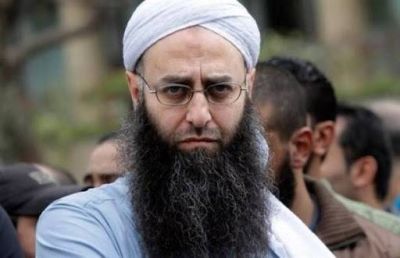
On Aug. 30, 2020, the Military Court sentenced Assir to 20 years of hard labor in the case of the 2014 Bhanin clashes in northern Lebanon against the Lebanese Army. The controversial Islamist preacher, imprisoned since 2015, had already been sentenced to death on Sept. 28, 2017, for the Abra clashes, which killed 29 people, including 18 Lebanese soldiers and 11 militiamen.

“At the time, there was a political alignment between the Lebanese Army and Hezbollah against the Sunni extremists,” recalled Mufti. “Sheikh Assir claimed to be defending the Sunnis against what he saw as Iran’s fifth column in Lebanon, namely Hezbollah, and he also wanted to build an arsenal to create a balance of power with the Shiites,” he added.
Commenting on the allegations of having participated in the Abra clashes, or even of having “fired the first shot,” a Hezbollah source told L’Orient-Le Jour, on condition of anonymity, that they are “not true” and constitute an “insult” to the Lebanese Army, by portraying it as “weak.”
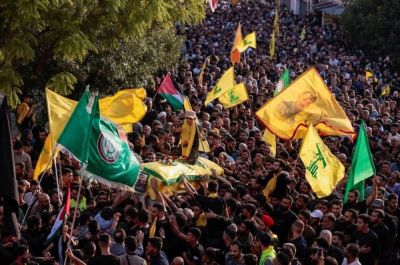
During his show, Tawk presented a version of events claiming that the Resistance Brigades — a predominantly Sunni militia loyal to Hezbollah — took part in the Abra clashes against Assir. The journalist accused them of “terrorizing civilians and innocents, under the watch of the army and its intelligence services, without any of these individuals ever being summoned for an investigation.”
When contacted, General Shamel Roukoz, then head of the army commandos on the ground at the time, denied these claims.
‘No mention of Hezbollah’
“The Military Court has never been a real court, but rather the court of the party of the devil and its instruments ... It specializes in oppressing, injustice and imprisoning Sunnis, whether from Syria or Lebanon,” said Sunni Sheikh Hassan Merheb, deputy inspector general of Dar al-Fatwa (the highest Sunni religious authority in Lebanon), on Oct. 21 on X.
For her part, Lebanese activist Kinda el-Khatib — known critic of Hezbollah and sentenced by the Military Court in December 2020 for “collaboration” with Israel — wrote on X that Mounir Shehadeh and Shamel Roukoz are “the first who should be tried for having sacrificed the blood of the Lebanese Army martyrs in Abra.”
“The judiciary must start from zero — from the one who fired the first bullet and the one who led the battle of Abra,” she added.
In response to these criticisms, a source close to the case stated that Assir’s defenders “are trying to manipulate people — they would almost claim that the soldiers and officers killed in Abra died from an electric shock,” the source said ironically.
“They want to exonerate everyone in a completely biased way,” the source added. “The military court only rules on the case submitted to it by the military prosecutor’s office following the intelligence services’ investigation: there was no mention of Hezbollah in the file,” the source said.
This case has gained momentum at a time when the new Syrian authorities are negotiating with Beirut for the release of Syrian prisoners held in Lebanese jails.
On Oct. 10, Syrian Foreign Minister Asaad al-Shaïbani, visiting Beirut, called on the Lebanese authorities to urgently release all Syrian nationals detained in Lebanon. The Lebanese authorities responded that the legal channels must be followed.
This article was originally published in French in L'Orient-Le Jour and was translated by Joelle El Khoury.