





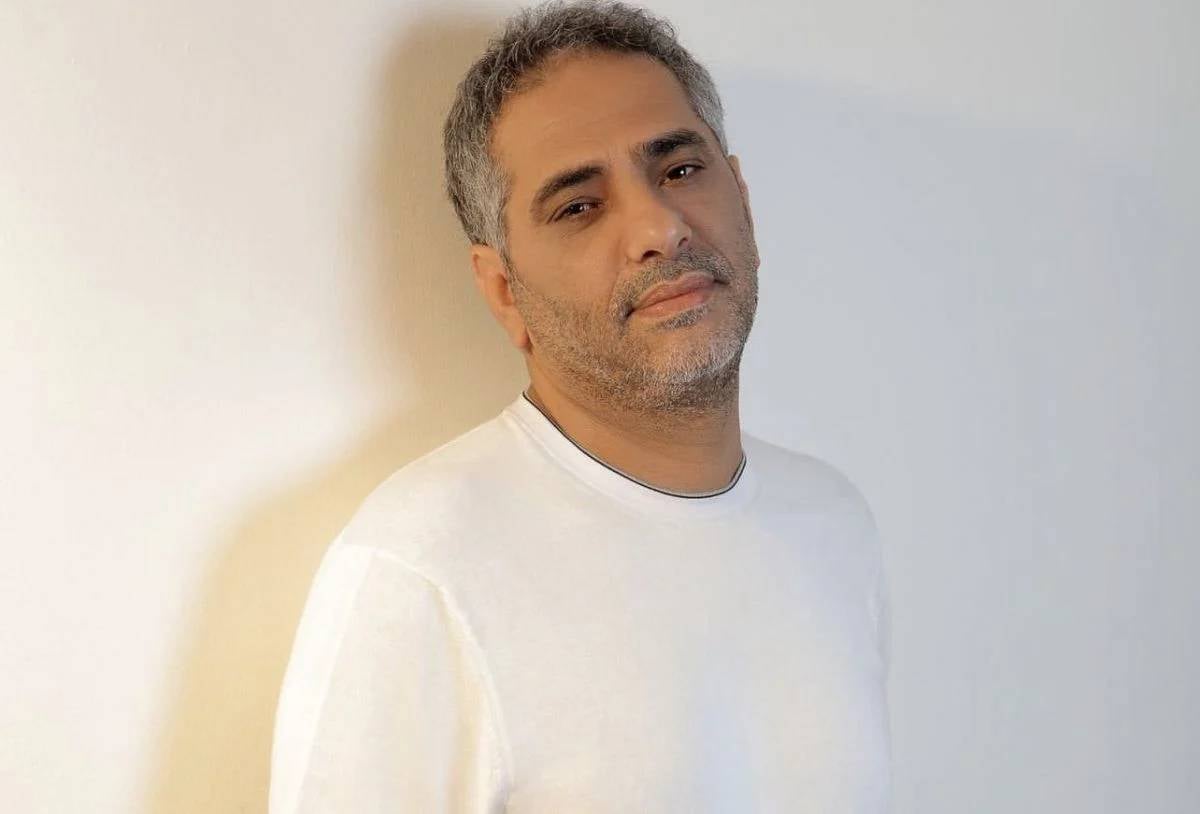
The Lebanese singer Fadl Shaker. (Photo taken from his X account)






BEIRUT — Less than 48 hours after Lebanese singer and former Salafist Fadl Shaker turned himself in to authorities, social media began buzzing with reactions, with some users warning of a potential deal that could reduce his sentence for his alleged participation in the 2013 Abra clashes with the Lebanese Army.
Shaker, who has been hiding in the Ain al-Hilweh Palestinian refugee camp since 2013, was sentenced in absentia to 22 years in prison in 2020 for providing financial and logistic support to Salafist Sheikh Ahmad al-Assir during the clashes, in which Assir and his followers confronted the army, killing 18 soldiers.
Shaker’s decision reportedly came after months of pressure and threats against him inside the camp, tied to his return to music and the release of his latest album, according to several local media outlets.
On Saturday, after he turned himself in, he was transferred directly to the Defense Ministry in Yarzeh as part of an agreement to settle his case.
According to judicial and security sources cited by AP, now that Shaker is being held by Lebanese authorities, the 22-year sentence he had received will be dropped. He will instead be questioned in preparation to stand trial on new charges of committing crimes against the military.
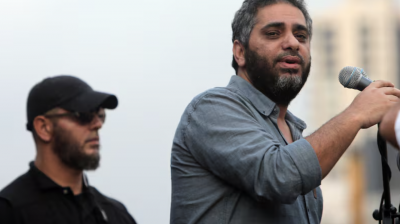
‘If he is guilty, hang him, and if he is innocent, we will carry him on our shoulders’
In a statement reported in the press on July 10, the singer framed himself as a victim and once again declared his innocence, asserting that the charges against him "were fabricated from scratch," blaming "political score-settling."
Playwright Ziad Itani praised Shaker’s surrender on X: “We are all Fadl Shaker.” Addressing the singer, he added: “You are coming back to your large audience, from Lebanon to every Arab country.”
Itani was himself arrested for four months between 2017 and 2018 on false charges of collaboration with Israel.
While some have accused Shaker of directly participating in the clashes against the army, investigative journalist Firas Hatoum said on Sunday that the military Court acquitted the singer of such accusations in 2018.
Until the outbreak of the clashes, Assir's movement was not banned in Lebanon, Hatoum added, which means that Shaker's "sympathy of, or even membership in this movement, including financial support, was not illegal."
Commenting on the case, activist Raymond Hakim, critical of Hezbollah, listed on X several crimes and assassinations committed in Lebanon that are blamed on Hezbollah and its allies: "Shaker did not assassinate Rafik Hariri and his colleagues, ... he did not attempt to assassinate May Chidiac ... but rather surrendered himself to the Lebanese Army... if he is guilty, hang him, and if he is innocent, we will carry him on our shoulders," he wrote.
Meanwhile, journalist Dima Sadek commented on an old video that resurfaced in the media in which Shaker appears, saying: “We have two rotting corpses that we snatched from you yesterday, you pigs, 16 wounded, may God increase them."
According to Sadek and Hatoum, Shaker was not referring to the Lebanese Army but to the Lebanese Resistance Brigades, a Lebanese paramilitary group affiliated with Hezbollah. Assir's followers had clashed with this group prior to the clashes with the army in 2013.
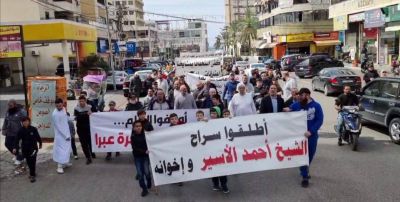
‘Because of a terrorist ... we are being deprived of my brother’
On the other hand, Josephine Bou Saab, sister of First Lieutenant George Bou Saab, one of the Lebanese Army soldiers killed, warned against any "negotiation over the blood" of the soldiers killed.
"Because of a terrorist ... we are being deprived of my brother. After 12 years of hiding like a coward, he decided to turn himself in," Bou Saab wrote on X. "I don’t want to believe that the only institution I trust in this country could negotiate over the blood of martyrs."
Samira Hobeika, mother of the same soldier, wrote on X: "What pains me most is that under President Joseph Aoun’s tenure, a deal could be made over the blood of the Lebanese Army martyrs. A question to His Excellency the President: Is this the justice and fairness we aspire to?"
L’Orient Today’s correspondent in the South reported on Sunday that Shaker was convinced to come out of hiding after being given security guarantees and following the involvement of some Arab countries.
Shaker ended his musical career with the outbreak of the Syrian revolution in 2011 against Bashar al-Assad’s regime and the subsequent civil war. He then grew closer to Assir's fundamentalist Salafist movement.
The Abra clashes, on the outskirts of Saida, left 18 Lebanese Army soldiers and at least 20 Assir-aligned fighters killed, as well as hundreds of people injured over several days of fighting. Assir, imprisoned since 2015, was sentenced to death in 2017 — a sentence later commuted to 20 years of hard labor.
Shaker made a first — and unsuccessful — attempt at a musical comeback in 2017. His releases this year brought him more success, with some songs going viral on social media.
After the fall of Assad on Dec. 8 and the rise to power of interim president Ahmad al-Sharaa, Shaker released a song dedicated to Damascus. In April, the Syrian artists’ union awarded Shaker the title of "honorary member" in recognition of his "remarkable artistic career" and his "humanitarian commitment to the cause of the Syrian people."