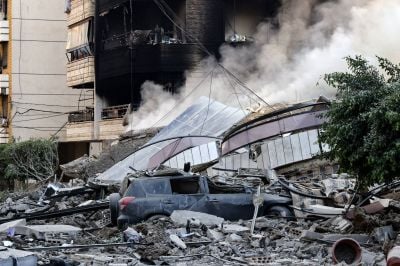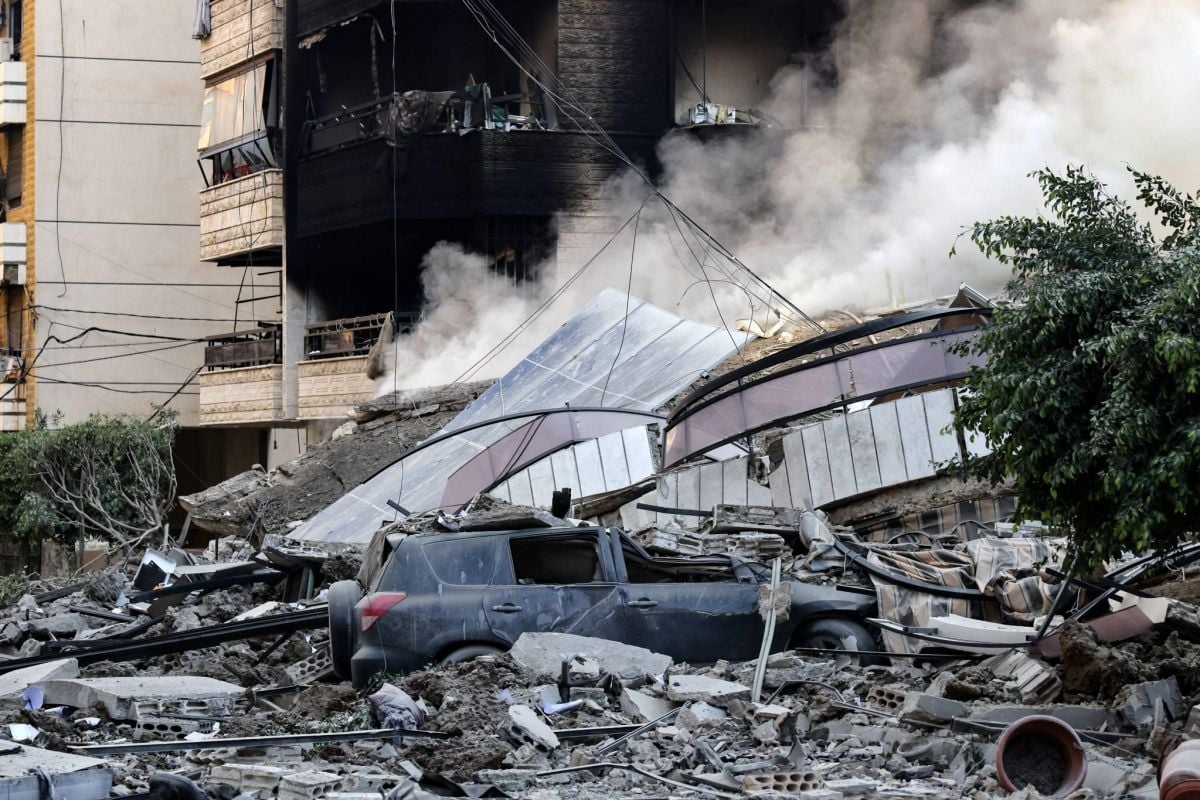
From the still-smoking ruins, on the morning of September 28, 2024, after one of the massive Israeli bombing campaigns on the southern suburbs. Anwar Amro / AFP






The article below is part of L’Orient Today’s selection of pieces translated from L’Orient-Le Jour’s special L’Orient des Écrivains (Writers’ edition) on Oct. 23, 2025 edition, produced for the ‘Beyrouth Livres’ Festival (annual book fair), in which the newsroom was opened to a group of writers, in partnership with the Institut français du Liban.
It was the first time I felt the need to write down what I was going to say.
Until then, I had spoken on television instinctively, following the thread of the war into which Lebanon had plunged.
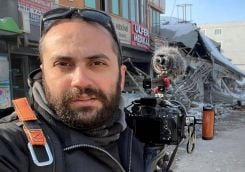
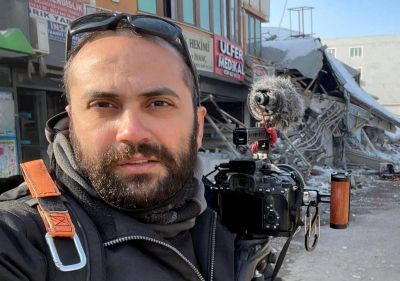
Issam Abdallah, covering the war for Reuters, was killed the previous day by an Israeli strike on the outskirts of Alma al-Shaab. I wanted, in the brief time I would be given, to say who he was — to interrogate the chain of accountability that had led to this act, which needed to be called by its name: the assassination of a journalist.
Only one uncertainty remained: what tone to adopt.
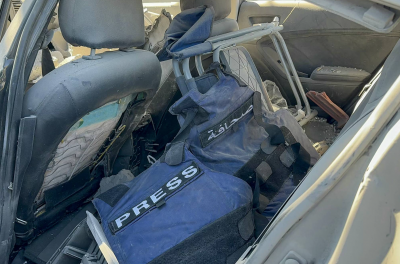
Steeped in the idea that the language of journalism should describe reality without being consumed by it, I had always considered absolute neutrality the cardinal virtue of the profession.
Yet, in the face of Issam’s death, it seemed to me to have become a refined form of cruelty.
I barely had time to mention his grieving family when my co-host on set cut in, his response abrupt and cold: “Yes, very well, Arthur... but have the terrorists been eliminated?”
“Eliminated?”
I rolled my eyes skyward with all the contempt I could muster, while inside I felt as if a vise were tightening around my gut.
For several days, Hamas’ massacres had made it possible to cast a long-overdue look of humanity on the fate of civilian lives — Israeli ones, in this case. Lives that I had always refused to weigh against Arab lives. Yet at that moment, I realized there was nothing trivial about the fact that Issam’s life hadn’t even been given the time for a biography.
It was, no doubt, a kind of professional awakening, since many other civilians had died before him. But I believed Issam belonged to a more abstract fraternity — that of the profession, of truth, of principles worth standing for.
I forgot that, for others, Issam was above all an Arab.
Everything was contained in my interlocutor’s sentence: that word “eliminated,” cold and abstract, soon to become the standard unit by which every death would be measured; and the specter of “terrorism,” brandished indiscriminately to describe each of them.
In it, I saw — although I could not yet put it into words — the matrix of future denials: those that, from Gaza to Lebanon, would flourish under the excesses of pundits who refused journalists from our region even the right to exist.
It was the first in a series of three deaths that would bring the war into my own relationship with this profession, and forever alter it.
From the very first month of the war, other names were added to the list of the dead — Farah Omar, Rabih Maamar, among others.
And with a few friends, we fell into the habit of confiding in one another each evening on the torn, ash-stained benches of a small coffeeshop in Jnah. The heavy consumption of shisha and tea helped calm our nerves, and I like to say that it was there I covered most of the war.
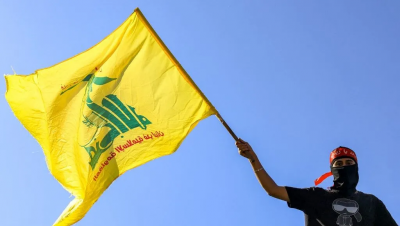
The border area we called the “kill zone” had become inaccessible, residents were beginning to speak of a “historic war”… and already, in most European newsrooms, Lebanon existed only through the prism of Hezbollah.
Perhaps rightly so, since the party had fired the first shot toward the occupied Shebaa Farms. If there was still any space left for civilians in the narrative, it was generally limited to stories about the displaced from southern Lebanon, crowded into public schools just behind the front line.
One evening, as our conversation waned, I repeated the words of a French colleague I had met in Beirut that had struck me deeply: “Every time I ask a displaced person how they’re living in their shelter, they answer beside the point and start giving me propaganda about the resistance.”
It’s true…
Why do the damned always speak of their cause before telling their own story? The question echoed strangely through the coffeeshop. For we, too, had at times given in to that same reflex — to move others in order to better report. Yet by reading civilian lives only through their suffering, we were, with a kind of sincere paternalism, consuming a part of who they were: political beings.
What could be more dehumanizing? Men and women who, caught in chaos, still drew breath from their bond to the land, from a purpose greater than themselves.
And, as with Issam, this was in fact the first thing denied to the Arab in wartime — the idea that, even in his misery, he might have something to defend: no ideal of freedom, no national purpose, nothing beyond himself.
Whereas on the other side, death serves a destiny, that of “the only democracy in the Middle East.”
So what could be more logical, it is thought, than to grant him this “humanitarian” treatment, since his death, stripped of any link to a broader humanity, would weigh only as much as his flesh?
The ‘perfect victim’
– What’s her name?
– We don’t know.
Coming from a doctor, the answer startled me.
The little girl he showed me, lying intubated, was nothing more than a body wrapped in bandages.
In September 2024, the war entered a new and harrowing phase: Lebanon crossed the alarming threshold of one million displaced people, and in just 72 hours, Israeli bombings had killed a thousand lives.
The nameless girl in the basement of Saksakiyeh Hospital [Saida] wasn’t even part of that count.
She was “one among the wounded,” nothing more in that moment — for, as Dr. Youssef put it, “She’s lost her nose, her eyes, her lips, her skin… she no longer has a face, and we don’t know who she is.”
They were like that — a silent row of faceless children brought in by ambulances, often missing limbs, swelling the numbers from which no individual life could be distinguished.
She died a few days later, I was told — still without a name. Her fate said everything about the form of “decivilization” that the Israeli offensive had taken.
Gaza had already endured it for a year with the defacing of the line between civilian and combatant. On television sets, coverage of the cataclysm turned into “strategic analysis,” a military reading quick to brush aside any legal consideration of border violations or occupation.
Children like those in Saksakiyeh were described as victims “of the war,” as if victims of a natural disaster — emaciated, their small bodies already stripped of names, carrying no political weight and, in the end, no memory.
The fracture deepened — this time between us, the field reporters, and those in the studio. I could see, reflected back at me, the tone of my own writing becoming harsher, more direct, more violent — driven, I admit, by the desire to horrify; the only violence I could in turn exert in a context of absolute moral collapse.
What I saw most clearly, in that context, was the unhealthy obsession many of us had nurtured with finding the “perfect victim.”
The girl from Saksakiyeh was a case in point: a young victim, female, preferably unveiled — a kind of marketable innocence, the “good” Arab victim, whose image could be paired with just enough sentimental footage to move a viewer eager to believe that a little girl, at least, had nothing to hide. I exaggerate only slightly.
The propaganda machine in Tel Aviv often forced us to internalize this self-censorship in advance. Our obsession turned to avoiding the wrath of the digital armies that scrutinized every line we wrote, multiplying attacks, death threats, even hounding us within our own media outlets, ever keen to invite combative Israeli army spokespersons.
Arab life, after all, suffered from an economy of proof. A supposed link to Hezbollah, a beard too thick, or — let’s say it — Arabness itself was enough to arouse suspicion.
All the more so for men; and lacking any immediate credit of empathy, their lives became publishable only after passing through a gauntlet of suspicion that determined whether or not they were granted the right to a story.
ChatGPT said:
When I returned from the hospital, I was invited to speak from Beirut on a French talk show. I was drained, sickened, wanting nothing more than a moment of silence and distance — simply to breathe, or perhaps to think together about what the little girl under the bandages might have been called. What, really, could have been more urgent?
Before giving me the floor, they brought on an detestable representative of Israeli intelligence, who, after that murderous day, flashed a broad smile and said: “It’s wonderful — we’re going to liberate Lebanon, and tomorrow we’ll be able to have a good beer in Beirut with the Lebanese.”
An hour later, I was livid. “Just die, you b—,” I said… under my breath. In truth, I had neither the courage nor the rhetorical composure to do more than contradict him, reminding viewers of the misery sown by those so-called liberating bombs falling behind me — a moral contradiction, to say the least, with the prospect of a friendly drink.
That remark earned me the label of “propaganda agent” — from the propaganda agent himself — without provoking the slightest outrage from the panel of experts. After all, in our industry, a belligerent and a journalist are, more often than not, just two guests.
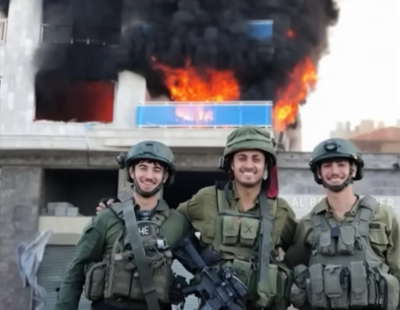
I can’t say how many times I felt insulted by that blurring of roles. How many times I had to contain my anger as the gap between what was happening to people and the way it was talked about turned into a form of violence. The violence of having to accept that the Arab view carries no weight, since it remains distorted by its supposed inability to see itself as a legitimate target.
That, too, is the legacy of our colonial history.
Unable to fully confront that burdensome past, France continues to operate within the same logic — the logic of the statistical, “indigenous” death — convinced that questioning today’s patterns would inevitably mean reopening yesterday’s wounds.
The Arab, and the others
The third death that changed the way I worked came, in fact, as a series — 16 bodies lying trapped under the rubble in the nearby Basta neighborhood.
On Oct. 10, 2024, my apartment shook with the echo of a massive explosion, and in an instant, our quarter was blanketed with that acrid, all-too-familiar smell of pulverized concrete.
Even the neighbors couldn’t name them.
Yet all were civilians — residents of the Hocheche building, killed simply for living too close to the intended target: Wafic Safa, a Hezbollah financier who had never lived there and is today in perfect health.
It took me a month to gather their 16 names.
None of them were equal in death. The Lebanese man from the top floor was laid to rest in a marble tomb; the war-displaced residents from the first floor were lined up in a makeshift morgue, awaiting the day they might return to their occupied lands in the South. As for the four people from the ground floor — the Hamaway family — they were buried several kilometers away, in a gravepit in Shehim reserved for Syrians.
The only survivor, a young man my age, bore the sorrowful name Wahid — “the only one.”
It wasn’t his first experience of dehumanization. His family, decimated from one war to the next, had fled Assad’s barbarity. And when, in Beirut, he lost the last of his loved ones, it was the first time their martyrdom — however anonymous — had stirred such emotion. Even in certain French political circles, there was suddenly sympathy for these deaths under Israeli fire, though those same circles had remained silent in the face of Bashar al-Assad’s bombs.
Because even amongst Arabs, some lives are deemed more worthy than others.
A part of my generation — born politically from the Arab Spring — was shaped by a belief in horizontal revolutionary movements, inspired by global slogans of social justice and democracy.
But many among the generation before us remain heirs to old blocs and ideological alignments, still unable to grasp the multiplicity of imperialisms. All of this has only reinforced the unfortunate tendency to tie the worth of Arab lives to national or partisan agendas.
Listening to Wahid was to feel alone — or at least to be aware that the deaths of his loved ones did not always fall on the “right” side of political loyalties. How many became champions of the Palestinian cause in Gaza, while downplaying the crimes of the butcher of Damascus as he destroyed lives in Yarmouk?
And how many, on the other side, prided themselves on understanding the suffering of bodies emerging from Syria’s hell camps, while turning away from those rotting at that very moment beneath the rubble of the genocidal war waged by the butcher of Tel Aviv?
My article on Basta was published on Nov. 20. I was satisfied with it. Luma, Tala, Tarek… these souls had regained their names. Yet on the very day it came out, another airstrike hit the same street, killing 12 more people — 12 more Arabs whose names I wasn’t able to find.
The horizon
Our empathy owes nothing to nature; it is political. The only moral stance is to resist the impulse to rank lives. I have no qualms admitting which ones resonated with me during this war — they came in bursts.
How could I feel empathy for the Israeli who died two years earlier, when Arab flesh would keep piling up day after day?
How could I pity the children in Tel Aviv’s shelters when no siren sounds here to warn of imminent death? How could I shed another tear for the lives of others when it already seemed impossible to draw a single glance toward the dead here?
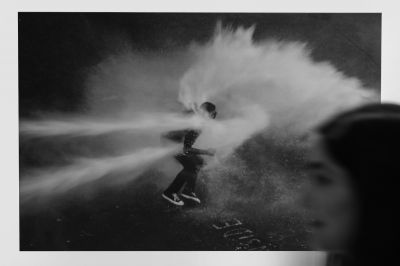
As a friend told me after Oct. 7: “How can we empathize with the victims of a single day when we feel like we’re the victims of an entire era?”
And I hated those thoughts — just as I hated seeing those consumed by them in Europe reproduce the same patterns, confusing everything, weighing antisemitic hatred against the fate of Gaza, even demanding that Jews shout louder against Israel’s actions to clear themselves of suspicion in turn.
To my deep regret, I can no longer see how to close the gaping wound opened by covering these two years of war. Strangely, I realize it’s no longer the erosion of facts that hurts me most — but the betrayal of language. I have felt too often the pain of seeing it twisted.
Journalism, I’m certain, will not change so long as it remains the product of hierarchies of power, of inherited structures and constraints that mirror our own choices. So perhaps we should begin by making one choice ourselves, to admit our compromises.
Still, I continue to believe in the journalism of small things — the kind that connects details to lives, lives to events, and events to history.
I no longer care whether our media see themselves in Arab lives or project themselves onto them. For our profession, it’s no longer a matter of regaining trust or mending our moral failures, but of understanding that, in the end, journalism’s only true responsibility is to give form to what we have allowed to fade away.
Arthur Sarradin is a journalist. His first book, Le nom des ombres (Seuil, 2025), has just been published.
This article was originally published in French in L’Orient-Le Jour and translated by Sahar Ghassoub.