


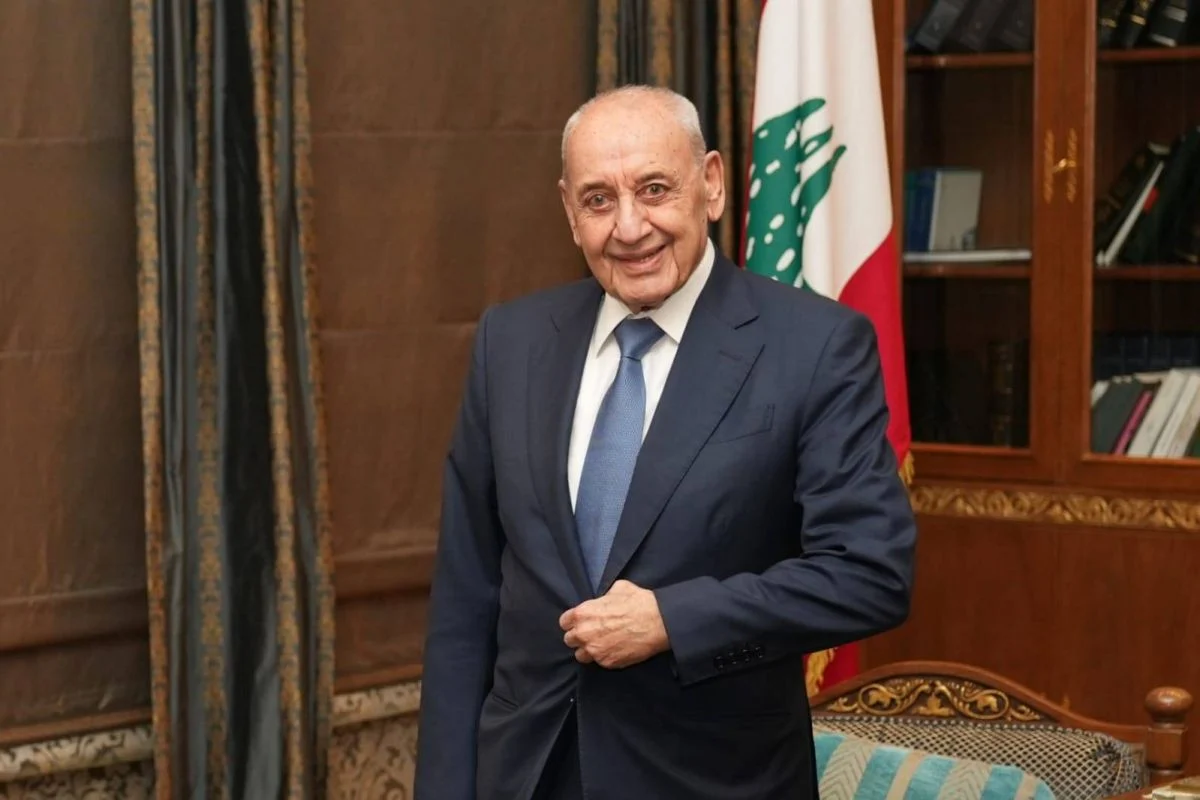
Speaker of Parliament, Nabih Berri, in his office in Ain el-Tineh, on March 5, 2024. (Credit: Mohammad Yassine/L’Orient-Le Jour)






Lebanese Parliament Speaker Nabih Berri said Sunday night that the massive Israeli strikes on Msayleh in South Lebanon, which killed one person and destroyed numerous construction vehicles, reflected Israel’s intention to prevent any reconstruction of border villages devastated by the war between Israel and Hezbollah.
The cease-fire reached last November is, as a reminder, violated almost daily by the Israeli army, while Hezbollah refuses to hand over its heavy weapons to the Lebanese army as demanded by the government.
In an interview with the pan-Arab newspaper al-Sharq al-Awsat, Berri emphasized that Saturday’s raids — the most violent after nearly a year of truce — took place less than 24 hours after his call for the government to include in the 2026 budget bill appropriations dedicated to rebuilding localities destroyed by Israel, and his criticism of the government for having "excluded" such projects from the text adopted by the government a few weeks ago.
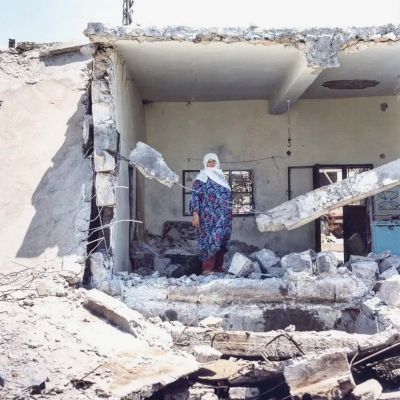
Berri, who had already denounced these strikes on Saturday, also said that through these strikes, which occurred not far from one of his residences, "the Israeli message banning the reconstruction of devastated villages was received."
He added that more than 300 construction machines had been destroyed. "Our absolute priority remains their reconstruction and the restoration of vital infrastructure," the speaker continued, affirming that this "insistence on rebuilding the destroyed localities and rehabilitating the infrastructure constitutes the concrete response to Israel’s plan to transform, by force of arms, the border villages into a demilitarized and uninhabitable buffer zone."
Ending the controversy
In response to these bombings, Lebanon’s answer must be its "national unity," the Hezbollah-allied Shiite politician continued, calling to "end internal controversy" and "intensify diplomatic action."
"We must not be content with statements, but take the matter to the Security Council so that it may meet and examine the Israeli aggression aimed at weakening our economy and forcing us into direct negotiations, which is unanimously rejected by the Lebanese. Israel’s claim that it is targeting Hezbollah’s military infrastructure does not hold, as the destruction affected machines and equipment dedicated to reconstruction, and nothing else," he added.
On Sunday, Prime Minister Nawaf Salam requested that a complaint be officially submitted to the U.N. Security Council.
Berri also criticized the lack of reaction from the United States, which co-chairs the cease-fire monitoring committee with France.
"Where is their credibility, while they sponsor with France the cease-fire agreement that Lebanon scrupulously adheres to, while Israel continues its violations under the eyes of the international monitoring commission, led by an American general and chaired, in less than eleven months, by three senior American officers?" the Speaker continued.

"What prevents the committee from intervening so that Israel puts an end to its aggression? Will this meeting once again end in failure as the previous ones have since Lebanon accepted the cease-fire? And what will the committee say in response to statements from the United Nations Interim Force in Lebanon (UNIFIL) attributing responsibility for these violations to Israel, as opposed to Hezbollah, which has not fired a single shot since the agreement entered into force?" Berri said.
Tom Barrack criticized
The Parliament Speaker also criticized U.S. emissary Tom Barrack, who had conveyed an American roadmap to Lebanon, the objectives of which were incorporated into the government’s decision to initiate Hezbollah’s disarmament. Lebanon "has always favored the diplomatic path to end the Israeli occupation. Where is this diplomacy now?" he further complained, considering that "the lack of American pressure to force Israel to implement the cease-fire, a prerequisite for the implementation of Resolution 1701 (of 2006)," encourages Tel Aviv "to continue its aggression."
"We were the first to welcome the end of the war in Gaza and to support President Donald Trump’s plan, which set a general framework for reaching an agreement in this regard. We hoped it would extend to South Lebanon. It seems the decision lies with Washington, which has the means to pressure Israel. Isn’t it time for Israel to withdraw?" he concluded.
