


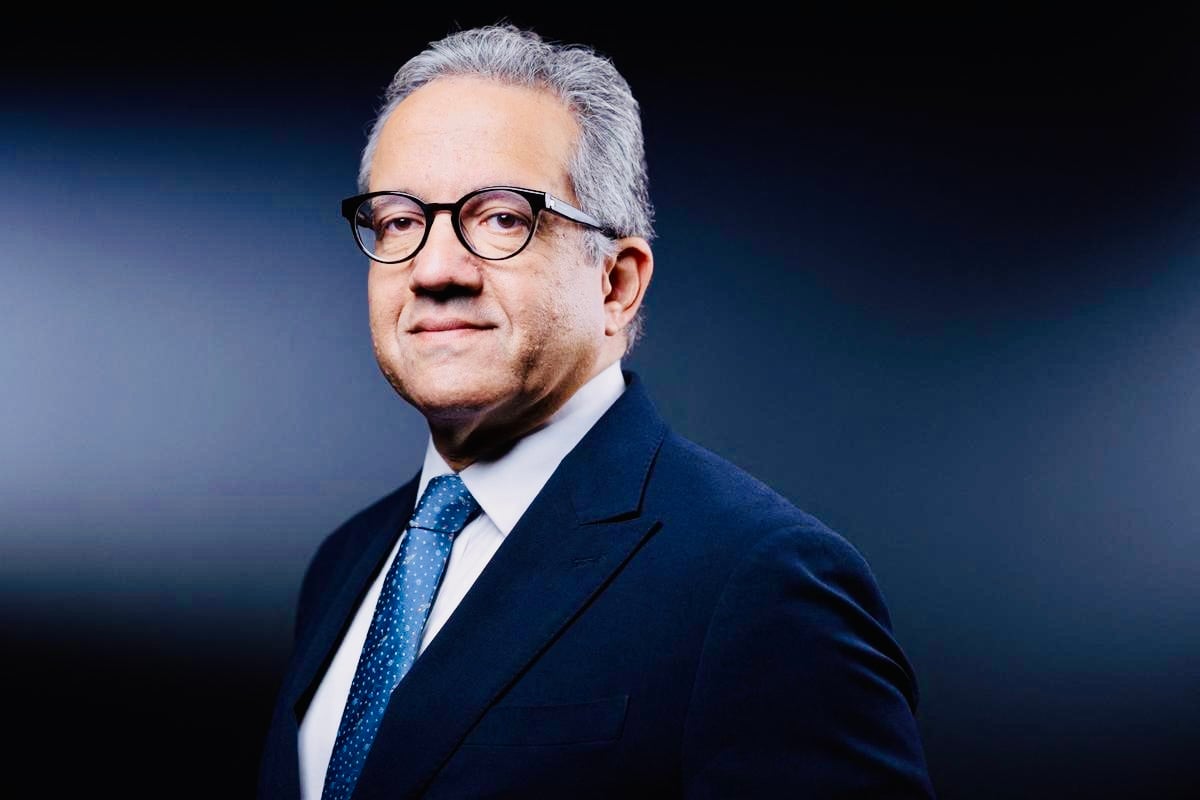
Khaled al-Enany, appointed Director-General of UNESCO on Oct. 6, 2025. (Credit: Joël Saget/AFP)






On Monday, Oct. 6, Unesco's executive board appointed Khaled al-Enany as its director-general for the next four years.
Elected by an overwhelming majority of 55 votes to 2 against his rival — Congolese candidate Firmin Edouard Matoko, former Unesco assistant director-general — Enany, 54, a former antiquities and tourism minister in Egypt (2016-2022), will officially take office next Nov. 14.
He will be the first person originating from an Arab country to lead the United Nations Educational, Scientific and Cultural Organization.
The executive board's vote is expected to be formally approved on November 6 at the general conference meeting of Unesco in Samarkand (Uzbekistan).
An appointment backed by strong international support
Although he benefited from significant international support (notably from the African Union and the Arab League), the new director's ability to manage complex international crises, including political ones, will be closely watched.
With his combined profile as both an academic and a public administrator, enhanced by international experience and fluent French (he received the insignia of Chevalier of the National Order of the Legion of Honor in September 2025), Enany brings several strengths.
He has also proven himself in fields as varied as education, scientific research, culture, tourism, public administration, public service, and international relations.
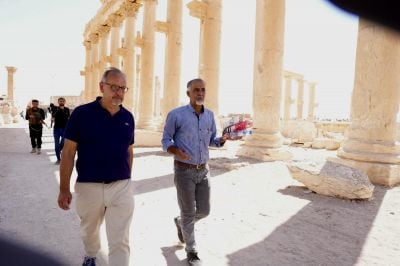
A renowned Egyptologist recognized for his expertise and commitment to teaching, he has, for over thirty years, been a faculty member at Helwan University, where he teaches courses focused on the civilization, archaeology, and epigraphy of ancient Egypt. He also worked for about fifteen years with the French Institute of Oriental Archaeology in Cairo (IFAO).
Prominent figure in Egyptology
Born in Giza, Enany was exposed to Egypt's illustrious pharaonic past from a young age. Educated in a French-language establishment, he later studied Egyptology in Cairo with the intention of becoming a tour guide.
He worked in this field at the very start of his career, which sparked his curiosity and appreciation for cultural diversity. After obtaining a scholarship, he pursued a doctorate in France at Paul Valéry University (Montpellier III).
"I left determined to get a degree," he said in a 2016 interview with the magazine Sciences et avenir. He added, "I loved research, I was impressed by the level of my French colleagues, their passion for their discipline. It changed me completely."
Through his publications in international scholarly journals and series, Enany has become a leading figure in Egyptology, widely recognized by the academic community. An honorary member of the French Society of Egyptology and a corresponding member of the German Archaeological Institute, he directed the National Museum of Egyptian Civilization and the Egyptian Museum in Cairo.
In 2016, he entered the government as antiquities minister, a post he held until 2019, where, according to supporters and critics alike, "he distinguished himself with his ability to combine scientific rigor and pragmatism." He later headed the Tourism and Antiquities Ministry for 2 years after the two ministries merged.
What is Azoulay doing now?
Audrey Azoulay announces the restoration of the Grand Théâtre de Beyrouth

Among the highlights of his ministerial tenures: overseeing the construction and renovation of several museums, including the National Museum of Egyptian Civilization (which since 2021 has housed a dozen royal mummies, including that of Ramses II) completed in collaboration with Unesco, as well as the Grand Egyptian Museum, one of the world's largest museums, with an estimated cost of around $1 billion.
He also undertook a significant number of restoration projects on archaeological sites, monuments, palaces, and historic religious buildings, including the al-Azhar mosque, Coptic churches and monasteries on the "Holy Family Route," as well as Jewish monuments, such as the Eliyahu Hanavi synagogue in Alexandria.
There was, however, a blemish: His term saw major urban development projects begin in 2020 that led to destruction in the "City of the Dead," a historic necropolis in Cairo. The expulsion of poor residents and the transfer of remains from this Unesco World Heritage site sparked sharp criticism, which his ministry refuted, assuring AFP that there had been "no destruction of monuments," only "contemporary graves."
Despite some concerns, his time as minister in Egypt was generally praised, at a time when this key sector of the country's economy — a major provider of jobs and foreign currency — was rocked by deadly Islamic State attacks in 2017 and 2018, followed by the Covid-19 pandemic in 2020.
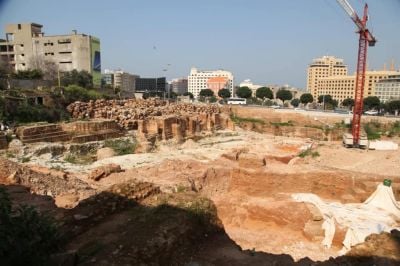
'Modernizing Unesco'
During his campaign, Enany promised to modernize Unesco, strengthen cooperation among member states, and preserve its role as a forum for dialogue and solutions. He told AFP that he would offer a "fresh perspective" and the practical expertise developed "on the ground" to give the organization "greater visibility and greater impact."
In a context marked by a legitimacy crisis, accusations of politicization, and the announced withdrawal of the United States, the new director intends to refocus Unesco on its core missions. To this end, he proposes a more transparent, inclusive leadership, "focused on member states, people, and culture as a tool for dialogue."
Determined to depoliticize debates, Enany — described by a former Unesco member as "the model administrator meeting institutional requirements" — aims to prioritize technical approaches and build consensus.
Facing budget challenges caused by the withdrawal of key donor countries, he says he wants to make funding a priority, relying on voluntary contributions, public-private partnerships, and innovative mechanisms like debt swaps. He also pledges to work for the return of the United States to the organization, continuing the efforts started by former director-general Azoulay.
Reacting to his appointment, Egyptian President Abdel Fattah al-Sissi wished him "the best in undertaking his noble mission. It is a historic achievement that will be added to Egypt's cultural and diplomatic record and to the accomplishments of Arab and African peoples," according to a statement.
With Enany at the helm of Unesco, it is reasonable to expect the organization to strengthen its role in Arab and African regions, in terms of heritage and education as drivers of development.

 7 p.m. recap: 1 person killed near border with Lebanon; 200 kilos of explosives carried by mules; Riyadh shuts its airspace