






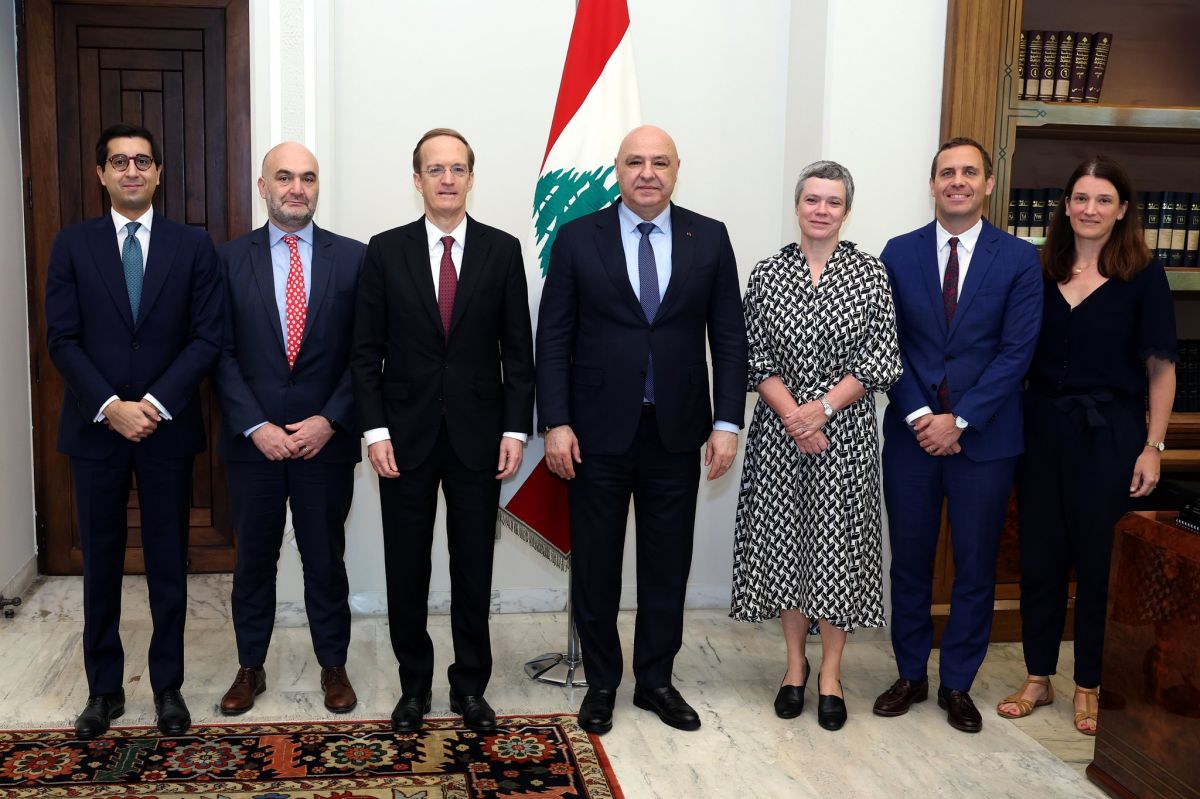
EU representatives in Baabda with the Lebanese president, Joseph Aoun. (Photo provided by the office of the presidency.)






Lebanese President Joseph Aoun on Wednesday called on the European Union (EU) to support the army and security forces in their bid to restore the state's arms monopoly and to pressure Israel to comply with all aspects of the cease-fire agreement, particularly the withdrawal from territories still occupied in southern Lebanon.
Aoun made these requests during a meeting in Baabda with an EU delegation led by Charles Fries, deputy secretary-general for peace, security and defense at the European External Action Service (EEAS). On this occasion, the President welcomed any support the EU could provide to the army and security forces to help strengthen their role in preserving security and stability throughout Lebanese territory.
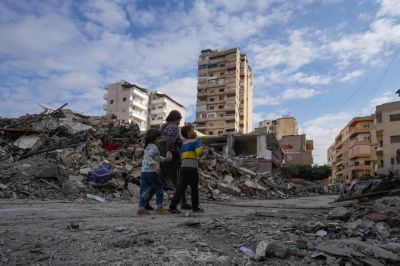
The troops are, in this context, deployed across the country and carry out « specific missions, » in addition to their « main mission » currently south of the Litani, where they have been deployed since Nov. 27, 2024, the day the cease-fire between Israel and Hezbollah supposedly went into effect.
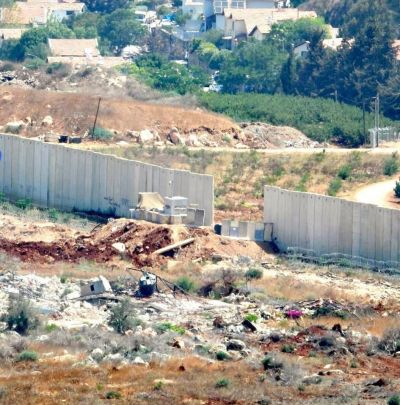
Before that date, the southern border area south of the Litani River was primarily controlled by Hezbollah, which is supposed to withdraw as part of the truce agreement and allow the army to take its place. Aoun, however, noted that this deployment cannot be carried out "in areas still occupied by Israel in violation of the agreement," namely on at least six points of Lebanese territory.
About 10,000 soldiers in southern Lebanon by the end of the year
"That is why Lebanon is asking its friends, especially European Union countries, to put pressure on Israel to withdraw from the still-occupied zones, end its daily attacks and release Lebanese prisoners," Aoun insisted, reiterating the state's official demands to enforce the truce. "Without these demands being met, the situation will remain unstable and the implementation of the army's plan to ensure the monopoly of arms by legitimate forces will not be able to progress," he argued, estimating that about 10,000 soldiers should be stationed in the South by year-end, "which requires equipment, vehicles and materials."
Regarding the end of the United Nations Interim Force in Lebanon's (UNIFIL) mandate, the Lebanese president said he hoped that this transition would take place "smoothly and in perfect coordination to guarantee security in the south." And while last July, the EU launched a €12.5 million project (around $14.7 million) to support the Lebanese Army in the south, following the thirteen-month war between Israel and Hezbollah, Aoun again thanked the 27 [EU states] for their assistance in various fields, stressing that Lebanon's "security stability" has "positive repercussions" for the EU bloc.
Reforms, Syrian refugees and relations with Damascus
In addition, the president said the government continues the "necessary financial and economic reforms, in cooperation with the World Bank and International Monetary Fund." "We are on the right track and we welcome the partnership with the EU in all areas," he said, hoping Europeans will participate in supervising the legislative elections scheduled for next May.
Regarding relations with Syria, Aoun stressed that they were "improving," with joint dossiers being addressed in a coordinated manner, notably regarding Syrian refugees and migrants. He stressed that Beirut continues to demand their return to Syria, "the conditions that caused their displacement having disappeared," and called for aid to be provided by the UN in their home regions.
For his part, Fries stated that the EU remains willing to continue providing aid to Lebanon, notably to its army and security forces, as well as concerning Syrian refugees.
