






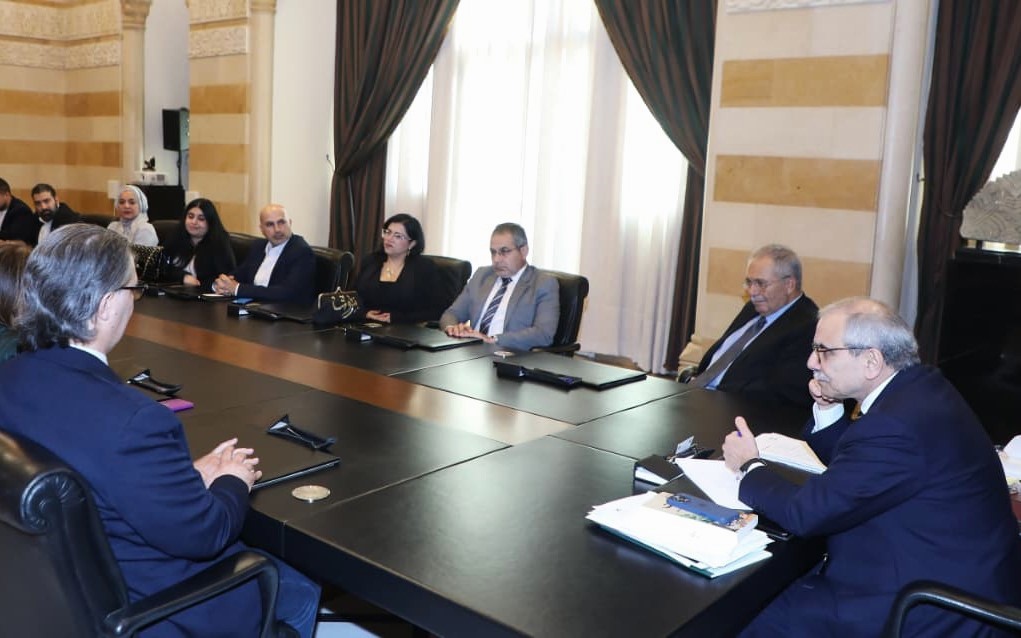
Prime Minister Nawaf Salam during a meeting at the Grand Serail with a delegation of Beiruti residents including jurists, journalists, and academics on Oct. 1, 2025. (Photo taken from the Grand Serail's X account)






BEIRUT — In comments made on Wednesday to the daily Annahar, Prime Minister Nawaf Salam said Lebanon must adapt to the new reality being created by the regional upheavals of recent years, despite the legitimate concerns they raise for the country’s future.
"Big changes are taking place in the region, notably the fall of the Syrian regime, the waning of Iranian influence, Israeli strikes in Yemen, and what is happening in Gaza," Salam said on the sidelines of a meeting at the Grand Serail with a delegation of Beiruti residents including lawyers, journalists and academics. "We are in a new region today, and there are concerns about these events, which will inevitably impact Lebanon."
The prime minister and former International Court of Justice head judge then called for Lebanon to take advantage of these changes and adapt to this new reality, Annahar reported.
Consensus on reforms and disarmament
According Annahar, Salam told reporters that the relationship between the president and the government must be based on "consensus" in order to implement the reforms needed to clean up Lebanon's financial system and sustainably revive its economy, as well as assert sovereignty, insisting on the need to restore the state’s monopoly on arms.
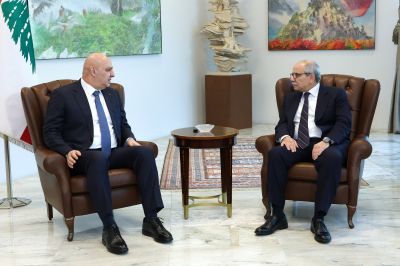
Salam met with President Joseph Aoun on Wednesday after tensions between the two regarding the army not intervening in the projection of slain Hezbollah leader's photos on the Raouche Rocks, which went against Salam's directives.
Salam's government assigned the Lebanese Army with the project of disarming Hezbollah during a Cabinet meeting in August. The process is set to be completed south of the Litani River by the end of the year. As for Hezbollah's disarmament throughout the rest of the country — which the party opposes so long as Israeli strikes on the country and occupation of regions in the South are ongoing — no timeline has been set. Instead, the government said the process would be rolled out according to the army's means.
The government's army monopoly aims also extended to Palestinians refugee camps in the country, historically out of the Lebanese state's purview. "Some doubted this measure," Salam told Annahar. "In the end, we managed to remove some weapons from the camps, whereas this was previously considered off-limits."
"The current government has succeeded, in seven months, in doing what previous governments could not do in the past five years," Salam asserted.
During Wednesday’s reception, the prime minister also insisted that the Raouche case was not over, notably because the deputy public prosecutor in charge of the case, Judge Jamal Hajjar, had issued two search notices for two people summoned to the investigation who refused to appear.
"A certain group requested authorization to organize a procession and that group violated this authorization," Salam said. "Consequently, it failed in its commitments and credibility. Whoever does not respect the law will face the consequences."
On Sept. 22, upon news of Hezbollah's plans to project pictures of their slain leaders on the iconic rocks, which are located in a traditionally Sunni neighborhood, Salam, who is himself Sunni, issued an unprecedented circular calling for the the use of public space to be prohibited without prior authorization. The circular "aimed to prevent tensions and protect civil peace in a context of deep divisions in the country," Salam said, recalling that other incidents more serious than the illumination of the rocks had taken place in recent months.