


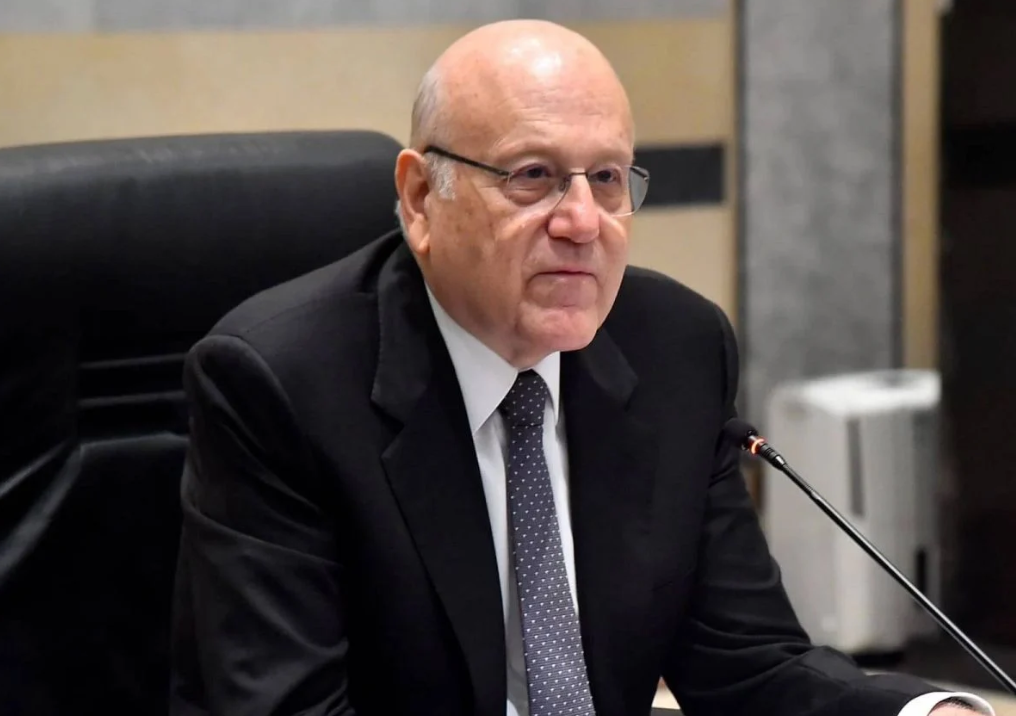
Najib Mikati, during a Cabinet meeting on March 19, 2024, when he was serving, at the time, as caretaker prime minister. (Credit: Press office of former prime minister)






The French National Financial Prosecutor's Office (NFP) in Paris has launched a preliminary investigation against former Prime Minister Najib Mikati based on a complaint filed by anti-corruption organizations, sources close to the case revealed to L'Orient-Le Jour.
The complaint was filed in April 2024 by French NGO Sherpa and The Collective of Victims of Fraudulent and Criminal Practices in Lebanon (CVFCPL), a group of depositors organized against the illegal withholding of their assets following the 2019 economic crisis.
It accuses Mikati, his brother Taha and several other family members of money laundering, concealment and "organized criminal conspiracy."
Mikati, who was caretaker prime minister at the time, defended himself, stating: "The origin of my family fortune is entirely transparent and legitimate," insisting that he has "always acted in strict compliance with the law."
A year later, the two plaintiffs submitted additional information to the prosecutor, going into further detail on the allegedly fraudulent means the Mikati family used to acquire assets in France and abroad, sometimes with the help of intermediaries, potentially constituting offenses that could warrant prosecution in France.
The evidence presented was ultimately deemed "sufficient to pass the threshold of presumption and justify opening an investigation for extremely serious offenses, particularly concerning money laundering," said Sherpa lawyer and founder William Bourdon in a brief interview with L'Orient-Le Jour.
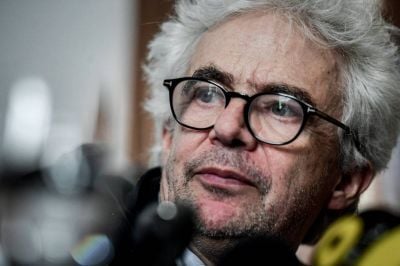
Among the assets cited by the plaintiffs are real estate holdings in France — notably Paris and Côte d’Azur — as well as in Monaco and Saint-Jean-Cap-Ferrat, under the names of Mikati and relatives.
There is also an investment in fashion house Façonnable; two yachts valued at $100 million and $125 million, attributed to Najib and Taha Mikati, respectively, and two private jets.
Stakes at Bank Audi
Sources close to the CVFCPL detailed several cases with L'Orient-Le Jour that they say could point to illicit enrichment.
One of the main cases raised by the plaintiffs against their brothers in their 2010 purchase of Bank Audi's shares. To finance their purchase of about 11 percent of the bank's capital (which later grew to 14 percent), the two billionaires received $300 million in loans from the bank itself.
"The commercial code prohibits acquiring more than five percent of a company's capital with loans granted or guaranteed by the company itself," one Lebanese legal expert who has followed the case says.
"The Money and Credit Code [MCC] strictly regulates loans to shareholders and prohibits pledging shares bought on credit," another legal source notes, adding that a Banque du Liban (BDL) circular bans banks from granting loans to buy their own shares.
However, the 2010 operation reportedly received special treatment from BDL, which was then led by ex-governor Riad Salameh. BDL did not consolidate the two brothers' stakes into a single entity, treating them instead as two separate entities, which could have allowed them to circumvent regulatory caps and ratios.
A banking source involved in the Mikatis' process of buying shares claims the process "was carried out in accordance with existing rules and laws," and that BDL "supervised the entire process in accordance with the MCC."
"This is an old case, already thoroughly covered by local media, and it was established there was no suspicion attached to it," the source said.
Before retiring, Mount Lebanon public prosecutor Ghada Aoun had sought to reopen the case and requested legal action in Lebanon against Salameh and the Mikati brothers regarding the Bank Audi deal.

Misconduct in public office?
The plaintiffs also brought into question certain events linked to the Mikati family's wealth, petitioning the courts to examine what they claim are irregular cases of granted privileges and abuse of office, particularly Mikati's numerous ministerial and political appointments.
In 1994, when Lebanon was under Syrian occupation, Najib and Taha Mikati were both known to be close to the Syrian regime at the time of Hafez al-Assad's regime. Telecom companies LibanCell and Cellis, in which the Mikati brothers were shareholders, were granted 10-year BOT (build-operate-transfer) contracts, giving the two operators a monopoly on the market.
In 1999, both companies were accused of underreporting their revenue and depriving the treasury of hundreds of millions of dollars in missed taxes. The government imposed a cumulative fine of $600 million, which the companies disputed.
Following intervention by the then president and prime minister, Emile Lahoud and Rafik Hariri, an agreement was reached for the fines to be submitted to international arbitration. The Lebanese government was to pay over $100 million in compensation.
Similar suspicions surround another Mikati company, Investcom, which won in 2001 a lucrative license to operate a wireless network in Syria, just after Bashar al-Assad came to power.
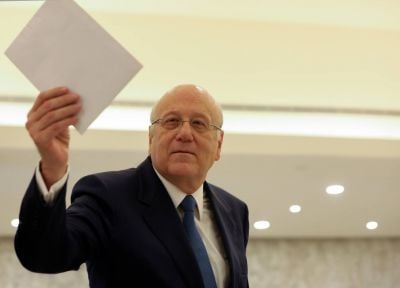
As part of investigations involving other figures, the Liechtenstein courts requested judicial cooperation from Lebanon in June 2022 in a money laundering investigation into Salameh. It cited a January 2016 agreement between a Salameh-owned Swiss company and another linked to Mikati.
Under this deal, Taha Mikati had transferred $14 million in August 2016 to a company registered in Liechtenstein with a Swiss account.
The plaintiffs also point to the use of shell companies, tax havens and investments in weakly regulated sectors or conflict countries as potential money-laundering mechanisms.
Mikati denied any wrongdoing after the 2016 Panama Papers and the Pandora Papers revealed the use of a Panama-based investment entity to purchase property in Monaco.
L'Orient-Le Jour was unable to contact Mikati, but a close associate denounced the French court's investigation as a campaign against the former prime minister. "It's a smear and disinformation operation," the associate said, threatening legal action in Lebanon and abroad against those behind what he considers a "malicious campaign."
He insisted: "Neither the family nor the family group has ever been convicted of any offense, in Lebanon or elsewhere, which attests to their respect for the law and high ethical standards."

In February 2022, Beirut’s chief investigative judge, Charbel Abou Samra, ruled to dismiss the so-called "subsidized loans" case involving BDL, in which Aoun had brought actions against Mikati, Taha and his son Maher Mikati.
The judge found the facts time-barred, a decision contested by several groups, including Legal Agenda. In August 2023, the Monaco court also abandoned proceedings for "illicit enrichment" and "money laundering" due to what it said was a lack of sufficient evidence.
“Faced with attempts by system insiders to undermine the process initiated by courageous public officials, this decision brings new hope to the Lebanese people,” said Bourdon.
“It is unquestionably a strong signal," a CVFCPL source added, "especially since this is exactly how Riad Salameh's downfall began: first with the NFP complaint in 2021, then the expansion of investigations to the European and international levels, and finally the Interpol red notice."
 7 p.m. recap: Flames, smoke reported near Aramco site near Riyadh; Houthis accuse Saudi Arabia of 56 strikes on Sanaa