






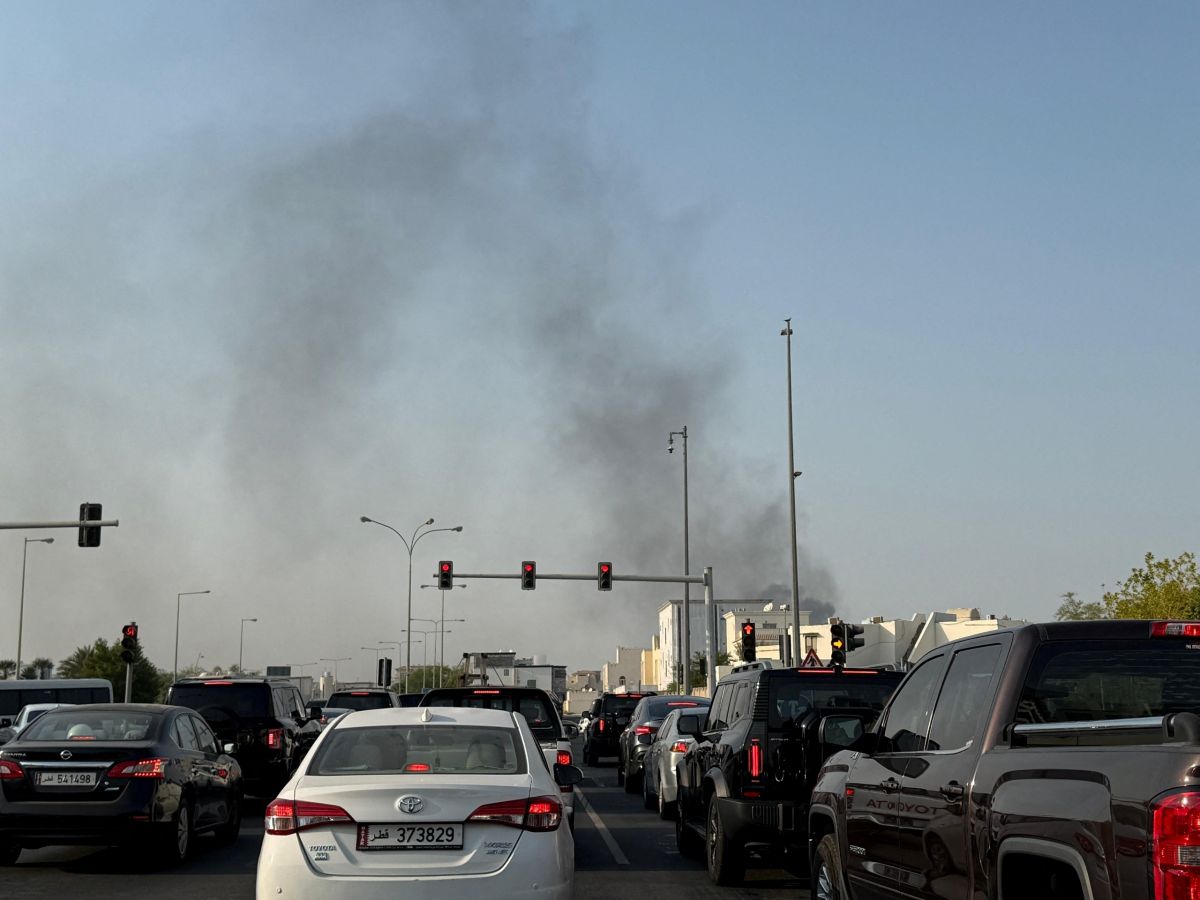
Smoke rises after several blasts were heard in Doha. (Credit: Reuters)






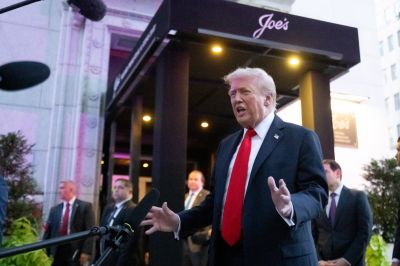
Reacting on Tuesday evening to the Israeli attack on Doha, which had targeted Hamas officials in Qatar earlier that morning, U.S. President Donald Trump spoke by phone with Emir Sheikh Tamim al-Thani and Israeli Prime Minister Benjamin Netanyahu.
The White House, through its spokesperson, said that the operation "does not serve the objectives of Israel nor America" and left "a very bad impression" on the U.S. chief executive.
Iran was the first to respond, just hours after the explosions were heard in Doha. The Foreign Ministry spokesperson called the Israeli attack against Hamas officials in Qatar "dangerous" and a "violation of international law."
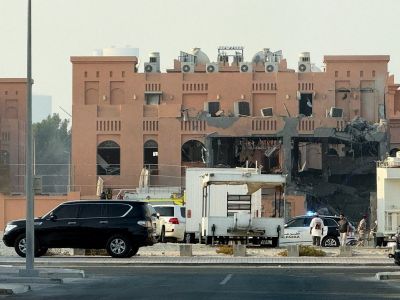
Gulf neighbors quickly followed suit, with Saudi Arabia firmly condemning Israel's "brutal attack" and warning of the "dramatic consequences" if Tel Aviv continues its "criminal violations," according to the Foreign Ministry.
Saudi Crown Prince Mohammad bin Salman spoke with the emir of Qatar and reaffirmed his support for the emirate, expressing readiness to mobilize all resources to help Qatar after the attack, as reported by the official Saudi agency.
Leading the normalization efforts with Israel, the United Arab Emirates stated it "stands with Qatar" and condemned the "treacherous" Israeli attack, according to the president's diplomatic adviser.
Qatar's ally, Turkey, stated that the Israeli attack in Doha demonstrated that Israel "has adopted expansionism and terrorism as state policy."
Palestinian President Mahmoud Abbas also called the attack a "blatant violation of international law" and an escalation that threatens "regional stability," according to a statement from the presidency carried by the official Palestinian news agency WAFA.
Islamic Jihad and Hezbollah both condemned what they called an "outright criminal act" and a "cowardly aggression."
Lebanon's responses
President Joseph Aoun and Prime Minister Nawaf Salam both posted messages condemning the Israeli strikes on Doha almost simultaneously on the X platform. Both leaders denounced the "aggression" and expressed their support for "the brotherly state of Qatar." Parliament Speaker Nabih Berri stressed the need to "halt Israeli aggression and its terrorism beyond the borders of Palestine."
The Israeli attack "is part of the series of Israeli assaults, demonstrating its intent to sabotage all efforts to establish stability and security in the countries of the region, as well as the safety of their people," wrote the head of state. Later in the evening, Aoun contacted Qatar's emir, Sheikh Tamim bin Hamad al-Thani, according to the Lebanese presidency on X.
He emphasized that "Lebanon, a daily victim of condemnable Israeli aggression, stands with the state of Qatar and its brotherly people." He also stated that this attack "was not only targeting Hamas leaders and civilians in Doha, but also Qatar's efforts to bring peace and security to the Gaza Strip and end the daily massacres committed by Israel against the Palestinian people."
In this context, he called for "a unified Arab and international mobilization to prevent Israel from continuing to undermine the security and stability of countries in the region."
Salam also "strongly condemned the Israeli aggression targeting the brotherly state of Qatar," calling on "the international community to shoulder its responsibilities to put an end to the repeated Israeli aggressions threatening the security and stability of the entire region."
Western countries' responses
U.N. Secretary-General Antonio Guterres also condemned the "blatant violation" of Qatar's territorial sovereignty, describing it as "a country playing a positive role in achieving a cease-fire [in Gaza] and the release of hostages," he told the press. "All parties must work to enable a permanent cease-fire, not destroy it," he added.
American Pope Leo XIV also responded quickly: "There is some really serious news right now," he said, referring to the Israeli strikes on Doha. He then expressed, visibly worried, "We don't know how things will evolve. This is really serious."
Among Western nations, the first to respond was French President Emmanuel Macron, who is leading efforts to recognize the Palestinian state and is at odds with Israeli Prime Minister Benjamin Netanyahu. Macron stated that the strikes were "unacceptable for any reason." "The war must not under any circumstances spread in the region," he posted on the X network, expressing his "solidarity with Qatar and its emir, Sheikh Tamim al-Thani."
British Prime Minister Keir Starmer also condemned the attacks, saying they could "intensify escalation across the region." These strikes "violate Qatar's sovereignty," Starmer added on his X account, renewing his call for an "immediate cease-fire, the release of hostages and a massive inflow of aid to Gaza."
This article was translated from L'Orient-Le Jour.

