












Driving is the daily referendum we don’t realize we’re holding. It shows how we deal with rules, time, frustration and strangers. Do we yield, or barrel through? Do we treat the person in front of us as a human being or as a slow-moving traffic cone?
In the hierarchy of national priorities, road safety barely makes the list. Yet in 2024 alone, 443 people were killed in driving accidents. Some lives are taken instantly; others are permanently rerouted. In a country where many of us were taught how to drive by a drunk uncle after Sunday lunch, the bar for safety was set low from the start: somewhere between “use the handbrake” and “N’Allah rad” (God willing).
This is about more than cars and collisions. It’s about whether we’re capable of actively living together without maiming each other in the process. The habits that kill on the road are the same ones that corrode elsewhere: culture, education, civic behavior. It’s the everyday training ground where we practice (or don’t) the radical act of coexisting.
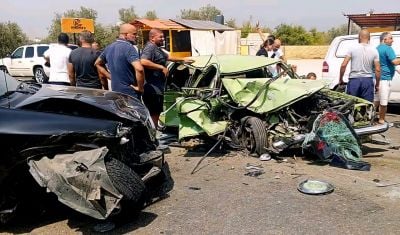
Yes, our streets are terrible. Pottholes, missing signs and chaotic intersections are all real problems that need attention and investment. But they are not the only reasons accidents happen. Infrastructure exposes our habits; it does not define them.
If we were to follow the present momentum of reform and rebuilding, we’d have to start by asking what kind of tracks it’s running on. The grandest blueprints crumble if the ground beneath them is quicksand. Real change needs small habits to hold up. And that responsibility doesn’t sit with “someone else,” it sits with us, in the lane we choose, the light we respect, the pedestrian we let cross, the life we spare. Reform as vision is one thing; reform in traffic, schools, offices and homes is where it’s truly put to the test.
And while the fix isn’t a new law, enforcing the ones already on the books is a crucial part of it. Change begins with each of us, but without the enforcement of the law, without officers on the streets or consequences for violations, it remains hollow. Right now, those enforcers are absent, and laws exist only on paper.
So we’re looking squarely at the streets, not because potholes outrank politics, but because the street is where citizenship is tested in its rawest form. In this series, you’ll find grief and grit, street-level accounts, a cheeky guide to the rules that matter and a motorcycle special, because here two wheels often ride closer to tragedy than to freedom.