






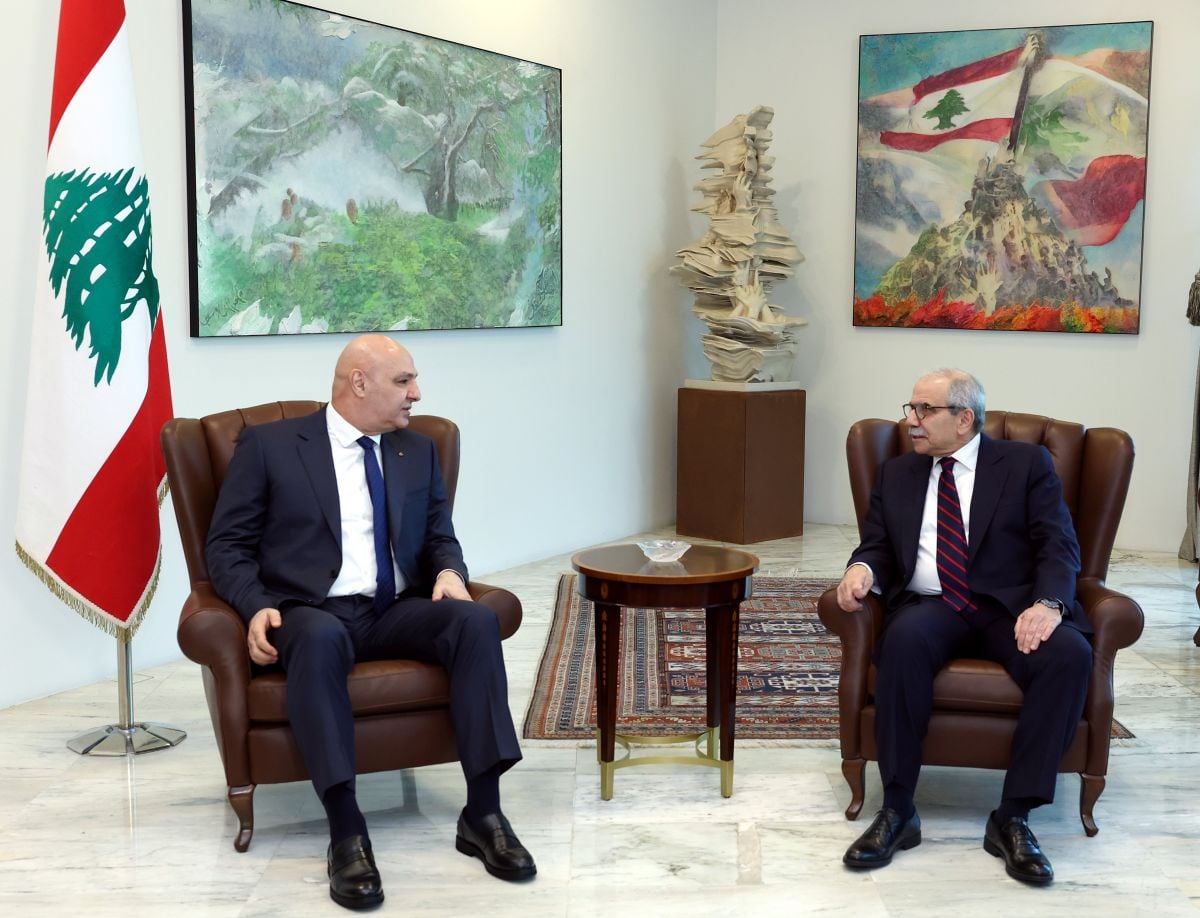
President, Joseph Aoun (left), receiving Prime Minister Nawaf Salam in Baabda on Sept. 1, 2025. (Credit: X/LBPresidency.)






BEIRUT — Lebanese President Joseph Aoun received Prime Minister Nawaf Salam on Monday morning at the Baabda Presidential Palace at the start of a crucial week for talks on Hezbollah's disarmament.
The government is set to examine, during a Cabinet meeting on Friday at 3 p.m., a plan prepared by the army aimed at restoring the state's monopoly on weapons, which would mean disarming Hezbollah as well as all other militias and Palestinian camps.
According to the presidential press office, Aoun and Salam discussed the “results of Salam's visit to Cairo last week,” where he met with President Abdel Fattah al-Sissi. The two also discussed the “preparations” for Friday’s Cabinet meeting and “the situation in the country.”
On Aug. 5, the government tasked the army with preparing this disarmament plan, before approving two days later the U.S. cease-fire roadmap, known as the "Barrack Plan." This document also covers the issue of weapons monopoly, among other recovery measures, in exchange for an end to Israeli attacks against Lebanon and Israel’s withdrawal from still-occupied territories in the South.
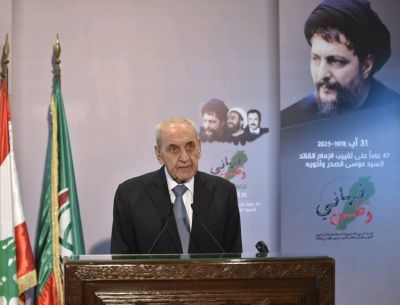
Hezbollah is opposed to any disarmament and calls for “dialogue,” as does its ally, Amal Movement leader and Parliament Speaker Nabih Berri. On Sunday, Berri launched a new "initiative" to discuss the issue of Hezbollah’s arsenal. After his statements, a few hundred supporters paraded on motorcycles around Beirut's southern suburbs, holding the party's flag.
Messages from Sisi
The issue of the state’s monopoly on weapons was at the center of several meetings held by the head of state in Baabda on Monday. Ahead of talks with French Ambassador Herve Magro — who confirmed that former minister Jean-Yves Le Drian will travel to Beirut in the coming days — Aoun also met with Egyptian Ambassador Alaa Moussa.
The ambassador conveyed his country’s “efforts to help the Lebanese administration achieve the goal we all share: Lebanon’s stability and the complete withdrawal of Israel from its territory.” He stressed that restoring the state’s monopoly on arms was “non-negotiable,” while the method of doing so was “an internal Lebanese matter.”
Moussa added that “the coming weeks should bring good news regarding the transfer of Egyptian expertise and support for Lebanon’s energy sector,” citing decisions made during Salam’s recent visit to Cairo.
“With God’s will, these preparations will materialize by the first week of November, during the meeting of the high joint commission, so that these initiatives can be translated into agreements beneficial to both countries,” he said, without offering further details.
A gas producer, Egypt was at one point involved in a U.S.-backed initiative to supply Lebanon’s power plants with fuel in the early years of the crisis that erupted in 2019. The plan, however, never materialized due to Washington’s reluctance to lift sanctions on the Assad regime — before its fall — to allow gas transit through Syria.
The ambassador also handed Aoun a written message from Egyptian President Abdel Fattah al-Sisi addressing the general situation and Lebanese-Egyptian relations, along with an invitation to attend the inauguration ceremony of the Grand Egyptian Museum, scheduled for Saturday, Nov.1.

 8 p.m. recap: Israel again threatens Beirut’s south suburbs; 2 ships hit near Hormuz; Riyadh football matches canceled