






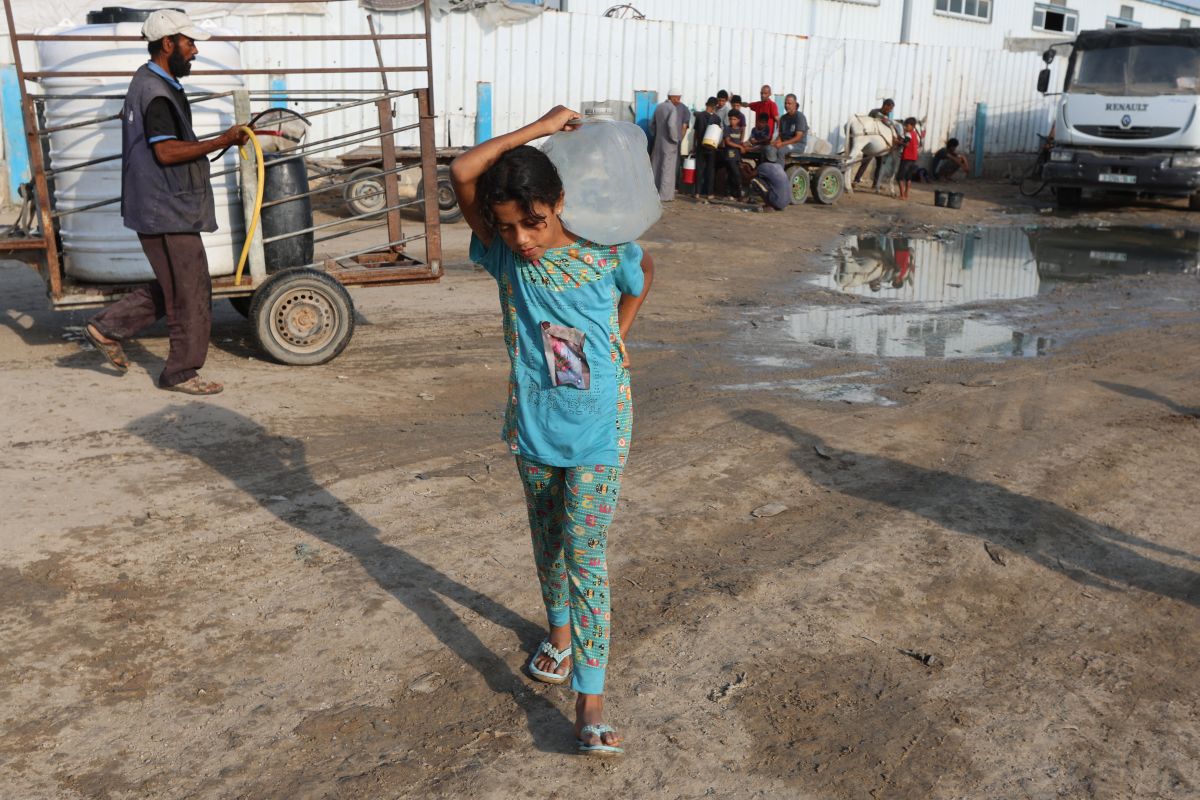
A Palestinian girl carries a water container during a severe shortage, at a distribution point in Deir al-Balah, in the central Gaza Strip, on Aug.5, 2025. (Credit: Ramadan Abed/Reuters.)






BEIRUT — "Aid that causes bloodshed" and "repeated mass displacements" are creating a catastrophic humanitarian crisis in Gaza, denounced the Danish NGO Danish Refugee Council (DRC), in a press release on Tuesday.
Based on a new survey conducted among Palestinians living in Gaza, the DRC stated that the population, "exhausted by extreme famine and multiple displacements, is systematically denied access to humanitarian aid."
The interviews conducted by the DRC among Gazans between May 22 and July 27, 2025, in 25 displacement sites — in Deir al-Balah, Khan Younis, Gaza City, and northern Gaza — exposed the deadly consequences of the humanitarian aid distribution program backed by the U.S. and Israel.
The 39 people interviewed, 22 women and 17 men, had been displaced an average of nine times since the start of the war in October 2023, the statement specifies. "No fewer than 70 perecnt of respondents cited extreme weakness caused by famine as a barrier to accessing aid," the NGO wrote. "Physical exhaustion is so severe that many are unable to walk the long distance to distribution sites or to carry heavy loads," the statement reads.
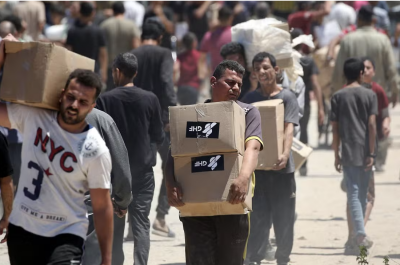
The DRC denounced in this context the "aid that causes bloodshed," without naming the Gaza Humanitarian Foundation (GHF), supported by the U.S. and Israel, who is conducting these distributions.
"Palestinians trying to access the distribution program (...) reported having witnessed people, including family members, being deliberately targeted, shot at, and killed by soldiers," the release reports. At least 1,373 Palestinians have been killed since the implementation of a new aid distribution system by the GHF on May 27, most by Israeli gunfire, "while searching for food," the UN accused last week.
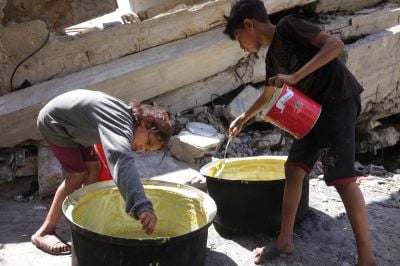
The DRC survey also reveals the inadequacy or even the absence of basic services at displaced persons' reception sites: "Forty-six percent reported receiving drinking water twice a week at their current shelter, and 28 percent said they could only get a hot meal in a communal kitchen once a week. Additionally, 31 percent [12 people] said they had received no services in the month before the interview." An AFP report revealed Monday that more than 80% of Gaza's water-related infrastructure has been damaged by the war, and residents of the occupied Strip can now rely only on erratic supplies.
The DRC also analyzes the catastrophic consequences for the mental health of Palestinians in Gaza, "33 percent describing constant fear, 31 percent depression, percent insomnia and nightmares, and 26 perecnt anxiety [and] in 13 percent of cases, respondents described feelings of despair and suicidal thoughts."
A man interviewed by the DRC in Khan Younis on July 12 said: "I can't stop thinking about what I've seen: tanks in the streets, people running, tents on fire, children screaming. It's etched in my mind. I keep reliving those images. Even now, I jump at every loud noise."
The worsening famine observed in recent weeks in the Palestinian enclave has pushed the total number of Palestinians who have died due to malnutrition to 175 people, including 93 children, as of Aug. 4, 2025. Furthermore, the collapse of Gaza's hospital system has led to the deaths of several thousand people, for lack of treatment for their conditions.
The al-Aqsa Flood operation, launched against Israel by Hamas on Oct. 7, 2023, resulted in the death of 1,219 people on the Israeli side, mostly civilians, according to an AFP tally based on official data.
Since then, Israeli reprisals have killed over 60,000 in Gaza, mostly civilians, according to figures from the Hamas Health Ministry, which the U.N. considers reliable.
