






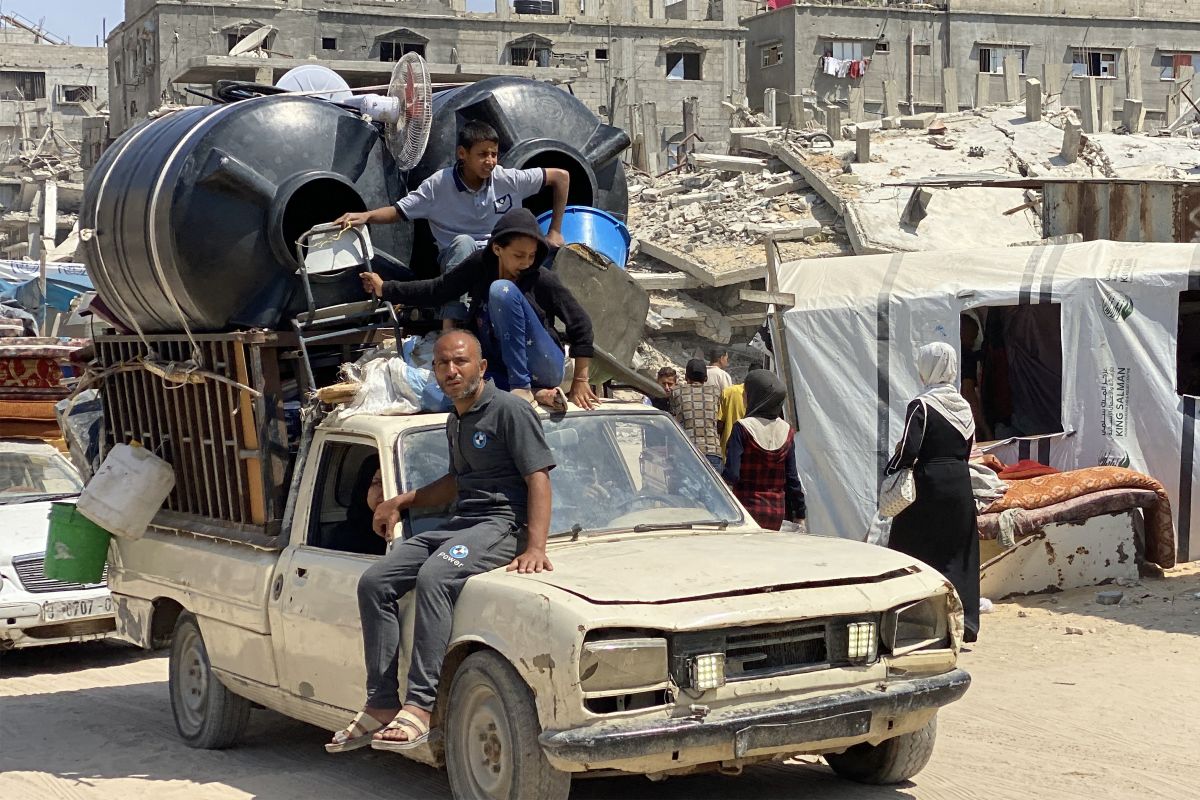
Boys are sitting with large water tanks, a fan, and other furniture in a moving vehicle. Displaced persons are fleeing Khan Younis to the west and al-Mawassi in the south of the Gaza Strip on June 3, 2025, after the Israeli army issued an evacuation order the previous day. (Credit: AFP)






In Gaza, the taps have gone dry. As the war grinds into its 21st month, over two million residents face a manufactured water catastrophe — not entirely driven by this year’s record-breaking heat wave drought or climate, but by deliberate obstruction, destruction and blockade. Declared a "man-made drought" by UNICEF on June 20, the crisis now endangers lives through dehydration, disease and long-term environmental collapse.Immediate drinking water emergencyDespite a recent minor easing of the blockade, fuel is still not allowed into Gaza — only limited food supplies enter through the GHF. This has left the vast majority of water systems, such as desalination plants, wastewater treatment facilities and water trucking operations, which all depend on electricity and diesel, largely offline. Other scarcities in war-torn Gaza Fuel...
In Gaza, the taps have gone dry. As the war grinds into its 21st month, over two million residents face a manufactured water catastrophe — not entirely driven by this year’s record-breaking heat wave drought or climate, but by deliberate obstruction, destruction and blockade. Declared a "man-made drought" by UNICEF on June 20, the crisis now endangers lives through dehydration, disease and long-term environmental collapse.Immediate drinking water emergencyDespite a recent minor easing of the blockade, fuel is still not allowed into Gaza — only limited food supplies enter through the GHF. This has left the vast majority of water systems, such as desalination plants, wastewater treatment facilities and water trucking operations, which all depend on electricity and diesel, largely offline. Other scarcities in war-torn...

Excellent article. Very informative
11 July 2025 09:56