






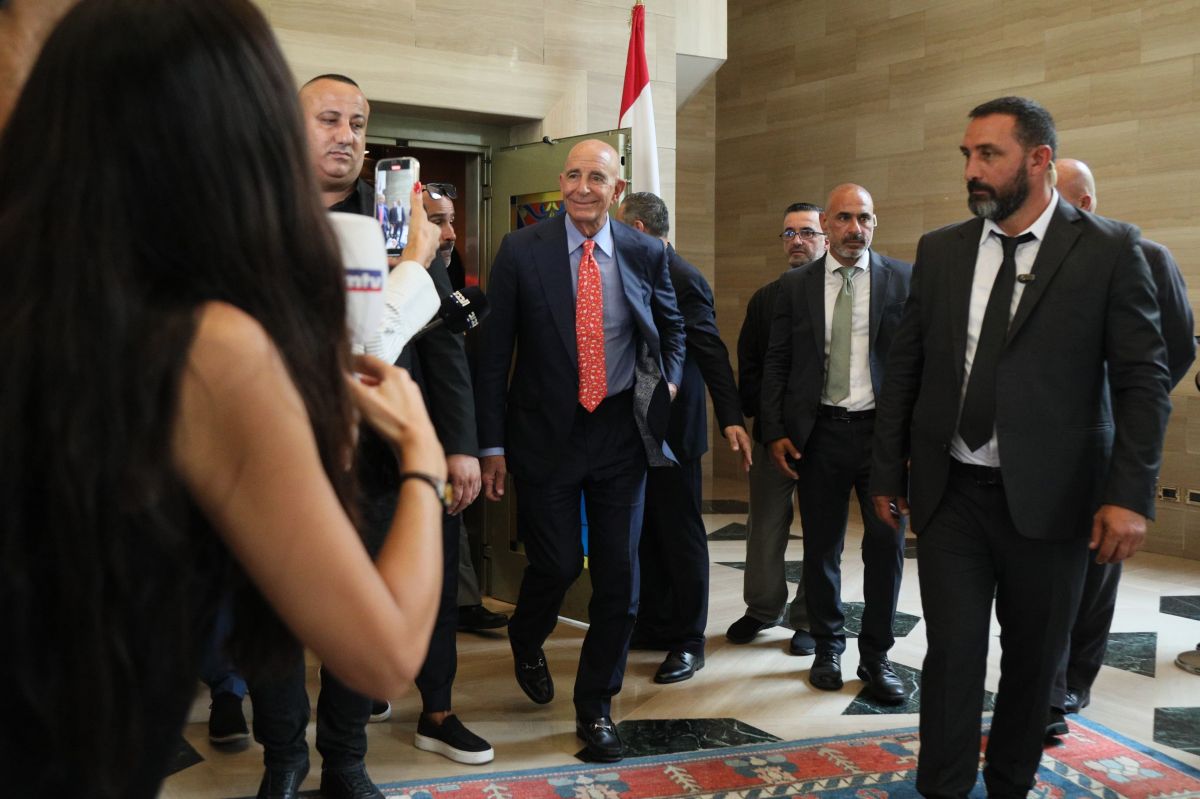
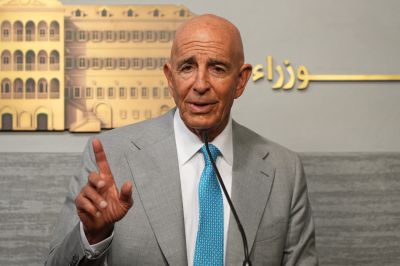
The American envoy Tom Barrack, upon his arrival in Ain al-Tineh on July 22, 2025. (Credit: Mohammad Yassin/L’Orient-Le Jour)






The results of American envoy Tom Barrack’s visit to Beirut were unclear, with many contradictory leaks dominating the scene, swinging between a positive outlook and negative reports on the ground.
On the first day of his stay, Barrack declared that no one could force Israel to do anything, that there were no guarantees and that the Lebanese state must take charge of the Hezbollah weapons issue to ensure a monopoly.
The next day, after an hour-and-a-half meeting with Parliament Speaker Nabih Berri, he stated that "the problem does not lie with the guarantees," alluding to a positive atmosphere that, at least in form, contrasted with the previous day’s mood. "The meeting with the parliament speaker was excellent and constructive; we are actively working towards stability, and you must keep hope," he said. "We will achieve stability."
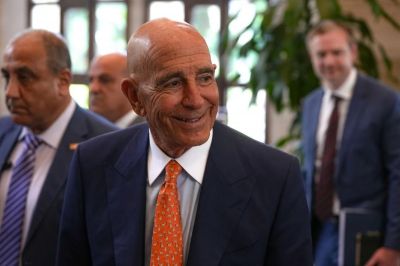
At the same time, he reminded everyone that "we don’t have much time left," emphasizing the importance of accelerating the handling of pending files to achieve concrete results. Upon arriving at Ain al-Tineh, he said, "I am optimistic about my visit ... The United States will not give up on Lebanon."
According to information from a source closely following the case, Berri reiterated to the American envoy that Lebanon is committed to respecting the cease-fire agreement and ensuring an arms monopoly in the state's hands, while stressing that the Lebanese should be given some leeway to work towards this objective.
He also insisted on the importance of concrete gestures from Israel, including the cessation of its strikes and aggression, so that the Lebanese government and state can effectively work on disarmament.
A source close to Ain al-Tineh said Berri is optimistic and there is "an opportunity to seize and an open window" to continue working, especially to cement the cease-fire and avoid escalation.
Internal reactions to visit
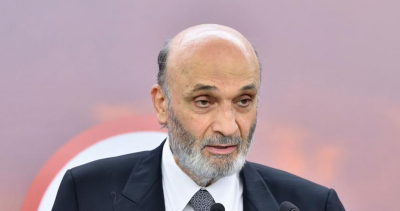
Lebanon's response to Barrack 'matches Hezbollah's demands,' says Geagea
The source explained that the parliament speaker voiced all Lebanese concerns and that his position "is in complete alignment with that of the Lebanese state."
In principle, Barrack is expected to leave Beirut on Wednesday to head to Tel Aviv, where he will discuss his roadmap with Israeli officials. "We must wait for the results of his contacts there," said the source close to Berri.
Divergences
In short, Barrack’s trajectory is clear: to achieve an arms monopoly by the Lebanese state and to move into a phase of concrete implementation, whatever the details.
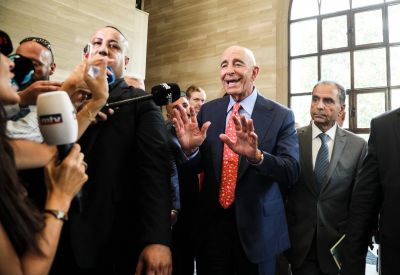
By contrast, Lebanon appears to be beset with contradictions, sometimes conveying a positive mood, and at other times emphasizing the difficulties. The positive aspects include ongoing negotiations with the Americans, Lebanon’s commitment to achieving the arms monopoly and the enforcement of the cease-fire agreement.
The negative aspects emerge as soon as detailed discussions and implementation mechanisms are broached. Washington is demanding a precise timetable and a clear, public stance on the withdrawal of weapons, as well as the methods for carrying this out.
One of the main issues is Lebanon’s refusal to sign a new agreement, while Barrack believes that the November 2024 agreement has failed. Hezbollah — which continues to refuse to hand over its weapons or set a timetable for doing so — remains the most unequivocal in rejecting a new agreement, insisting on the need to pressure Israel into implementing the one already reached.
In summary, all debates about the American document and the Lebanese response have become secondary to the implementation mechanisms.
This is where differences emerge: Lebanon is demanding that Israel cease its violations, attacks and assassinations so it can address Hezbollah and persuade it to accept a timetable for surrendering its weapons. However, the idea that Israel should take the first step for Lebanon to start this process does not seem to have succeeded.
The focus now is on a comprehensive agreement that involves weapons withdrawal and dismantling military positions in exchange for a halt to Israeli strikes, followed by pressure for Israel to withdraw — a formula that Hezbollah has yet to approve.
What is remarkable about Barrack’s visit is that he intentionally expanded the scope of his political meetings, including religious leaders, politicians, ministers, members of parliament and representatives of parliamentary blocs.
He aimed to present his proposals to all stakeholders and remind them of their responsibilities: to pressure Hezbollah, the government and the presidency to establish a state monopoly on arms.
This dynamic quickly prompted responses from Lebanese Forces leader Samir Geagea and other members of parliament, calling for an official cabinet decision supporting this monopoly.
In practical terms, Barrack’s broad meetings recall those of last year’s American envoy Amos Hochstein, who warned Lebanese officials that, without a cease-fire and a withdrawal of Hezbollah from its Gaza support front, Israel would launch a large-scale war. Everyone knows what happened next.
This article was translated from L'Orient-Le Jour.
