


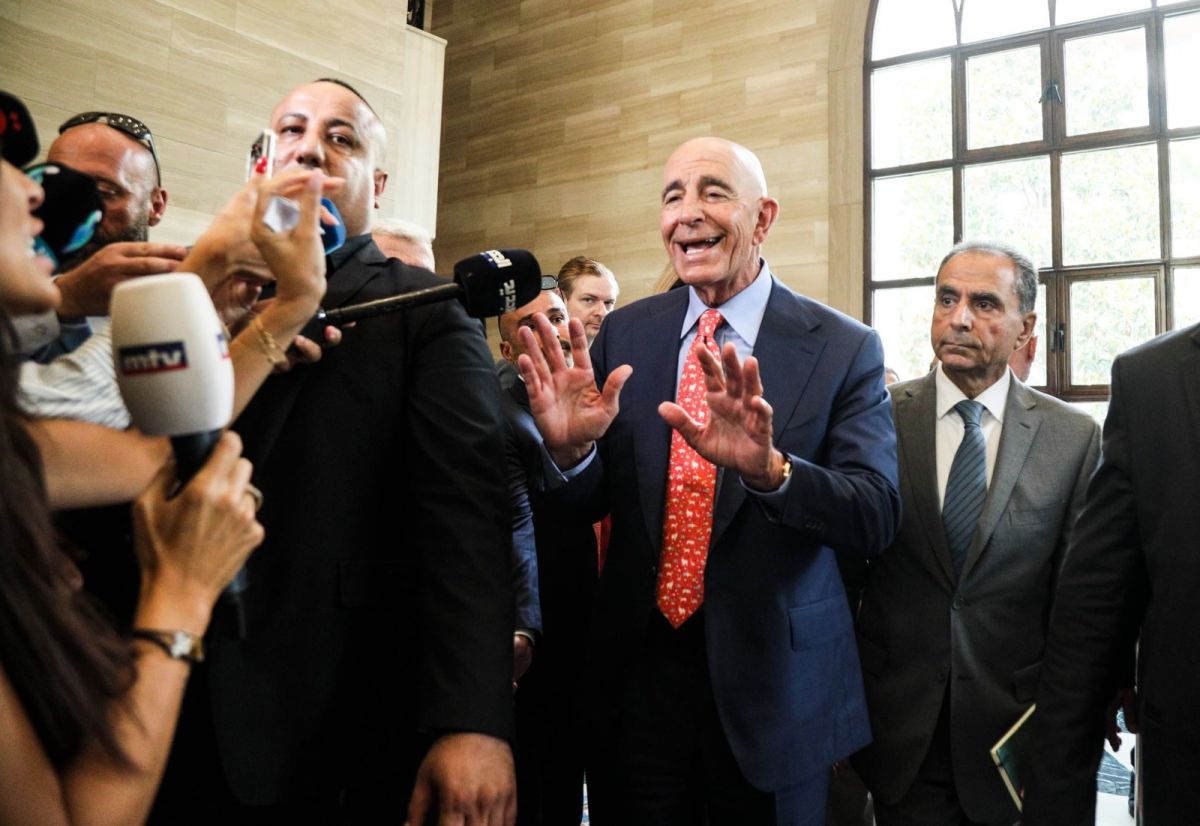
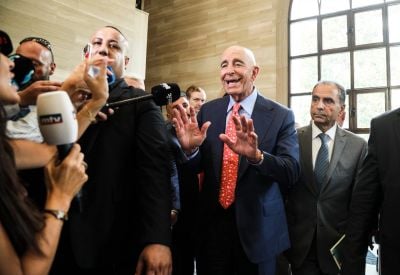
The American envoy Tom Barrack traveled to Ain el-Tineh on Tuesday, July 22, 2025, as part of his third visit to Lebanon in a few weeks. Photo Mohammad Yassine/L'Orient-Le Jour






BEIRUT — On the third day of his third visit to Lebanon in just a few weeks, U.S. envoy Tom Barrack met Parliament Speaker Nabih Berri on Tuesday at Ain al-Tineh to discuss the Lebanese state’s monopoly on arms and the disarmament of Hezbollah. On Monday evening, he reiterated Washington’s stance on the issue in an interview with public broadcaster Télé Liban.
According to press reports, Berri was expected to present a proposal calling for Israel to first suspend its attacks on Lebanon for 15 days, after which Beirut would begin a disarmament process.
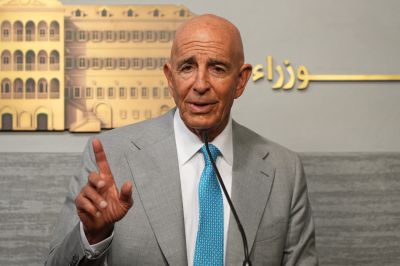
Earlier Tuesday, Barrack also met Finance Minister Yassine Jaber and Banque du Liban (BDL, central bank) Governor Karim Souhaid, according to local broadcaster MTV.
During his Télé Liban interview, the envoy stressed that the ongoing negotiations were launched "on behalf of Lebanon" and not Hezbollah, adding that the statements that the party makes are its own.
His comments referenced remarks made over the weekend by Hezbollah Secretary-General Naim Qassem, who declared the party would not relinquish its "strength" and remained ready to confront Israel. Barrack told Télé Liban, "We will use ... our influence outside at some point to convince the Israelis that we have a plan, a canvas, tapestry that is meaningful for everybody to bring peace and then ultimately prosperity."
On the sidelines of Barrack’s meeting with Berri, President Joseph Aoun warned that “"the current phase is delicate and sensitive and requires unified positions that preserve the unity of Lebanon, its territory and people, and protect its sovereignty and independence." He made the comments at Baabda Presidential Palace during a meeting with Pastor Joseph Kassab, the spiritual leader of the Evangelical community in Lebanon and Syria, according to the presidency’s account on X. Aoun added that Lebanon was maintaining contacts to shield the country from the repercussions of regional turmoil.
Separately, Agriculture Minister Nizar Hani told Sawt Kel Lebnan (Voice of All Lebanon) radio that Lebanon’s final response to the U.S. proposal for a lasting cease-fire would be presented to the Cabinet at its next meeting. He said there was no set timetable for restoring the state’s monopoly on arms but described cooperation with the U.S. envoy as positive, citing a clear plan for next steps with backing from the United States and Lebanon’s allies.

Displayed optimism
In his Télé Liban interview, Barrack largely reiterated points he made during previous visits.
Discussing the talks, he said: "They are along the same lines as we discussed before. It is on how the U.S. can help facilitate, at a very delicate time in the region — and a more delicate time in Lebanon — a cessation of hostility agreement that has substance and performance criteria that will allow us to move to the next step in where Lebanon needs to go. And my meetings with both the president and the prime minister were constructive, well thought, hopeful; and we’re gaining ground. We’re making progress."
Before meeting Nabih Berri, Barrack responded "yes" when a journalist asked, as he entered Ain al-Tineh, whether he was optimistic.
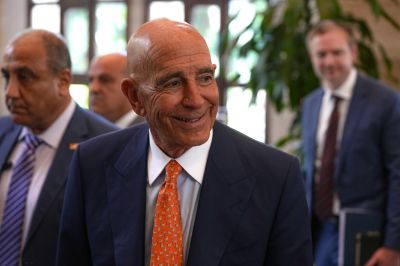
Asked about U.S. expectations, he replied: "Let me be clear, America has no demands. We came at a request to help, and our suggestions are just that … the path to try and find understanding amongst all these constituencies who have not found it."
Earlier in July, Barrack had told the New York Times that the cease-fire reached at the end of November between Israel and Hezbollah had been a "real failure."
The envoy also emphasized he had no direct contacts with Hezbollah as part of his efforts. He noted that Hezbollah remains a "problem" for Israel and said the party must be a "willing participant" in any solution aimed at "restoring trust" among the parties to the conflict.
"We are happy to negotiate on behalf of Lebanon, not on behalf of Hezbollah. Hezbollah and Lebanon — Hezbollah being a part of Lebanon — have to first come to their own conclusion. If that happens, count on us to back you, to support you, to take you to the next level with all the resources we have available to make it happen," Barrack said.
'What they are trying to accomplish is enormous'
Asked about Washington’s so-called "carrot-and-stick strategy" toward Hezbollah, Barrack said it was "logical in any negotiation" and noted that one of the biggest obstacles to an agreement was "mistrust on both sides."
"There’s mistrust on the Lebanese government side; there’s mistrust on the Hezbollah side; and the third counterpart is there’s mistrust on Israel’s side," he said.
Barrack stressed that the absence of a security agreement in the region was holding back Lebanon’s reform efforts. Still, he praised the progress made since Prime Minister Nawaf Salam’s government took office.
"It’s tremendous what they’re contemplating: the bank resolution, the ‘Gap Act’ — all coming to fruition — a new central bank governor who’s well respected … a potential Starlink transaction," Barrack said, while reiterating that restoring security was essential to consolidating these gains.
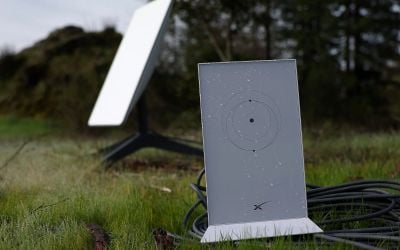
In April, Lebanon passed a law amending banking secrecy regulations to bring them broadly in line with international standards. A draft law setting a framework for bank resolution could soon be approved by Parliament, along with the appointment process for several regulatory authorities outlined in Lebanese legislation.
"For 50 years, if there was a dollar made in the Middle East, five cents were made in Lebanon; no more … because we don’t have security," the envoy noted. "Lebanon should be the economy and the touristic center of the Middle East."
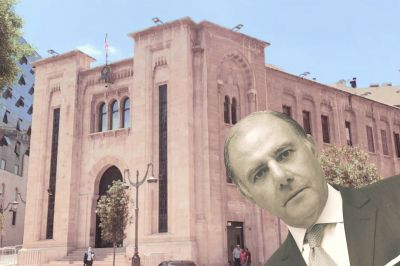
Army, UNIFIL and Syria
Barrack also stressed that the United States had set no conditions for continuing its support for the Lebanese Army.
"One of the things that we all need to do is to engineer a methodology to further support the Lebanese Army so that they have the resources to provide first-class military support for their people: to pay them the wages that are necessary, to have the necessary number of men and women on the ground; they have to be properly equipped; they have to be properly trained as a peacekeeping force — not as a military offensive force," he said.
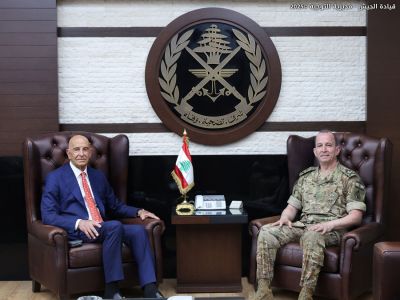
"And within that, then everybody can start relaxing. The Shiites and Hezbollah can then say, 'I have a sufficient force to protect me from the forces from which I’m concerned. I don’t need my own military force,'" he added.
On the renewal of the mandate for the United Nations Interim Force in Lebanon (UNIFIL), which the Security Council is set to address in August, Barrack said that discussions are "still in process, from many facets, trying to navigate to what is the right recommendation as to what we do with UNIFIL."
The envoy confirmed that the issue of demarcating the border between Lebanon and Syria had also been raised during his meetings with Lebanese officials. "This is an ongoing discussion that has been going on for about 40 years. And we’re not going to solve it in a week," he said, adding that he preferred to focus discussions on the "relationship" between the two countries rather than demarcation.
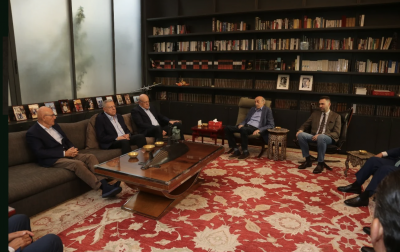
"Lebanon deserves to go back to the heritage that it had. The heritage is: the pearl in the middle of this necklace; in a region that always had it as leadership. And an environment that always welcomed Christians, Sunnis, Shiites, Druze, Jews. In a place, in a region, that in the next two or three years — with a little bit of luck — you can start to see unfolding into a regional power, with Lebanon at the center of this new cyclical relationship," the envoy concluded.
This article also appeared in French in L'Orient-Le Jour.

 7 p.m. recap: 1 person killed near border with Lebanon; 200 kilos of explosives carried by mules; Riyadh shuts its airspace