


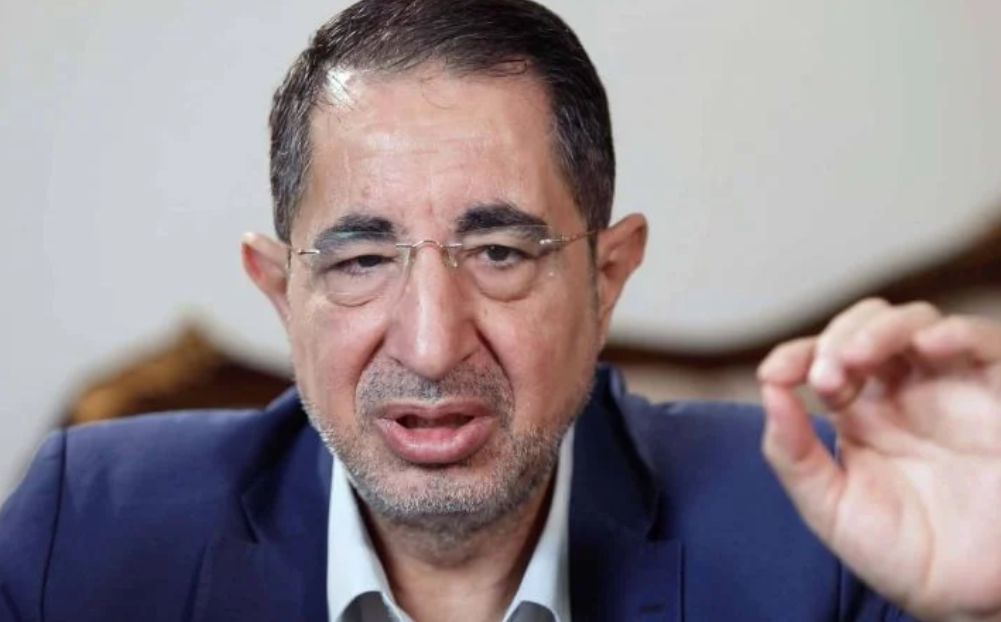
Hezbollah MP and former Industry Minister Hussein Hajj Hassan. (Screenshot: L'Orient-Le Jour)






Hussein Hajj Hassan, a Hezbollah MP and former minister, said Monday that his party was "ready for any discussion on Lebanese internal issues" with the aim of "defending Lebanon against Israeli and terrorist threats, as well as American attempts to destabilize the region."
This statement comes as U.S. envoy Tom Barrack is visiting Beirut for the second time in two weeks, at a time when the issue of the disarmament of the party is heightening political debate both in Lebanon and internationally. Hezbollah insists that the fate of its weapons is strictly a matter for internal dialogue, under the aegis of the president and as part of a national defense strategy, rejecting any timeline or commitment imposed from outside.
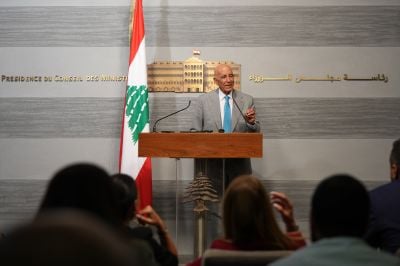
In a speech delivered in the village of Sariane (Bekaa), Hajj Hassan warned against what he called "American sabotage of regional dynamics," stating that this project required "responsible dialogue, if anyone is willing to listen to the disasters being plotted."
The U.S. envoy warned: "If Lebanon does not take action," referring to the possible persistence of Hezbollah's arms and a blockage of reforms, "the country will revert to Bilad al-Sham." This phrase, despite a subsequent correction, was widely perceived as a veiled threat of Lebanon returning to "Greater Syria."
'Lebanon has fully respected the agreement'
Returning to the cease-fire agreement that ended the war between Israel and Hezbollah last November, the MP emphasized that "Lebanon has fully respected the agreement, while the Zionist enemy has respected nothing."
Coming into force on Nov. 27 under the auspices of the U.S. and France, the agreement called for a full withdrawal of Israeli troops from southern Lebanon. However, the Israeli army still occupies five positions on Lebanese territory, regularly conducts ground incursions and carries out almost daily airstrikes. On the Lebanese side, the agreement called for the progressive disarmament of Hezbollah, starting with the area south of the Litani, then across the whole territory, in accordance with U.N. Resolution 1701 — a requirement the party flatly rejects. Israeli attacks on Lebanon over the past eight months have killed more than 270 people.
Hajj Hassan also denounced the attitude of "certain" Lebanese political forces, whom he accused of "undermining the official position" of Lebanon in the face of Israel. He called for "joint national action" to "strengthen the state's position, impose a halt to the aggression, and kickstart the reconstruction" of areas devastated by war.
The Hezbollah MP also singled out "certain Arab and Islamic capitals," claiming that "their internal conflicts have given the American and Israeli enemies sources of strength," condemning a "normalization [with Israel] tantamount to total submission to the American will on political, security, and economic levels."
10 days ago, President Joseph Aoun ruled out any normalization of ties with Israel, while declaring himself in favor of a peaceful situation with the neighboring country, which still occupies part of its territory. This was the first official Lebanese reaction to comments made by Israeli Foreign Minister Gideon Saar, who said on June 30 that Israel was "interested" in normalization with Syria and Lebanon.