


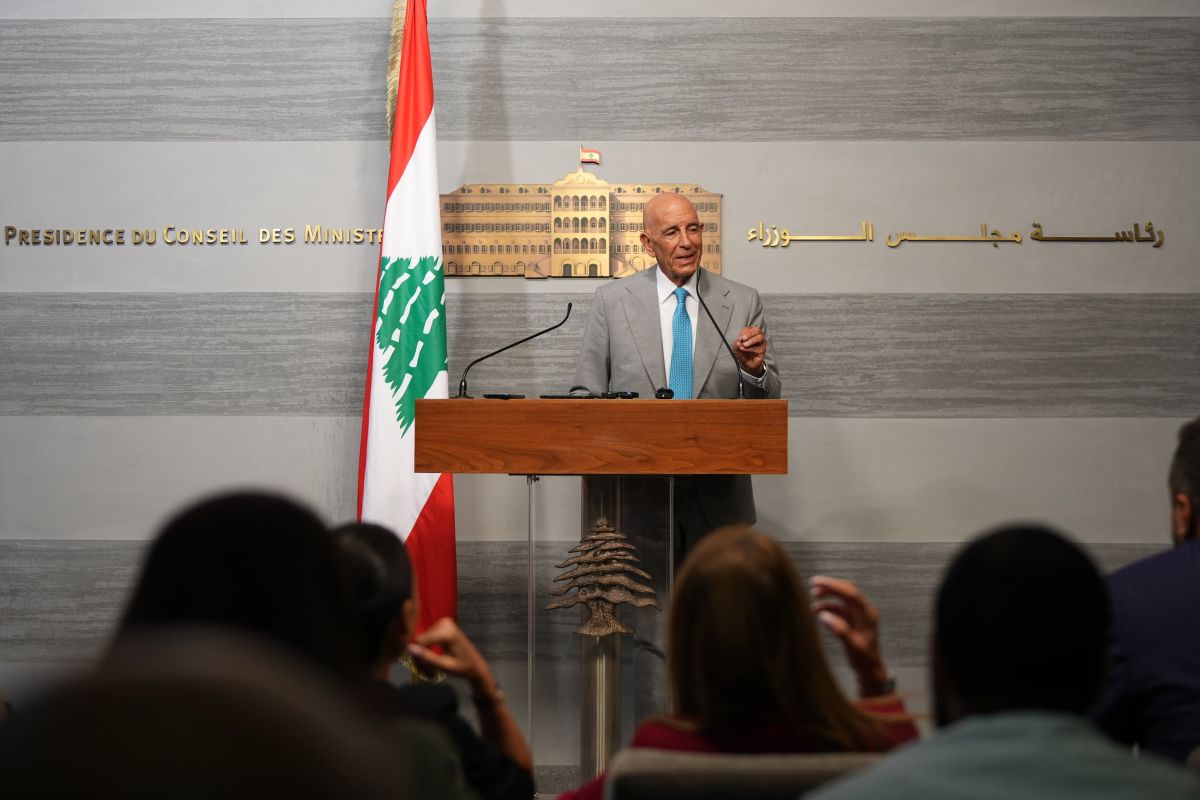
American envoy Tom Barrack during a press conference at the Grand Serail, on July 21, 2025. (Credit: Mohammad Yassin/L'Orient-Le Jour)






American envoy Tom Barrack stated Monday, following a meeting with Prime Minister Nawaf Salam, that Washington wants to ensure the return of stability to the region, which justified his return to Beirut for the second time in two weeks, but that it cannot "force Israel to do anything," admitting that the cease-fire agreement reached at the end of November to end the war between Hezbollah and Israel "has not succeeded."
This agreement, which came into effect on Nov. 27, was brokered by the U.S. and France. It called for a total withdrawal of Israeli troops from southern Lebanon, where they still occupy five positions on Lebanese territory, continue to conduct ground incursions and carry out almost daily airstrikes. On the Lebanese side, it was to lead to the disarmament of Hezbollah, primarily south of the Litani, then in the rest of the country, as stipulated by U.N. Resolution 1701, which served as the framework for the truce agreement — something the party rejects. Israeli attacks on Lebanon over the past eight months have killed more than 270 people.
No guarantees, no threats, no sanctions
Stating from the Grand Serail that the truce agreement "has not succeeded" and that the United States wants to "resolve" this situation, Barrack, himself of Lebanese origin, said he was present "because President Donald Trump attaches importance to the situation in Lebanon and to restoring stability in the region."
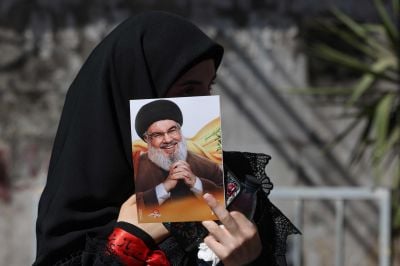
"We want to discuss with national actors, the government, to see how we can help," he said, adding he had not taken note of "comments" by Hezbollah regarding the roadmap proposed by Washington and reminding that, for the American administration, the party is "a terrorist organization."
"We are trying to help, to use our influence on all parties," he added, stating that disarming Hezbollah was "a Lebanese internal matter."
He further stressed that the United States was not there to "threaten" and has no intention of imposing new sanctions on Lebanese officials.
"Imposing sanctions is a complicated process, which is not currently being discussed," he stated. However, there are no "guarantees" made to Lebanon, he said in response to a question, stating that the United States "cannot force Israel to do anything."
"We are here to help you achieve a better understanding with your neighbors, and not just Israel, but it's up to you and your government to work this out," he said, insisting that Washington "wants to restore stability in the region and not pour oil on the fire."
Draft memorandum for the implementation of Lebanon's commitments
Arriving Sunday in Beirut, the American envoy was met, before his meeting at the Grand Serail, by President Joseph Aoun. According to the presidency, during this meeting, Aoun gave the diplomat, "on behalf of the Lebanese state, a draft comprehensive memorandum to implement Lebanon's commitments," whether it concerns the modalities of the truce agreement, the swearing-in of the president or the ministerial statement of Nawaf Salam's cabinet.
Barrack's meetings are being held in the presence of U.S. Ambassador Lisa Johnson. According to local media, the American envoy is also expected to meet during the day with Maronite Patriarch Bechara al-Rai, Greek Orthodox Metropolitan of Beirut Bishop Elias Audi, Army Commander General Rodolph Haykal, as well as former PSP leader Walid Joumblatt. A dinner gathering with several MPs is also planned at the U.S. Embassy.
Barrack's visit to Lebanon is part of efforts to consolidate the cease-fire between Israel and Hezbollah. During his previous stay, he received the Lebanese response to an American proposal, notably calling for Hezbollah's disarmament. Lebanon was to receive feedback on this response a few days later, specifically requesting the completion of the disarmament of the party by the end of the year, especially regarding heavy and medium weapons.
This new trip was an opportunity to continue dialogue and bring viewpoints closer. According to L'Orient-Le Jour's information, Lebanon intends to clearly commit to a return to the state's monopoly on weapons and will propose to conduct this process "in stages," which would progress as Israel fulfills its part of the deal by withdrawing from southern Lebanon. This position directly contrasts with that of Hezbollah, whose secretary-general, Naim Qassem, called on Friday for officials to "postpone the issue of monopoly on arms."
On the situation in Syria, Barrack said Washington was "worried and saddened" by renewed violence last week in the southern Sweida region. The clashes pitted Druze fighters against members of Sunni Bedouin tribes and were marked by abuses on both sides, as well as Israeli strikes following the deployment of government forces in the area. The fighting, which left hundreds dead, had largely subsided by Sunday, bringing a fragile calm to the region.