





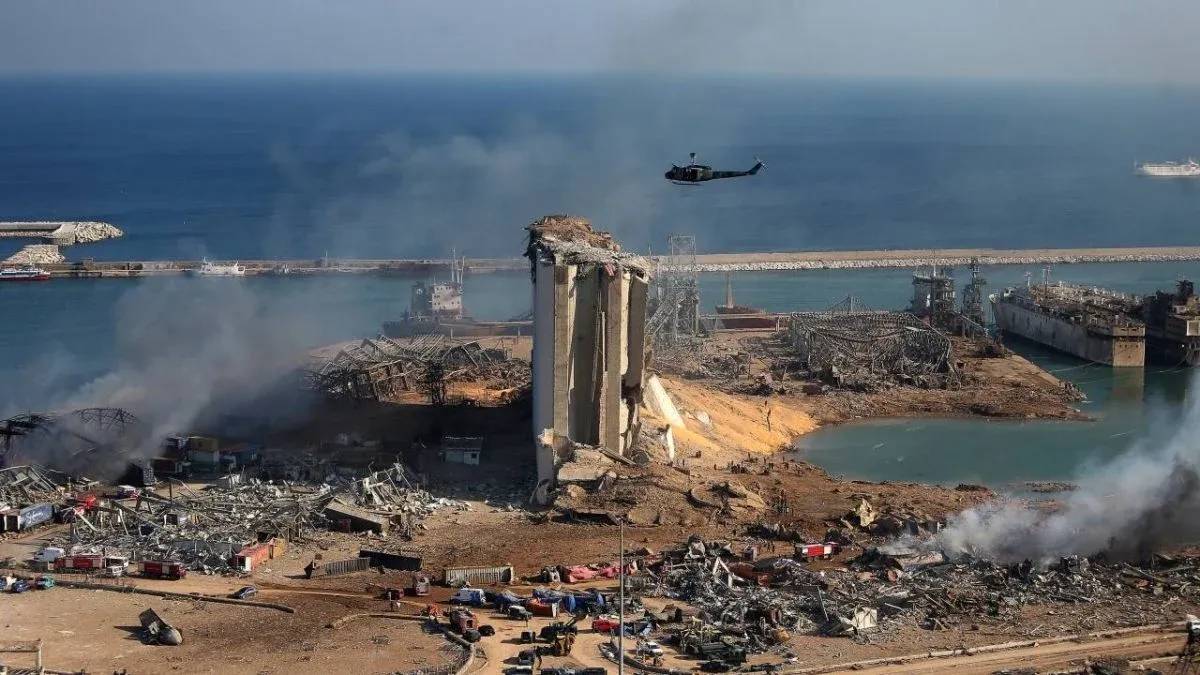
The port of Beirut, after the explosion at the port of Beirut. (Credit: AFP)






BEIRUT — Just days before the sixth anniversary of the Beirut Port explosion on Aug. 4, 2020, relatives of the victims are hoping the judicial investigation is entering a decisive phase. Gathered on Tuesday at Metropolis Cinema in Mar Mikhael for an event titled "Voices for Truth," organized by the Committee of Victims' Parents and the Beirut 607 platform — a reference to the time of the disaster (6:07 p.m.) — lawyers and officials said several legal obstacles that had stalled the investigation in recent years had now been lifted, paving the way for possible indictments of those responsible.
Investigative Judge Tarek Bitar of the Court of Justice completed his investigation at the end of March and referred the case to the public prosecutor's office at the Court of Cassation for indictment. Lawyers now hope an indictment will be issued in the coming months and that any arrest warrants will be carried out without political interference.
A long-stalled investigation
Speaking at the event, Chucri Haddad, a lawyer with the complaints office established by the Beirut Bar Association in the aftermath of the disaster, reviewed the main obstacles that have hampered the investigation.
Haddad recalled that in January 2023, then-public prosecutor at the Court of Cassation Ghassan Oueidate charged Judge Bitar with abuse of power, barred the judicial police from cooperating with him and ordered the release of 17 people detained in connection with the case, bringing the investigation to an almost complete standstill.
Ghida Frangieh, a lawyer with Legal Agenda, said that period is now over. She welcomed the decision issued last January dismissing the allegations of abuse of power against Judge Bitar.
"The effects of that blow are over now," she said.
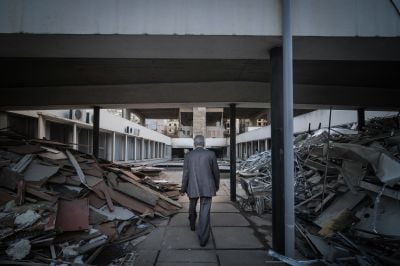
Frangieh also reviewed the numerous legal motions filed over the years by several political figures implicated in the case, including motions for recusal, requests for disqualification on the grounds of "legitimate suspicion" and lawsuits against the state targeting both Judge Bitar and the judges responsible for hearing those motions. Comparing the investigation to "a train forced to stop at every station to remove obstacles," she said that its stop-and-start progress had finally come to an end.
According to her, several recent rulings reflect that progress. The plenary assembly of the Court of Cassation, which for a long time was unable to convene because it lacked a quorum, has in recent months rejected several motions. Also in January, the Beirut Court of First Instance ordered two former ministers affiliated with the Amal Movement, Ali Hassan Khalil and Ghazi Zeaiter, to pay substantial damages for "abuse in exercising the rights of defense."
For Haddad and Frangieh, the main challenge is now political: ensuring that the judge's decisions are enforced. "That is now the challenge for the executive branch," Haddad said, noting that a conviction in the case would set a major precedent — "a model" for the rule of law in Lebanon. President Joseph Aoun said on Aug. 4, 2025, that accountability, "regardless of the rank of those involved," was "an absolute priority" of his presidency.
'Keeping the collective memory alive'
Culture Minister Ghassan Salameh, meanwhile, stressed the state's responsibility toward the victims. He said that on the fifth anniversary of the disaster, the government had, "for the first time, acknowledged its responsibility to support the victims" while seeking to establish where the failures occurred and identify those responsible.
According to Salameh, that acknowledgment, made during a meeting last August between Prime Minister Nawaf Salam and the victims' families, marked "a step toward accountability." The minister said he has maintained an ongoing dialogue with the families, adding that "it is the government's duty to support them until justice is served."
Salameh also called for preserving the memory of the disaster. While the victims' families "have the right to forget," he said, the state and the Lebanese people "have a duty to keep the collective memory alive." He also noted that he had placed the Beirut port silos on the national heritage registry.
The decision reversed a demolition plan approved in 2022 by the government of Najib Mikati over concerns that the silos could collapse, a move fiercely opposed by the victims' families, who believe the structures should remain a "silent witness" to a crime that remains unpunished.

 Evening recap: Netanyahu announces West Bank offensive; 7 killed in Jordan church shooting; tents burned in south Lebanon
 US strike on Iran this weekend? ‘Absolutely,’ says Barrack; ‘I have no idea,’ says Trump