





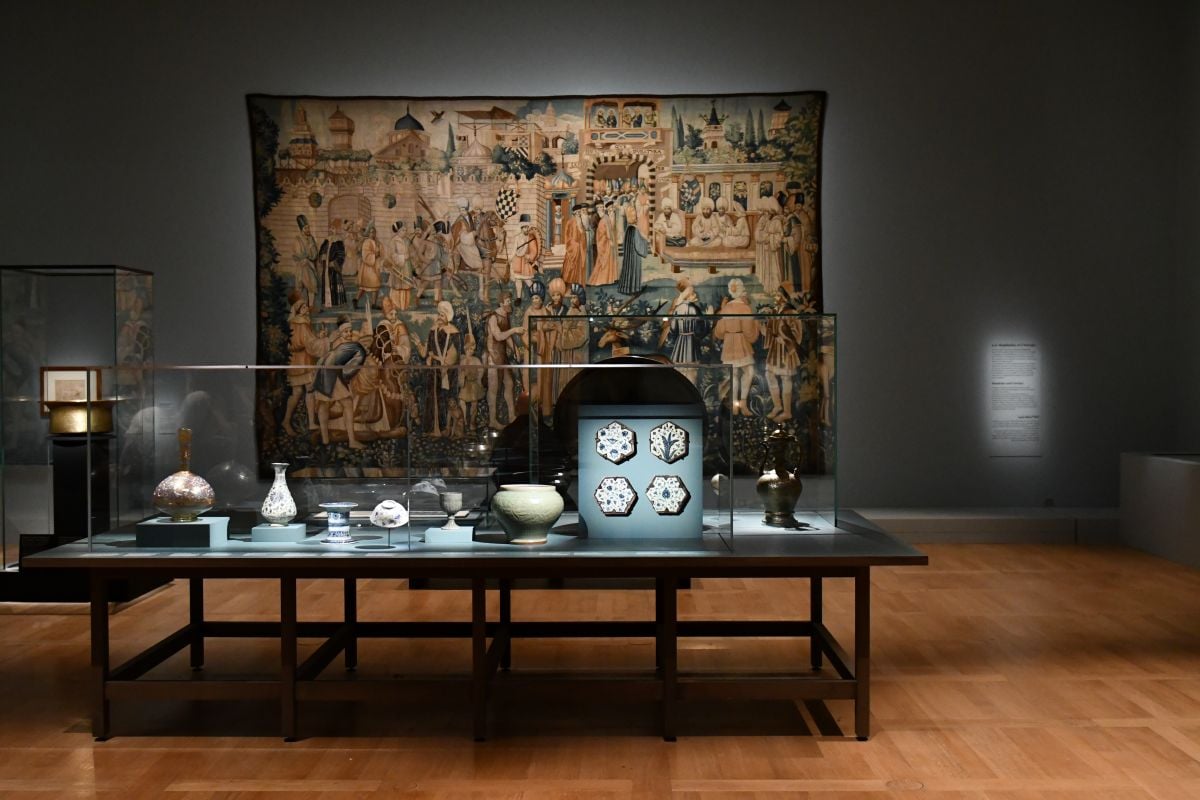
General view of the exhibition on the Mamluks at the Louvre Museum. (Credit: Nicolas Bousser)






For some, the Mamluks are linked to Napoleon’s armies; for others, they’re a vague memory from history lessons — a cultural layer in the complex sedimentation that shaped Middle Eastern identity. The word mamluk means “possessed” in Arabic. Purchased by the Ayyubids to serve in their army and converted to Islam, they were trained to become elite fighters. This image of powerful, unyielding warriors, however, belies the splendor of their architecture and the refinement of their literature and craftsmanship.
The exhibition, curated by Souraya Noujaim, director of the Department of Islamic Art, and art historian Carine Juvin, features a meticulously designed scenography. Visitors enter the world of the Mamluk sultanate through theater.
“We wanted to create a very engaging, immersive space. The public is welcomed by the reconstruction of a shadow theater, a very ancient tradition from Asia found in Arabic literature,” says Noujaim.

“This exhibition is the first in Europe devoted to the Mamluk sultanate (the Louvre opted for the spelling ‘Mamlouk’),” says Carine Juvin. “It represents the culmination of extensive research and synthesizes the last ten years of scholarship on the subject. We’ve secured exceptional loans from major international institutions.”
The Mamluks were royal slaves who ruled a sultanate from 1250 to 1517, stretching from Egypt to the eastern borders of modern-day Turkey. They controlled Islam’s holy sites in Arabia and developed a unique political and military system. Their main urban centers were Cairo and Damascus, but also Jerusalem, Gaza, Tripoli and Aleppo — cities that remain landmarks of Mamluk architectural heritage.
“They asserted their power and prestige in stone”
The exhibition opens in reverse chronology, beginning with 'The Battle of the Pyramids,' an 1810 painting that evokes the mythic image of Napoleonic Mamluks.
“The Mamluk sultanate ended in 1517 with the Ottoman conquest of its territories, but Mamluks remained in Egypt and Syria and were integrated into the Ottoman army,” Juvin explains. “By the 18th century, they had regained political significance. During Napoleon’s Egyptian campaign, they clashed with French troops, most notably at the Battle of the Pyramids in 1798.”
That moment is the subject of a dramatic painting by François-André Vincent, held in the battle gallery of the Grosbois estate. “At the center is a spectacular Mamluk rider, a symbol of the bravery and equestrian skill that impressed the French,” Juvin says.
Bonaparte, she adds, took note: “He created a corps of Mamluks within the imperial army — a massive PR move. These troops became part of the visual and ceremonial identity of Napoleonic power.”
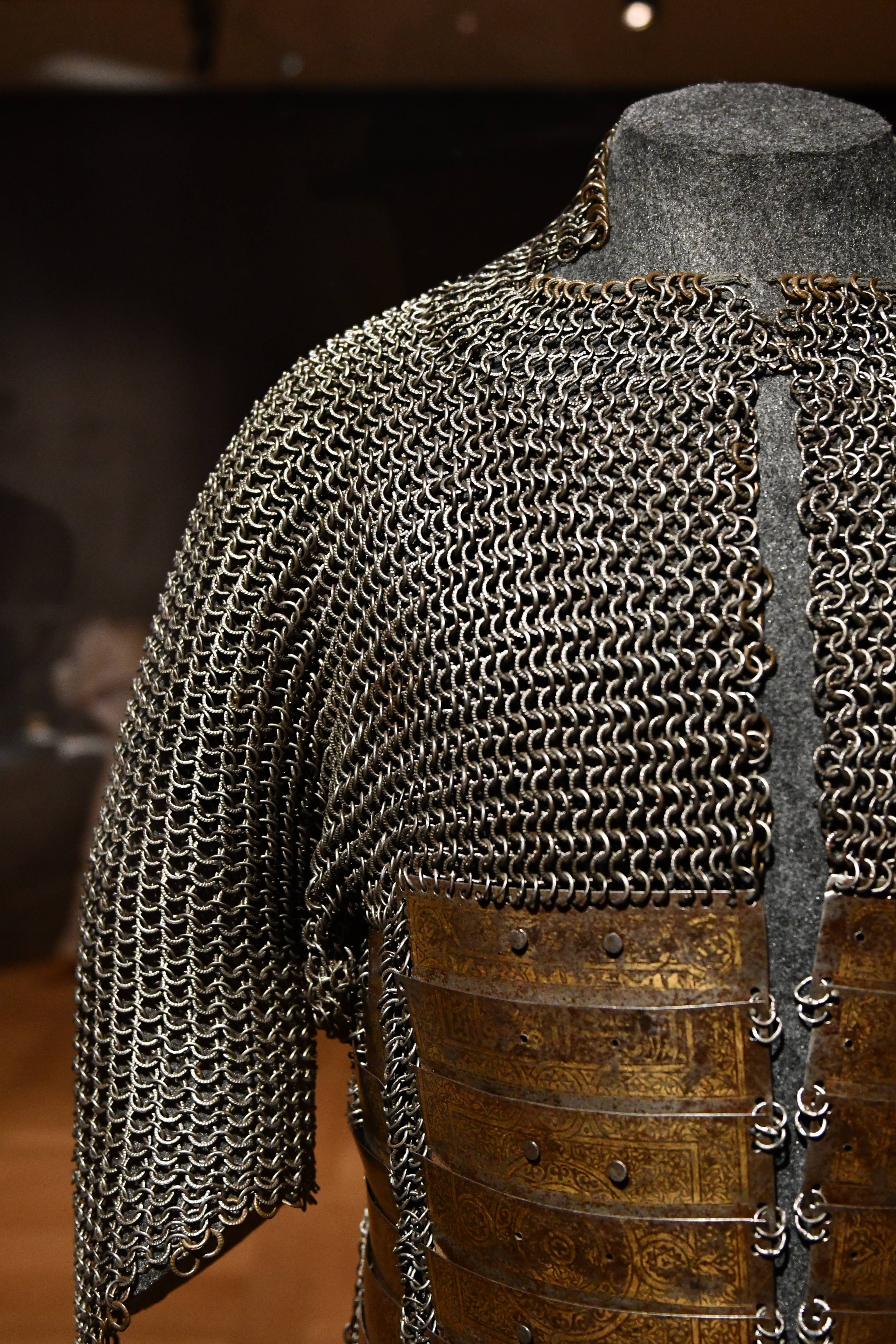
The exhibition is rich and varied, with each item unfolding centuries of history, whether it's a ceremonial armor of a Mamluk chief or various manuscripts. The 'Romance of Baybars' manuscript, translated into French, is symbolic of Mamluk identity. “He was a 13th-century sultan who established the mechanics of Mamluk power and conquered Syria. He participated in the Battle of Ain Jalut against the Mongols,” Juvin notes.
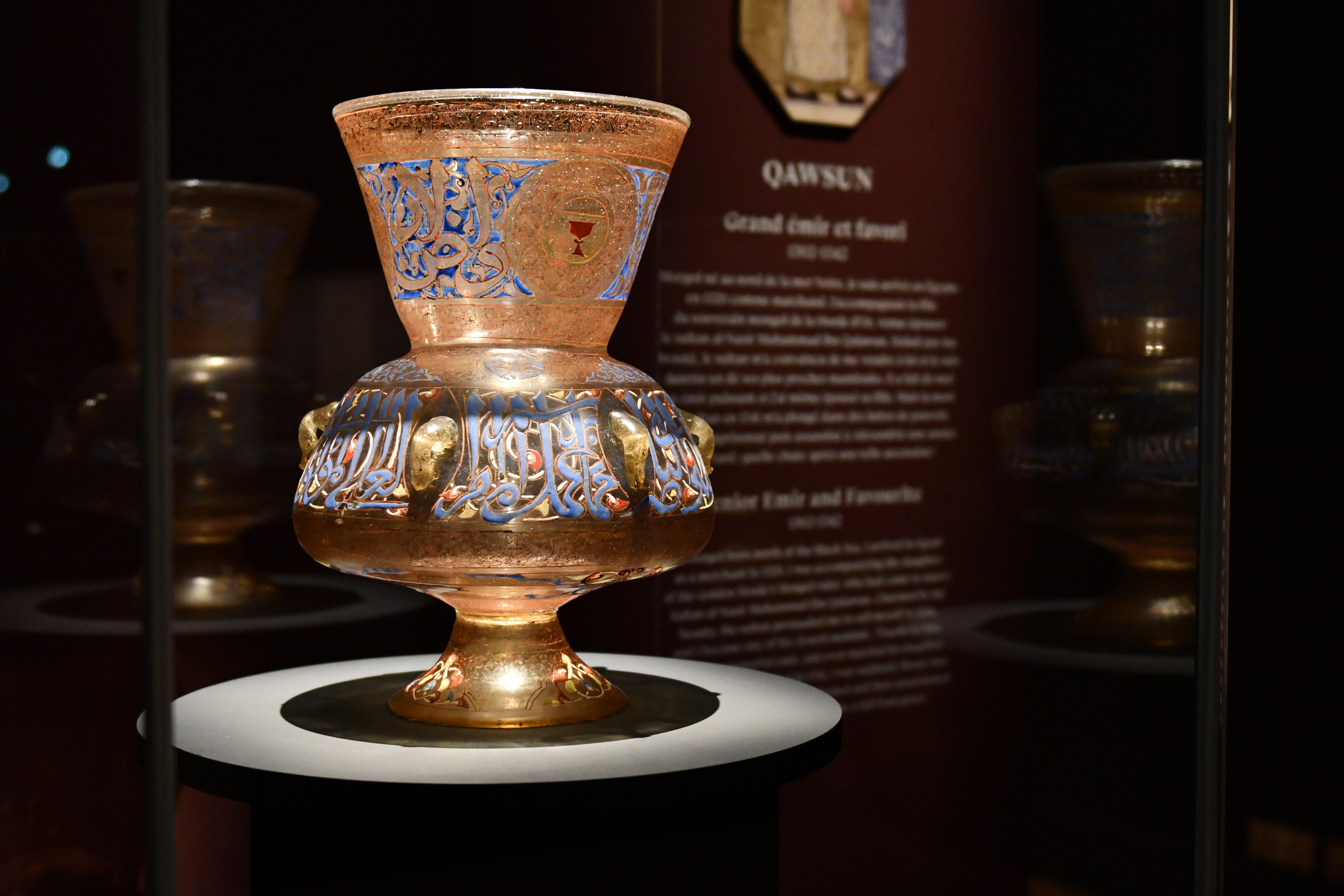
A large immersive space offers a striking change of scale, plunging the visitor into the monumental architecture of a vast complex comprising the mausoleum of Qalawun, a madrasa, a hospital and a mosque.
“More than a thousand monuments were built during this period in the great cities of the sultanate,” says the curator. “The Mamluks asserted their power and prestige in stone. These monuments were designed to be seen from afar, with sober façades contrasting with very colorful interiors that employ various techniques: mosaic, marble, woodwork and sculpted stucco. There is a triumph of geometry, one of the hallmarks of Mamluk aesthetics, with a particular treatment of light,” explains Noujaim.
Mamluks, lovers of calligraphy, Chinese-style motifs and wine
As visitors move through the exhibition, many objects related to Islam stand out, such as a key to the Kaaba, the backrest of a minbar chair, and various majestic Qur'an manuscripts.
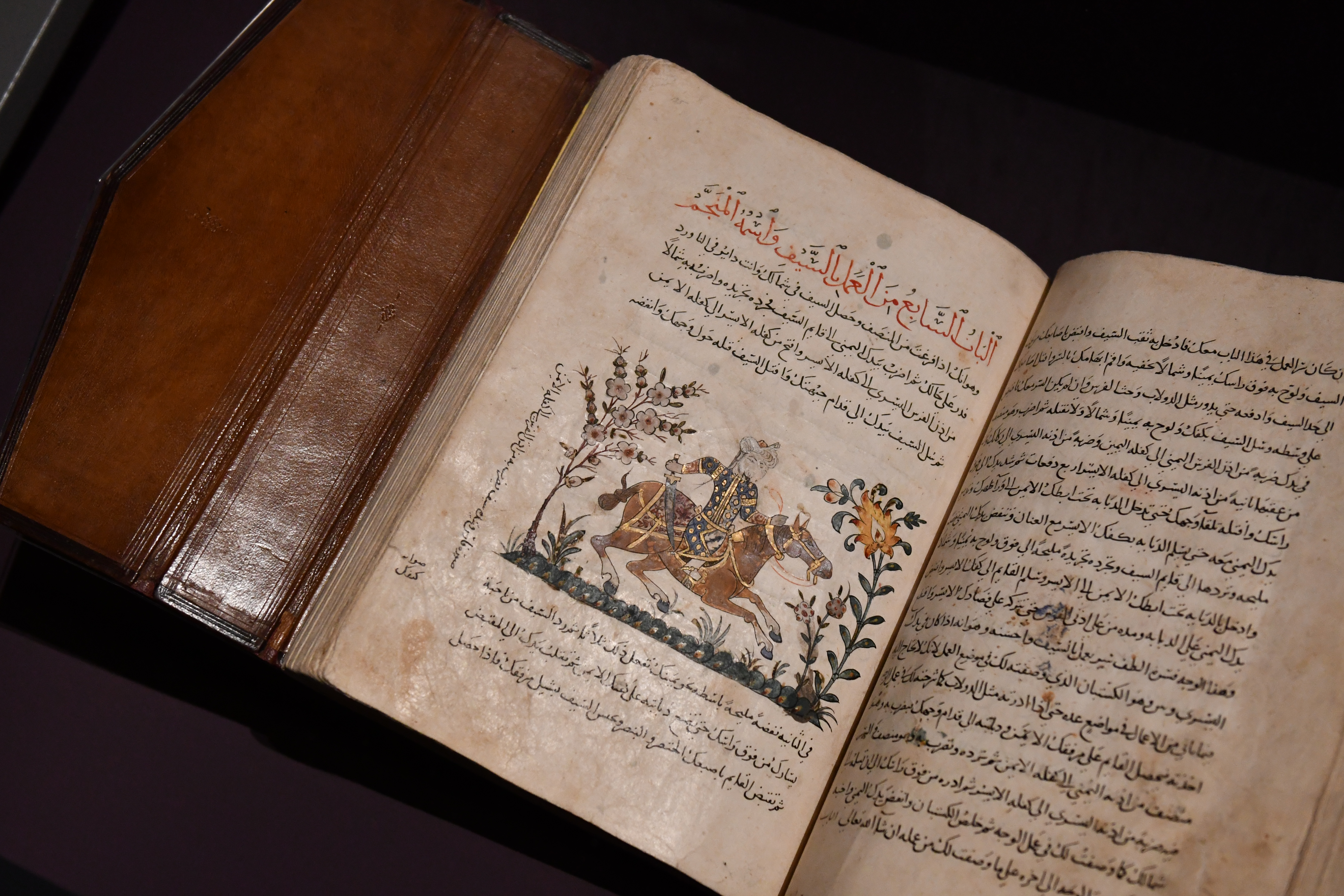
“These objects illustrate the multicultural and multilingual nature of the sultanate,” says Carine Juvin. “The military elite spoke Turkish, the population spoke Arabic, and there were many Mongol and Iranian converts. This manuscript from the Bibliothèque nationale de France, copied in Persian in Aleppo at the end of the 15th century, reflects that blend.”
Decorative elements from a significant Coptic church in Cairo on display also reflect Islamic aesthetic, with its scrolling foliage and plant motifs.
In the section on civil society, several female figures are highlighted. “We can mention Shajar al-Durr, who was sultan in 1250, or the former slave Sitt Hadaq, who was in charge of the children of Sultan Mohammad ibn Qalawun,” adds Noujaim.
The art of the book is another fascinating focus of the exhibition. Many manuscripts, written in elegant cursive Arabic, include treatises on horsemanship, hunting manuals, animal fables such as Kalila and Dimna and poetic collections — some celebrating wine.
“The Mamluk elites did not disdain the consumption of wine, at least some of them, and continued an ancient literary tradition of Bacchic poetry,” Juvin notes.
After a section dedicated to science, the exhibition highlights the interconnected world of the sultanate. The magnificent painting at the Louvre from the Venetian school, dating from 1511 and depicting the reception of a Venetian embassy in Damascus, recalls the frequent exchanges between East and West.
After a section on scientific contributions, the exhibition shifts to highlight the sultanate’s global connections. The magnificent painting at the Louvre from the Venetian school, dating from 1511 and depicting the reception of a Venetian embassy in Damascus, recalls the frequent exchanges between East and West.
“Through the trade of textiles, furs, silks and spices, the Mamluks helped connect Africa, Europe and China,” Noujaim explains. This influence is visible in Mamluk art, particularly in Chinese-style blue-and-white celadons and porcelain, featuring bird and cloud motifs.
Noujaim also emphasizes the sophistication of Mamluk silks. “We wanted to highlight their excellence as designers. They worked with complex geometric and floral patterns, often leaning toward abstraction,” she says.
The highlight of the exhibition is the famous Saint Louis basin, signed Mohammad ibn al-Zayn, in chiseled copper alloy, inlaid with silver, gold, and black paste, used, among others, for the baptisms of the future Louis XIII, Henri d’Artois, Prince Napoléon-Eugène.
“The presence of coats of arms may indicate a European owner in the 14th century, but this remains one hypothesis among several. This magnificent basin illustrates the close ties between the Mamluk sultanate and French history."