












When the law of the jungle prevails, the question inevitably arises: who is the greatest predator? Not the one who dominates and regulates, but the one who terrorizes and devours.
On the international stage, Russia, despite its limitations, has held this position for two decades. No other country has destabilized the world order to such an extent since the start of the 21st century.
China does not hide its desire to reshape it, but its predatory nature is, for now, limited to its “near abroad.”
The U.S. has also behaved like a predatory power during the invasion of Iraq and, to a lesser extent, Afghanistan, and bears significant responsibility for the “deregulation of the use of force.” But it has also contributed greatly to the defense and stabilization of that order.

The return to power of Donald Trump, with a much more pronounced desire for rupture than during his first term, now makes him a very credible contender for the title of greatest predator in the global jungle.
At the scale of the Middle East, where predators are hardly lacking, it was Iran that held this position since the beginning of the century. Turkey was not far behind.
Some Arab countries may have had the ambition but not the means. And Israel, due to the conditions of its creation and its policy of erasing the Palestinians, belonged in a category of its own. Not a major predator as such, except for the Palestinians, but a structural factor of destabilization that encourages other actors to resort to force.

Despite the fierce competition, no one was, nevertheless, in a position to challenge Iran’s supremacy as a destabilizing force in the Middle East. No one embraced an imperial logic, so fully, to the point of seeking to subjugate several countries to its desires.
This era, however, is over. Not because Iran has changed its approach, but because it no longer has the means. And since nature abhors a vacuum, two powers are attempting to fill it. Turkey, which is developing a fairly traditional imperialist project based on a history spanning several centuries. And Israel, which, after having destroyed the Iranian empire, aspires to a much more singular form of regional hegemony, but one that is no less dangerous.
For now, Israel is several steps ahead of the competition — so much so that it now stands as the main factor of destabilization, and therefore the frontrunner for the title of the region’s top predator.
Israel has never thought of itself as an empire, but rather as a besieged fortress. It conquered part of its territory by force and has been nibbling away for decades at land that rightfully belongs to the Palestinians.
It occupied and annexed territories in Egypt, the West Bank, the Golan, Gaza, Jerusalem and Lebanon, and in most cases continues to do so.
But this has been driven by a logic of expanding the fortress, not of building an empire. What’s the difference? It has never had the ambition to govern non-Jewish populations and has done so — with Arab and Druze minorities — more out of necessity than choice. The others do not interest it. It does not seek to impose its model on them or to integrate them — though the case of the Golan is somewhat particular — and would not hesitate to empty all its territories of their populations if it could.
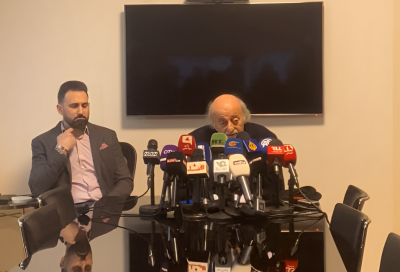
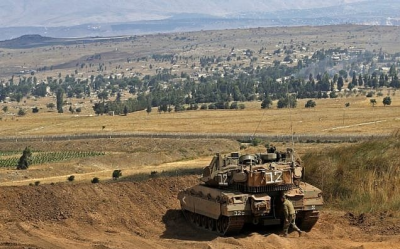
The period after Oct. 7, however, marks a turning point. Israel is considering reoccupying Gaza and annexing the West Bank, has declared its intention to maintain its positions in southern Lebanon, is expanding its territory in Syria and is even threatening to go to war with the new government in Damascus.
Never before had Israel so unabashedly embraced its ambition for regional hegemony. Admittedly, this ambition is above all security-driven. Since Hamas’ Al-Aqsa Deluge operation on Oct. 7, Israel considers that everything is permitted.
But this logic is also fueled by political considerations and, in any case, carries serious consequences on that front. The Palestinians are ordered to disappear — politically and sometimes physically.
Lebanon is placed under a form of tutelage, while the new Syria is expected to submit to the diktat of its southern neighbor or risk losing yet another part of its territory.
Not only is Israeli domination total on the military level — as evidenced by the destruction of Hezbollah's arsenal as well as that of the Syrian army — but it is also accompanied by no desire for political compromise.
Israel is operating in a purely power-based logic. And that balance of power is so lopsided, so unconcerned with the fate of the defeated, that the resulting hegemony can only produce chaos in the medium and long term.
The region’s top predator has as its main ally the world’s top predator.
Together, they are set to impose their rule over the Middle East. They will break all taboos, redraw parts of the borders, attempt to impose peace by force and bring into line all those who refuse to fall into step.
The liquidation of the Palestinian question, forced normalization, Israeli hegemony over countries stripped of any sovereignty and the gradual nibbling away of parts of their territory — that is their project.
Both the Gulf countries and those most directly concerned in the region must be aware: the end of the Iranian era is a blessing. The beginning of the Israeli era is a curse. In Lebanon and throughout the region, we will be paying the price for a long time to come.
This article was originally published in French in L'Orient Le-Jour and was translated by Sahar Ghoussoub.