






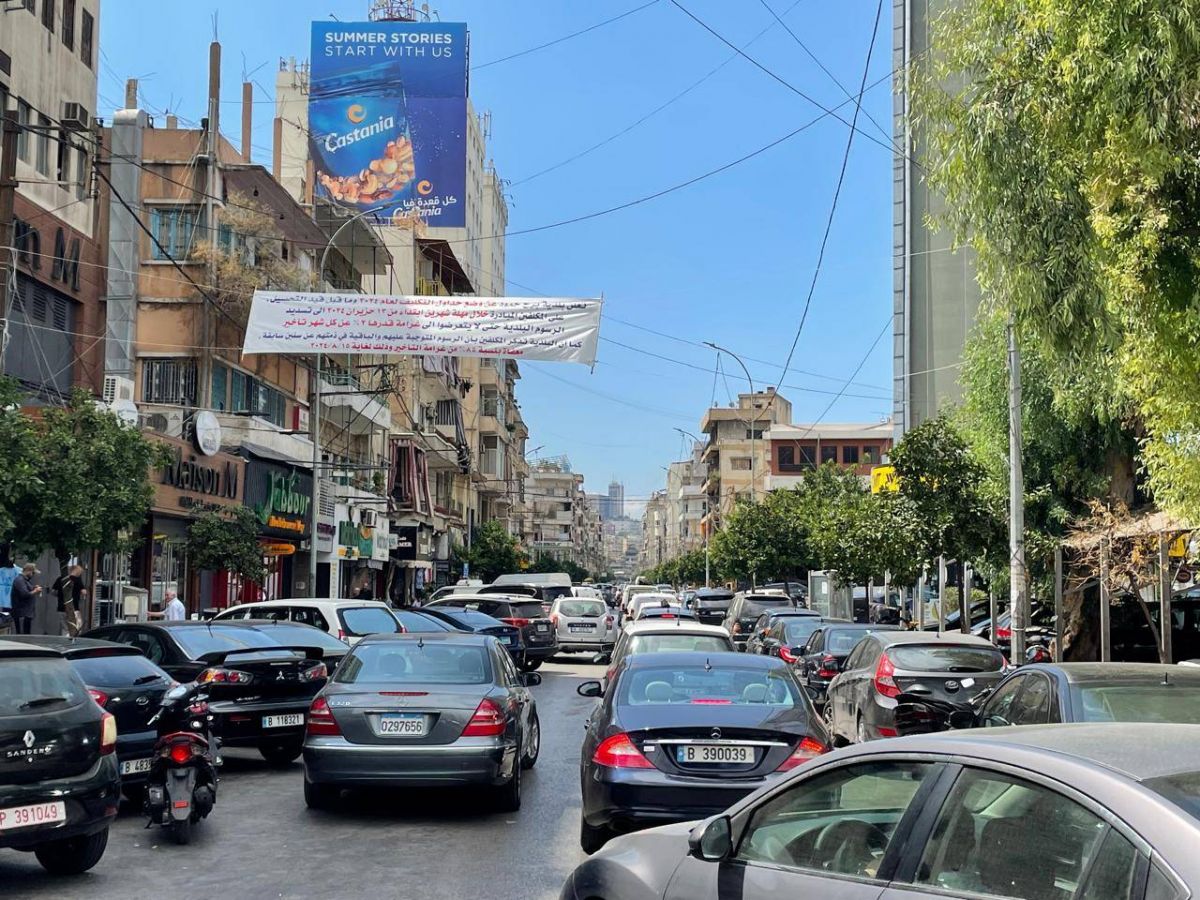
Burj Hammoud as seen from Dora last September, 2023 (Credit: Philippe Hage Boutros/ L'Orient Today)






The Institute of International Finance (IFI), a global organization representing several hundred of the world’s leading banks, has released its projections for the Lebanese economy in 2024 and 2025 amid the country's escalating war.
The IFI outlines two possible scenarios: one in which the war continues until mid-2025, potentially leading to an Israeli military invasion of Lebanon, and a more "pessimistic" scenario, where the conflict drags on and escalates, drawing in Iran and possibly the United States.
In the first scenario, the organization estimates that Lebanon’s GDP will shrink by 7% in 2024 — a forecast already mentioned by the institute's chief economist for MENA and Central Asia, Garbis Iradian, in an interview with L'Orient Today on Oct. 7. The IFI also anticipates a further 10% contraction in 2025.
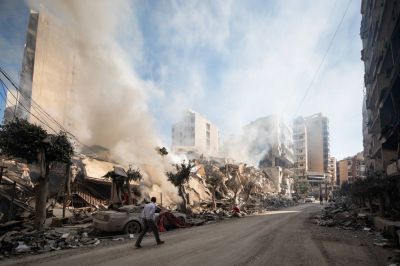
The IFI attributes the decline in GDP to several key factors:
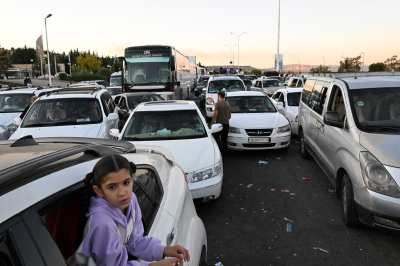
• A significant drop in domestic consumption, driven by the exodus of more than 12% of the country’s population, including Lebanese citizens and "Syrian refugees," who are estimated to account for 1.5 million according to Lebanese government figures, out of a total population of around 6 million.
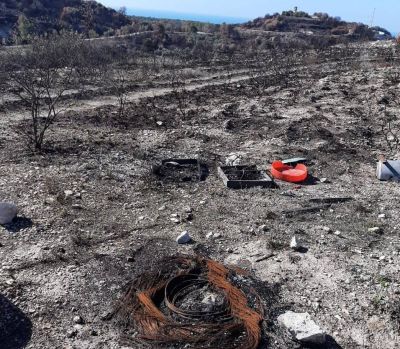
• A decline in exports, exacerbated by heavy losses in the agricultural sector. Large areas of arable land in southern Lebanon and the Bekaa have been destroyed or polluted by Israeli airstrikes. In a report published last month, the United Nations Economic and Social Commission for Western Asia (ESCWA) stated that the tobacco industry had been hit the hardest, with losses estimated at $30 million, even before the Israeli ground offensive began on Sept. 30.
• The tourism sector, which accounted for 20% of Lebanon’s GDP before the war, has come to a complete halt.
The IFI also highlights the toll that damage to infrastructure has taken due to Israeli strikes, reducing the country’s capital stock and necessitating significant investment in rehabilitation. This will further delay any economic recovery in Lebanon, which has already been in crisis since 2019.
Under the more pessimistic scenario, the IFI predicts Lebanon’s GDP could contract by over 20% by 2025, with an exodus of more than 1.2 million people among other severe consequences.
As recently as last spring, most international organizations had forecast modest growth or a contraction of around 1% for Lebanon’s GDP in 2024.
Since the outbreak of fighting between Israel and Hezbollah on Oct. 8, 2023 — following the start of the Gaza war — the war has claimed more than 2,300 lives. This includes over 1,350 people killed since Sept. 23, 2024, when the attrition conflict along the border intensified into a full-scale war. Israeli forces have devastated several areas in Lebanon, including the southern suburbs of Beirut, a Hezbollah stronghold, resulting in significant civilian casualties.
