





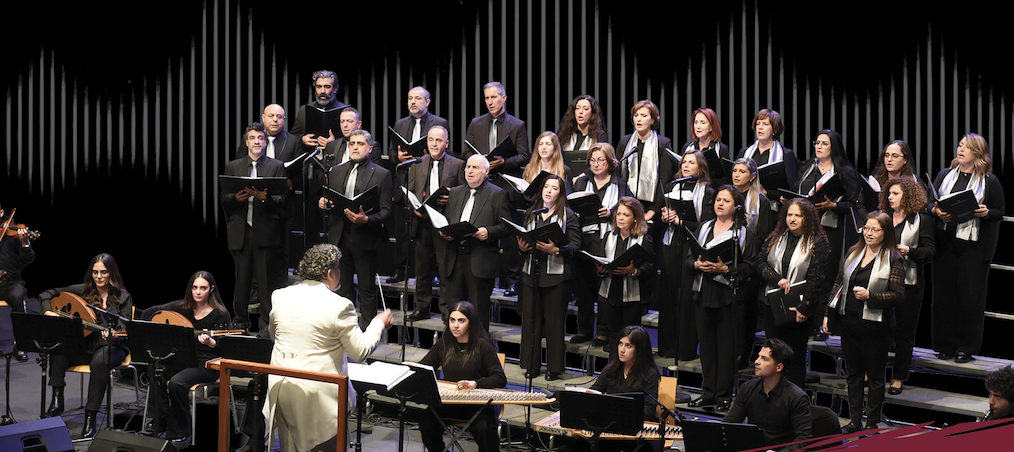
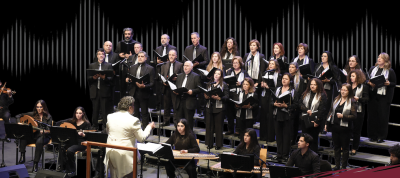
Photo taken from the poster for the concert "Echoes of Baalbeck’s Musical Heritage, 1957-1974," performed by the AUB Arab Ensemble on September 19 at the Assembly Hall. Courtesy of AUB and the Baalbeck Festival.






For one week this September, the Baalbeck International Festival will leave its ancient temples behind and move into the halls of the American University of Beirut (AUB), where its 70-year history will take center stage. From Sept. 14 to 19, AUB will mark the festival’s 70th anniversary with a week dedicated to its history and the artists who, beneath the ancient columns of Baalbeck, helped shape a vision of Lebanese musical modernity
An exhibition, seminar, book signing and concert will make up Baalbeck Festival Week at AUB, organized by the Zaki Nassif Program for Music and the Jafet Library. More than an institutional commemoration, the event will bring together images, repertoires, and stories from a festival whose history is deeply intertwined with that of the country itself.
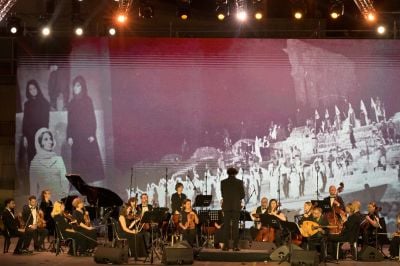
The initiative comes in an anniversary year overshadowed by the postponement of the 2026 summer edition, a decision made because of Lebanon’s security and political situation. In its announcement, the executive committee stressed that the decision “does not in any way call into question our commitment to culture, creativity, and dialogue among peoples.” It added that, for more than seven decades, the festival has “endured the trials of history without ever giving up its mission,” while remaining convinced that culture is “one of the most beautiful expressions of faith in better days.”
The week at AUB is thus another way of keeping Baalbeck alive: temporarily leaving its monumental stage to enter the world of archives, transmission, and study. This shift does not erase the absence of performances beneath the temples. But it serves as a reminder that a festival is not defined solely by a place or a season. It is also made up of scores, photographs, voices, memories, and a collective mythology that each generation reinterprets.
A history to observe
The program will begin on Sept. 14 at 4 p.m. in the Batish Auditorium at West Hall, with a ceremony followed by the opening of an exhibition curated by the AUB libraries.
On display for two months, the exhibition will explore the place of the Baalbeck International Festival in Lebanon’s cultural history. Students, researchers, and visitors will be able to trace the legacy of an adventure that began in 1956, when the Roman ruins became the setting for an artistic project designed to foster dialogue between Lebanese creators and major international figures.
Over the decades, Baalbeck has hosted Fairuz, the Rahbani brothers, Sabah, Zaki Nassif, Nasri Chamseddine, and many international artists. The Lebanese folk productions showcased there were more than heritage entertainment: they helped shape a modern stage language capable of projecting an image of a creative, open, and ambitious Lebanon beyond its borders.
The executive committee defended this mission in an open letter published in November 2024, amid Israeli bombing around Baalbeck. With the support of the local population, it wrote, the festival has sought to preserve the site as “a bastion of diversity, where the values of openness, cooperation and joy of living resonate through art and its universal language.” The letter ended with a striking image: “Baalbeck deserves the world’s attention so that the ‘City of the Sun’ does not sink into darkness.”
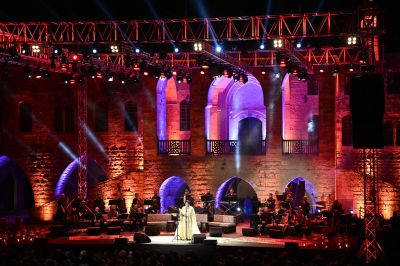
What Baalbeck has changed
On Wednesday, Sept. 16, at 5:30 p.m., memory will give way to analysis. A special edition of the Ali Ghandour cultural seminar will examine the influence of the Baalbeck International Festival on the development of music in Lebanon and the Levant.
In the Bassile Antoine Meguerdiche Conference Hall of the Issam Fares Institute, Nayla de Freige, president of the festival’s executive committee since 2011, will be in conversation with Father Badih El Hajj, professor at the Holy Spirit University of Kaslik, and musicologist Zeina Saleh Kayali.
The question goes far beyond the prestige of the artists the festival has hosted. What would Lebanese music have become without the major productions created for Baalbeck? How did the festival help elevate the work of the Rahbani brothers, Nassif and their contemporaries? And what remains of this model today, in a country where cultural institutions operate without financial stability or a secure political horizon?
These questions should allow us to consider the festival not as a glorious succession of starry evenings, but as a true tool of production. Baalbeck did not merely present works: it gave them scale, resources, and a symbolic space through which artists could enter the regional imagination.
In January, when the anniversary program was announced, Freige recalled that, at a time when "hope and creativity matter more than ever," the festival’s mission remains tied to "artistic excellence, creativity and cultural dialogue." Words that, after the postponement of the summer performances, now stand as a program to be pursued by other means.
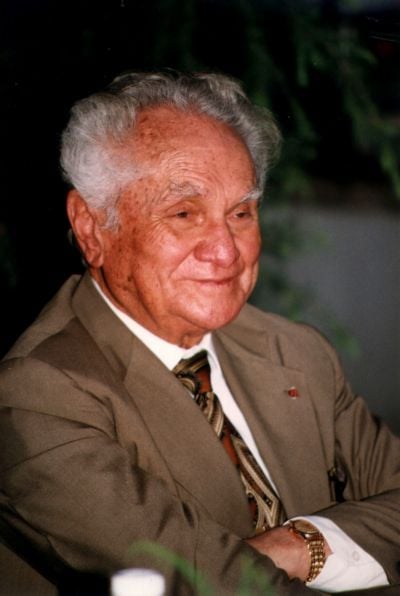
The discussion will be followed by a book signing by Nassif, a champion of local heritage, by Kayali. The choice of composer is no coincidence. His work precisely embodies this passage from heritage to creation: music deeply rooted in the landscapes, rhythms and poetry of Lebanon, but conceived for the stage and for an audience beyond the nation’s borders.
Giving a voice to the archives
On Saturday, Sept. 19 at 8 p.m., Assembly Hall will host the final installment of the week: echoes of Baalbeck’s musical heritage, 1957–1974, performed by the AUB Arabic Ensemble, affiliated with the Zaki Nassif Program for Music.
The choice of this period points to the festival’s early decades, when a repertoire now associated with its golden age was established. But the concert will be much more than mere nostalgia. By entrusting these works to a university ensemble, it places them in the hands of a new generation of musicians and listeners.
This may be where this week finds its deepest meaning. Commemorating 70 years of history is not about confining Baalbeck in a nostalgic showcase or contemplating a vanished cultural Lebanon. It is about understanding how heritage remains alive: when it is documented, discussed, taught and, above all, reinterpreted.
The overarching theme of the 2026–2027 festival by the Zaki Nassif Program sums up this ambition, titled Remember and Discover: Preserving Heritage, Inspiring the Future. Between the archives of the Jafet Library, the seminar’s discussions and the music revived at Assembly Hall, Baalbeck continues to resonate, far from its temples, but true to its promise.
"Baalbeck Festival Week at AUB," from Sept. 14 to 19, at the American University of Beirut. Exhibition open for two months. Concert tickets available at all Librairie Antoine branches and on Antoine Ticketing.

 7 p.m. recap: Aoun rejects leniency toward Hezbollah, Qatar eyes 2 power plants in Lebanon, Gantz bows out