





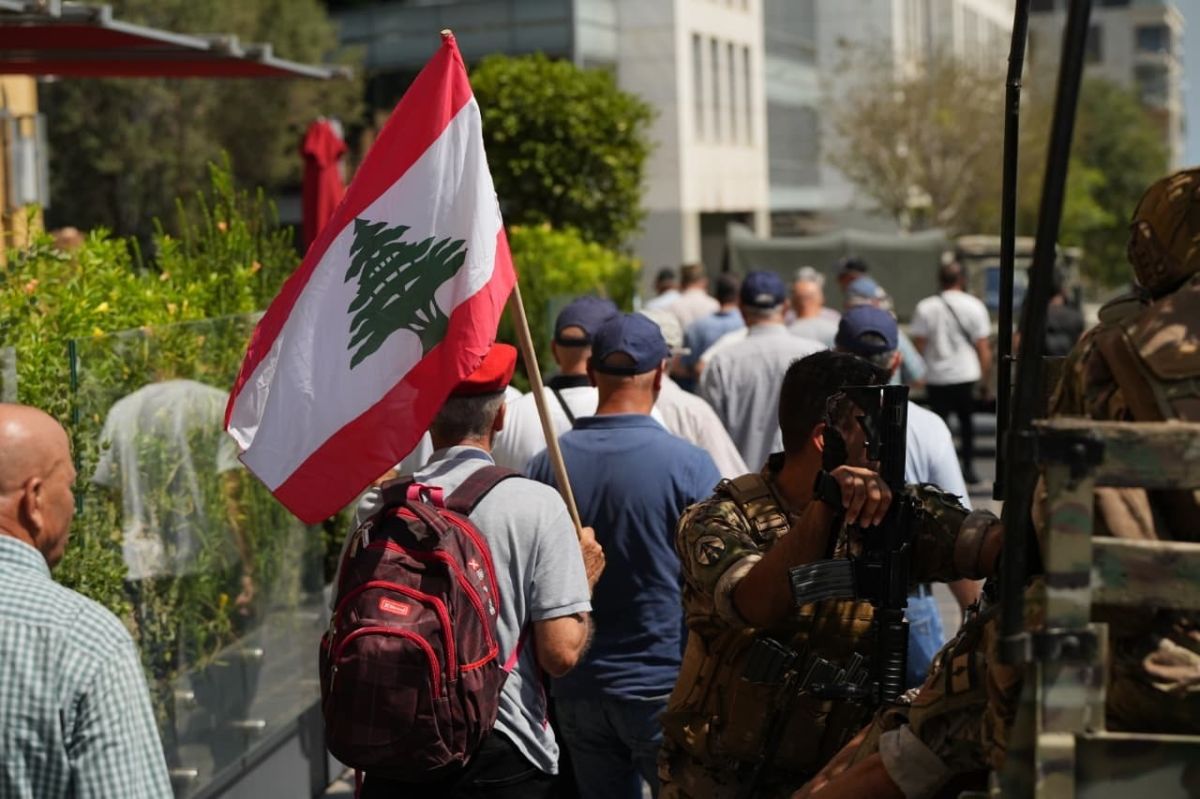
Protesters stationed not far from Parliament on the sidelines of the parliamentary sessions scheduled for Aug. 11, 2026, notably devoted to the general amnesty law. (Credit: Mohammad Yassin/L’Orient-Le Jour)






BEIRUT — The general amnesty law was signed Friday by President Joseph Aoun, nearly a month after its adoption in Parliament, without the president sending it back to Parliament for further review. The decision was promptly praised by Prime Minister Nawaf Salam, a staunch supporter of the legislation, which notably paves the way for the release of 86 Islamist detainees this year. Salam placed a phone call to Aoun, "commending his signature of the amnesty law, long awaited by the Lebanese," according to a message from the Cabinet on X.
The president "gave his instructions" for the law to be published Friday in a special edition of the Official Gazette.
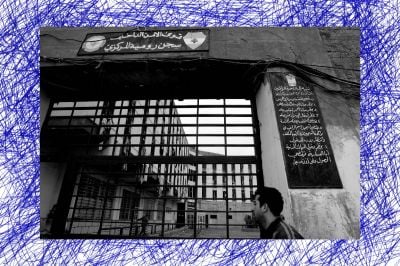
Cries of "Allahu Akbar" rang out from Roumieh Prison, Lebanon's largest, in celebration Friday, according to a video shared by the Markaziya agency. "There are celebrations and the detainees are happy. The law is very good for everyone," Abu Omar, a pseudonym for a man incarcerated since 2014, told L’Orient-Le Jour on the day it was adopted in Parliament. He described the law's adoption as "an achievement" for Islamist detainees in particular, although they are only a small proportion of those benefiting from the law.
Appeal for invalidation
Aoun's decision was by no means a given, since the law was adopted after months of political wrangling, amid an unprecedented power struggle between Salam and Defense Minister Michel Menassah, who is close to the president and a former army commander-in-chief. Reminding that he alone spoke on behalf of the government, Salam had refused, during a parliamentary session on Aug. 11, to allow Menassah to deliver an address to Parliament that sought to prevent amnesty for those convicted of killing soldiers.
Ultimately, the defense minister was absent from the chamber for the decisive vote the next day. "The army was prevented from speaking, but this is not the end of the story," he promised in a statement, which was then praised by army commander-in-chief Rodolph Haykal, who is also close to Aoun. However, ten days after their dispute, the two men participated side by side in a visit and a military briefing at a barracks in Sour in southern Lebanon, displaying a united front.
Meanwhile, Free Patriotic Movement (FPM) leader Gebran Bassil had denounced what he called an affront to the "dignity" of the army during the vote. After Friday's decision, MP Bassil announced that he planned to file an appeal for invalidation, which requires the support of at least ten MPs (his bloc has thirteen members), before the Constitutional Council. "Now that the president of the republic has signed the general amnesty law... we are going to contest it, to defend justice, out of respect for the martyrs and to confront a crime," Bassil wrote on his X account, stating he was acting "to preserve dignity, retain some pride and pay tribute to the army."
In total, around 2,000 detainees prosecuted for various offenses are expected to be released in a first phase of the law's implementation, according to a parliamentary source contacted in August by L'Orient-Le Jour. Local media and the organization Legal Agenda estimate the number of Islamist detainees affected at about 250, who are to be released in stages over the coming years depending on the length of their sentences. Notably, under the law, Salafist Sheikh Ahmad el-Assir should be released in April 2028. The text also covers about 100 people convicted or prosecuted for minor drug offenses, a good portion of whom are Shiite. Regarding Lebanese nationals in Israel covered by the law at the request of Christian parties, their unofficial number is estimated at around 4,000, according to media reports and Legal Agenda estimates.

 7 p.m. recap: Iran warns Egypt, Israeli soldiers vote in south Lebanon, Haret Hreik responds to Kataeb