






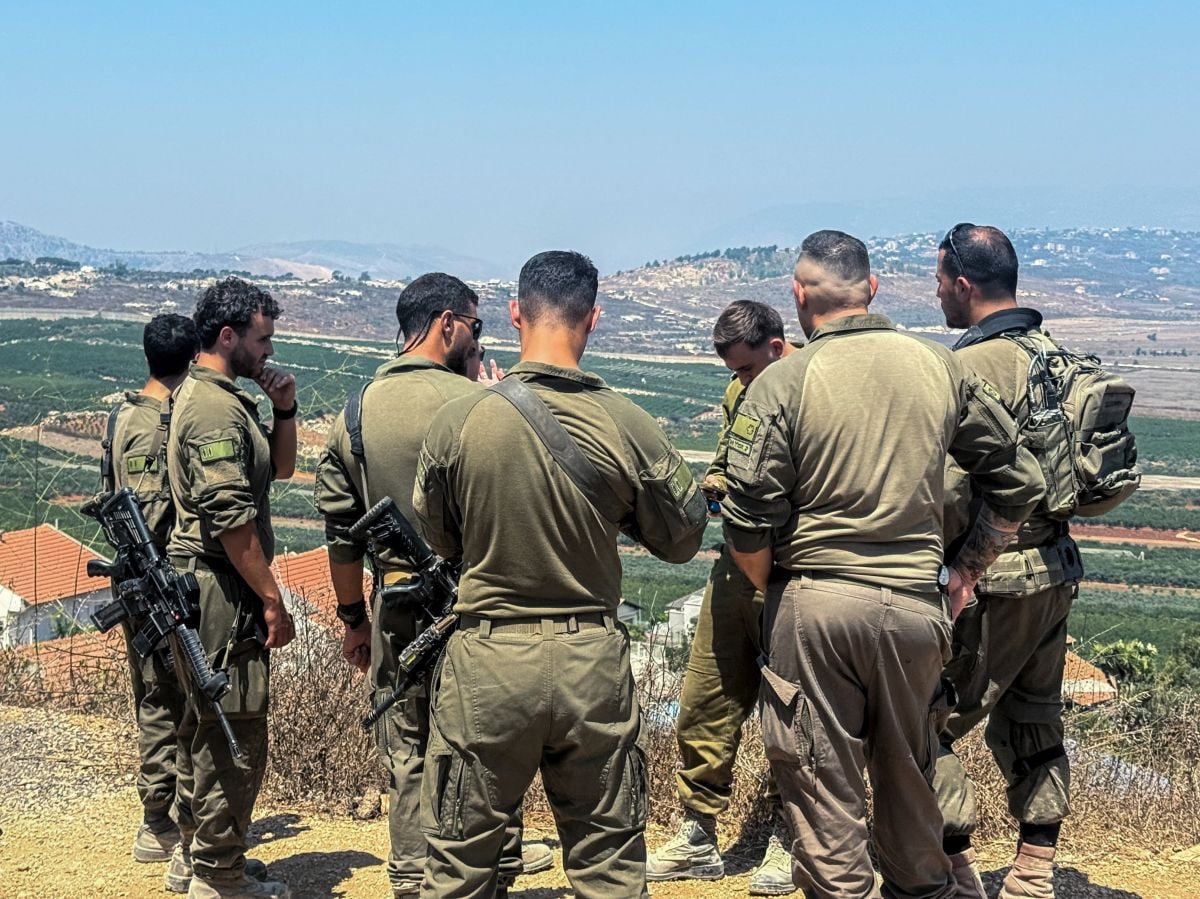
Israeli soldiers look towards Lebanon from a viewpoint at the Israel-Lebanon border, Aug. 21, 2026. (Credit: Avi Ohayon/Reuters)






In recent weeks, the developments on the ground in southern Lebanon and the deadlock reached in the Rome negotiations have led many observers to question whether it would be more effective for the talks to be held between the conflict’s actual parties: namely Israel, backed by Washington, on one side, and Iran and Hezbollah on the other. There is an irrefutable logic behind this observation. As philosopher and researcher Jean Clam recently noted in our columns, the Lebanese state has struggled to find matters it can actually negotiate with its southern neighbor, with which it has been in a state of neither war nor peace for three-quarters of a century. At first glance, the format of direct negotiations between Israel and Lebanon therefore seems like a case of miscasting. Current climate Michel Issa in Tel Aviv to revive talks with...
In recent weeks, the developments on the ground in southern Lebanon and the deadlock reached in the Rome negotiations have led many observers to question whether it would be more effective for the talks to be held between the conflict’s actual parties: namely Israel, backed by Washington, on one side, and Iran and Hezbollah on the other. There is an irrefutable logic behind this observation. As philosopher and researcher Jean Clam recently noted in our columns, the Lebanese state has struggled to find matters it can actually negotiate with its southern neighbor, with which it has been in a state of neither war nor peace for three-quarters of a century. At first glance, the format of direct negotiations between Israel and Lebanon therefore seems like a case of miscasting. Current climate Michel Issa in Tel Aviv to revive talks with...