






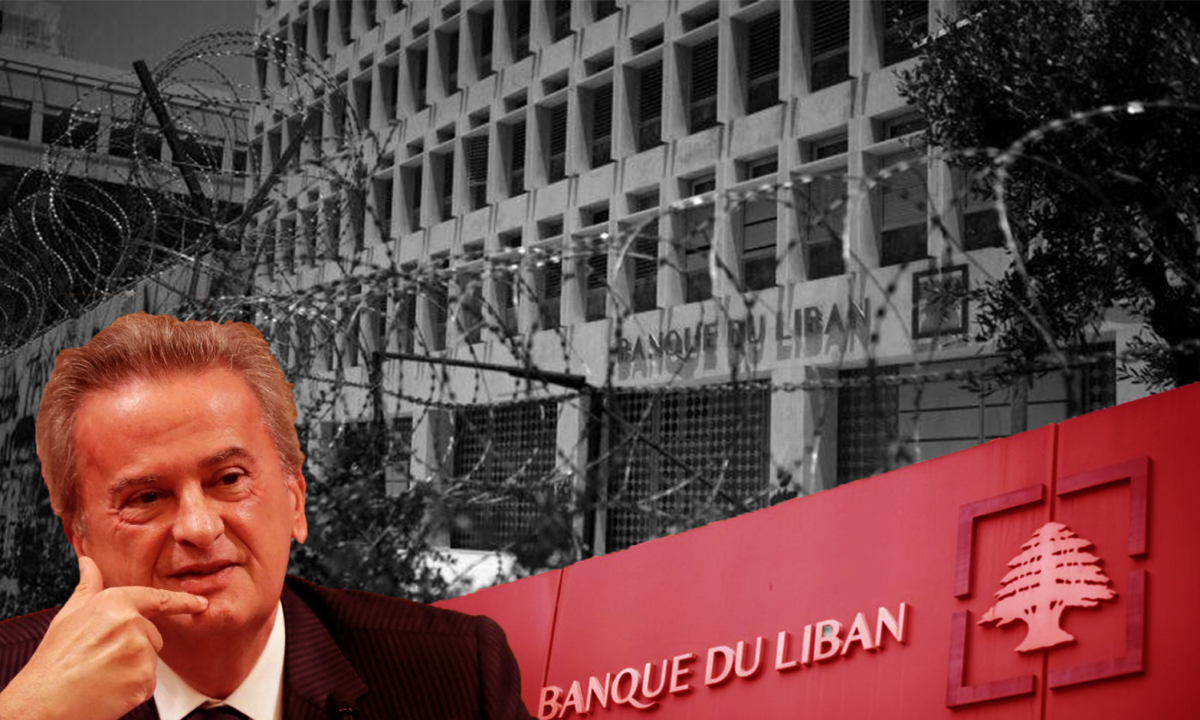
Former BDL governor Riad Salameh and the BDL headquarters in Beirut. (Credit: Montage by Guilhem Dorandeu/Photos by João Sousa/L’Orient-Le Jour and AFP)






After initiating proceedings on Aug. 10 against former Banque du Liban (BDL) governor Riad Salameh for theft of BDL funds, illicit enrichment, and money laundering, the attorney general at the Beirut Court of Appeal, Raja Hamoush, has launched prosecutions against him for violating the Code of Money and Credit.
These prosecutions also target the former CEO of Bank Audi, Samir Hanna. They follow a complaint filed by the current BDL governor, Karim Souhaid, and were announced last January at a press conference, without naming the individuals targeted at the time.

According to our information, the complaint concerns shares acquired in 2010 by a group of investors assembled by Bank Audi from the Egyptian company EFG Hermes, which was then Bank Audi's main shareholder. The company eventually sold its entire stake in the Lebanese bank for about $900 million, according to a source familiar with the case. According to the same source, a company established in the Cayman Islands, MOSF, then acquired a portion of Bank Audi's shares, issuing bonds in return secured by both these shares and Bank Audi's credit. The BDL subscribed to these bonds for a total of $153 million.
However, Karim Souhaid's complaint is based in particular on Lebanese law provisions that prohibit BDL from taking stakes in private institutions, except in cases of extreme emergency related to the stability of the banking sector. The defense, by contrast, argues that Article 70 of the Code of Money and Credit gives BDL the power to intervene to safeguard the strength of the banking system and economic stability. The defense also notes that, in any case, the loan granted as part of this operation was fully repaid, along with more than $33 million in interest.

When Judge Hamoush first initiated proceedings, he forwarded to the financial prosecutor the part of the case relating to the alleged violation of the provisions of the Code of Money and Credit, since it fell under this office's jurisdiction. However, the financial prosecutor returned the file to him on Tuesday, asking him, on the basis of a provision of the Code of Criminal Procedure that authorizes such a transfer, to take charge of prosecuting this alleged violation himself. Hamoush complied with this request.
A judicial source told L’Orient-Le Jour that this procedure ensures a better process of justice than in cases where prosecutions are divided between two prosecutors. The chosen option now makes it possible to limit the matter to a single prosecuting authority, with whom the investigating judge can work until the investigation is completed and the indictment issued.
Conversely, splitting the two aspects between two prosecutors could have led to discrepancies in their positions. One, for instance, could decide to appeal the indictment, while the other could approve it and choose not to challenge it, creating judicial inconsistency.

 8 p.m. recap: Israel again threatens Beirut’s south suburbs; 2 ships hit near Hormuz; Riyadh football matches canceled