






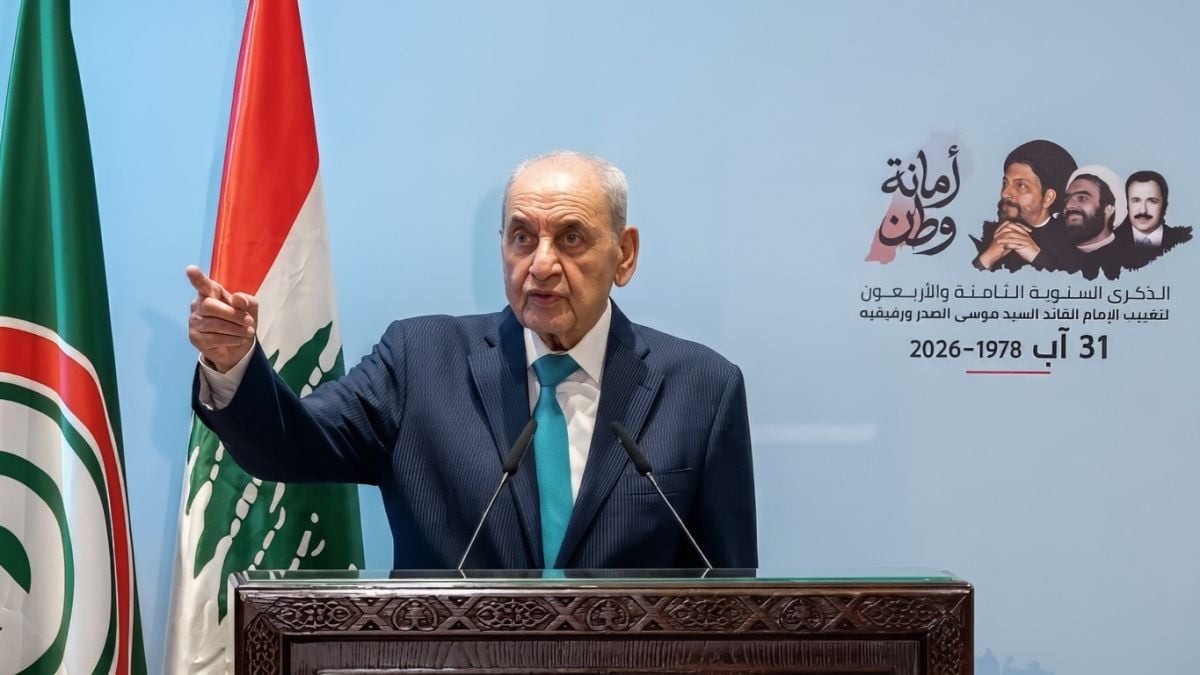
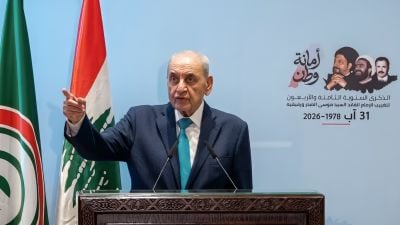
Parliament Speaker Nabih Berri delivers a speech on Aug. 31, 2026. (Photo: Hassan Ibrahim: Lebanese Parliament)






BEIRUT — For the 48th anniversary of the disappearance of Imam Moussa Sadr and his two companions, Parliament Speaker and Amal Movement leader Nabih Berri gave a speech akin to a true political manifesto. As well as paying tribute to the missing imam, Berri addressed the issues most concurrent in Lebanon today: the future of the South, Hezbollah's weapons, Lebanon's negotiations with Israel, and the state's ability to impose its sovereign choices. By rejecting any prospect of turning the South into a so-called "buffer zone" and denouncing negotiations held "under fire," Berri mainly sought to mark the debate with several red lines, from preserving civil peace and national unity, to reasserting the central role of the Lebanese Army.
In Berri's view, Israel's escalation in the South is not simply a confrontation with Hezbollah, affirming that it is part of a broader plan to weaken Lebanon, its unity, and its stability. Hence his call to address this new phase on a national level, going beyond partisan logic and sectarian divides.
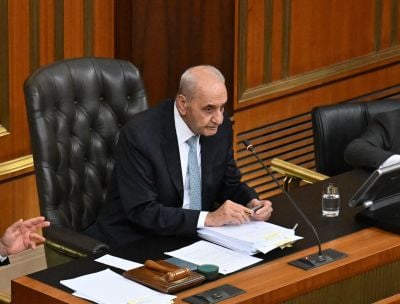
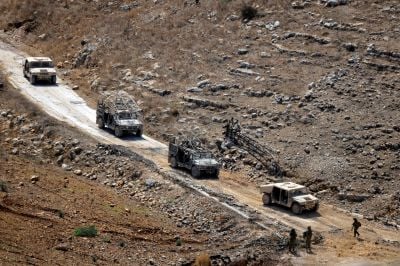
In his speech Monday, Berri did not miss the opportunity, in this context, to channel indirect criticism at President Joseph Aoun and his insistence that direct negotiations with Israel are the only possible solution to save Lebanon. "Existential dangers do not give anyone the right to act, under any pretext whatsoever, in the name of the framework agreement or any secret annex whatsoever," he declared as Israel threatens to launch a large-scale operation to seize the strategic hill of Ali Taher, near Nabatieh. "We have warned of the consequences of negotiating under fire: seven rounds of negotiations... what has been the result? The occupied zones have expanded, destruction has increased, and the number of martyrs has risen," he listed, as a new cycle of bilateral talks is reportedly scheduled for September in Rome.
Berri reiterated his attachment to U.N. Security Council Resolution 1701 and to the UNIFIL peacekeepers, whose mission expires this year. The Hezbollah-Amal duo in particular fears that these arrangements will be replaced by the agreement between Lebanon and Israel, which provides for a verification mechanism that would not be subject to the Security Council (and which, therefore, could be controlled by the U.S.) Finally, he emphasized that "the geography of the South cannot be divided between zones north and south of the river," once again rejecting the idea of "pilot zones" set up in several areas of southern Lebanon as part of this agreement's implementation.
Berri then referred to the 13th point of the framework agreement, under which Lebanon and Israel commit to renounce "any hostile or harmful action within international political or legal bodies." "We refuse to give up Lebanon's right to prosecute Israel for the crimes of genocide it commits. Renouncing this right is akin to surrendering sovereignty, and this right must not be called into question," he stated.
'Israel is aiming for... discord'
Berri argued that Israel seeks primarily to increase internal tensions. "What Israel is aiming for is neither Hezbollah, nor its weapons, nor the Amal movement, nor the Shiite community, but rather discord... Do not lose Lebanon to internal wars, to divisions, or to political and security errors that could be fatal," he warned, urging not to let fundamental disagreements degenerate into a new internal rift.
Berri also established the Lebanese Army as a red line, rejecting any challenge to the military institution or any attempt to diminish its role. This position comes as pressure mounts to reinforce the army's deployment in the South and to assign it increased security responsibilities. He continued: "We refuse to have the role of the army questioned and we will not accept the creation of a buffer zone or a security belt in southern Lebanon, under any pretext whatsoever."
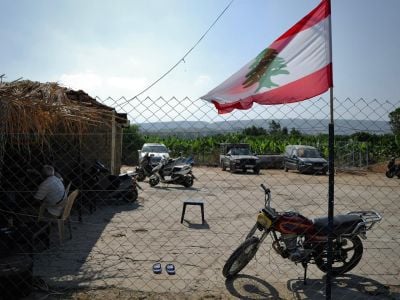
At a time when debate over the future of Hezbollah's weapons dominates discourse, Berri asserted that it is up to the state to rebuild and protect south Lebanon. "The South is an integral part of Lebanon, and the responsibility to protect it, alongside its residents, and to rebuild it falls to the state," he stated.
'Sadr's jailer is gone'
Berri also returned to the main reason for this commemoration: the still-unresolved disappearance of Imam Moussa Sadr. Founder of the Amal movement and a major figure of the Lebanese Shiite community, the imam went to Libya on Aug. 25, 1978, accompanied by Sheikh Mohammad Yaacoub and journalist Abbas Badreddine, at the invitation of Muammar Gaddafi's regime. The three men were last seen in Tripoli on Aug. 31 before disappearing. The Libyan regime then claimed they had left the country for Rome, a version never substantiated by Italian and Lebanese investigations. "The jailer of Imam Sadr is gone, but the mentality of those who succeeded him has not changed and has not cooperated with Lebanon," accused Berri, thus targeting Muammar Gaddafi, killed in 2011, and the Libyan authorities who succeeded him.
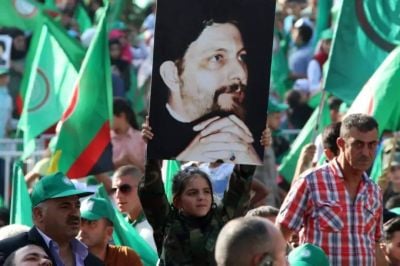
The case continues to poison relations between Beirut and Tripoli nearly half a century later. It notably led to the nearly ten-year detention in Lebanon of Hannibal Gaddafi, son of the former Libyan leader, prosecuted for "concealing information" about the fate of the imam and his companions. He was ultimately released in October 2025, for a bail of $900,000, without any clarity on the fate of the three men.
Mister Bury… 1) virtually ALL negotiations in history take place “under fire” or else no one would have a need to negotiate 2) you ask about “results” - tell me what benefits to the Palestinian people have resulted from Iran’s martyring of thousands of Lebanese ??
01 September 2026 07:35