






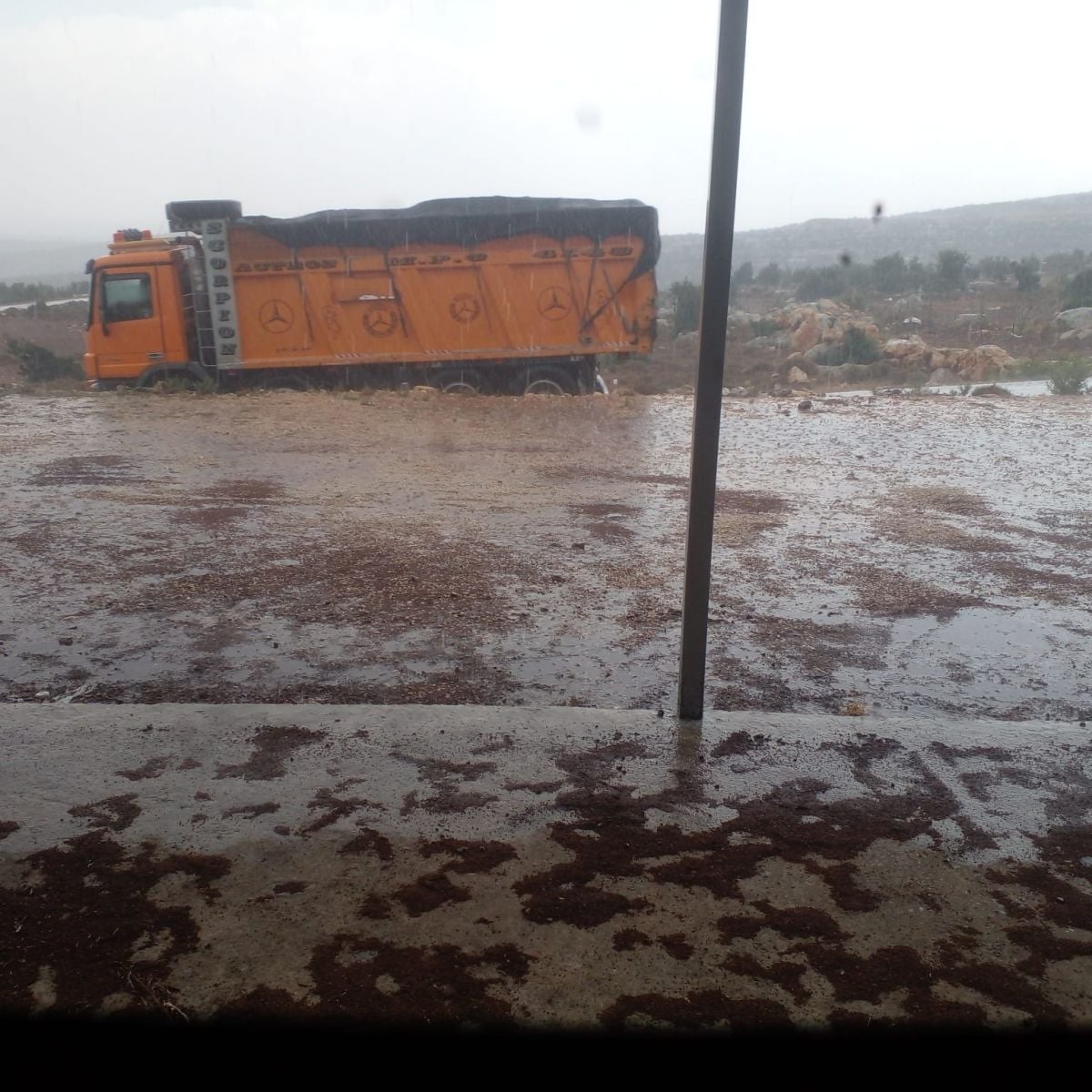
A truck is driving as heavy rains fall on the village of Akroum, in Akkar, North Lebanon, on Saturday, Aug. 29, 2026. Photo provided by our correspondent in the region, Michel Hallak.






The cold air mass moving into Lebanon from Turkey, which had been forecast to affect the country this weekend, was significantly impacting North Lebanon on Saturday, bringing strong winds, heavy rain, thunderstorms and dense fog to higher elevations, according to local media and our correspondent in the region, Michel Hallak. Hail showers hit Akkar, while heavy rain was also reported in several parts of the country, including Jbeil and Metn. Meanwhile, the municipality of Haret Hreik in Beirut’s southern suburbs called on residents to “stay away from damaged buildings.”
Winds in Akkar exceeded 70 kph, our correspondent reported. Torrential rain caused flooding in the village of Akroum. Heavy rain also caused part of a retaining wall to collapse onto an agricultural road in Andkit, Akkar. Farmers in the region, particularly those with plastic greenhouses, had been warned about strong winds and the risk of sudden flooding. Fishermen were also urged not to go out to sea during the storm, as waves had already exceeded 2 meters in height, while motorists were advised to drive carefully because of the risk of skidding.
In Tripoli, strong winds knocked down several trees in the Zahriyah neighborhood. A potentially serious incident was also avoided on Abdel Wahab Island in Mina, Tripoli, after Civil Defense rescuers saved an 18-year-old who had become trapped under a bridge, according to a statement from the rescue service.
“He became trapped under the bridge on Abdel Wahab Island while swimming as the winds were getting stronger,” Civil Defense said.
Several hours earlier, Civil Defense had issued a statement warning of “the risks associated with swimming and all types of water activities and sports along the coast” over the weekend.
Haret Hreik municipality issues warning
As the weather system moved toward Beirut, the municipality of Haret Hreik, a neighborhood in the southern suburbs that was particularly affected by Israeli attacks in autumn 2024 and spring 2026, also issued a warning.
It called on residents to “stay away from damaged and cracked buildings, not to approach them or remain nearby,” citing “stronger winds and the risk of falling stones and parts of facades.”
The municipality also urged motorists “to avoid parking their vehicles near these buildings, exercise the utmost caution and follow safety instructions.”
Several buildings have partially or completely collapsed in Beirut’s southern suburbs since late 2024 because of cracks caused by previous Israeli strikes, without causing any casualties. Following the open war between Hezbollah and the Israeli army in late 2024, a study estimated that about 50,000 homes in the area had been damaged.
The area’s population density partly explains the scale of the damage. The impact of the Beirut port explosion on Aug. 4, 2020, and the earthquake in Syria and Turkey that also shook Lebanon on Feb. 6, 2023, has also had a lasting effect on some building foundations.

 8 p.m. recap: Israel again threatens Beirut’s south suburbs; 2 ships hit near Hormuz; Riyadh football matches canceled