


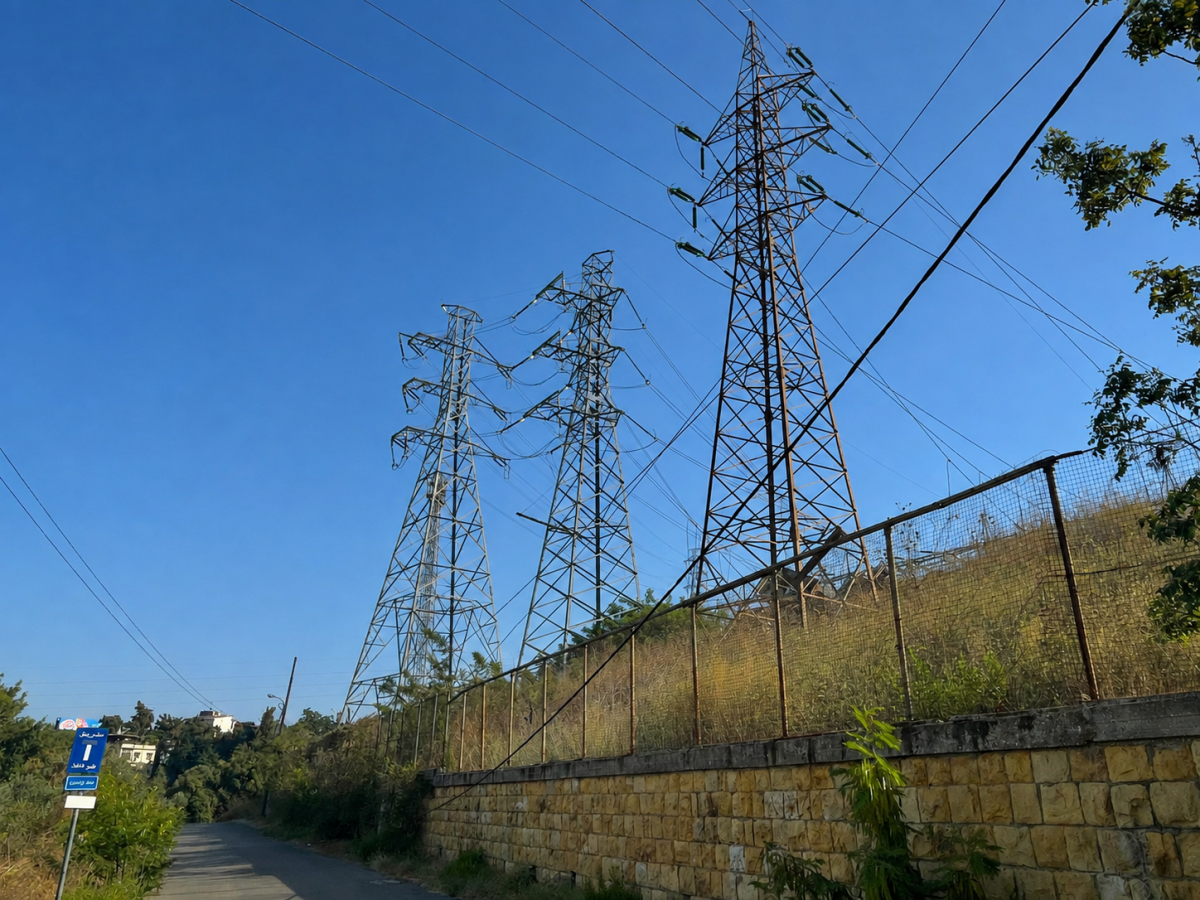
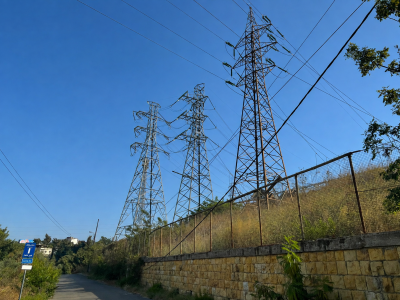
High-voltage electric pylons in Baabda, on August 22, 2024. Illustrative photo by Philippe Hage Boutros/L’Orient-Le Jour.






Ten days after first issuing a formal notice to public administrations, public institutions and municipalities to settle their overdue electricity bills, Electricité du Liban (EDL) said it took action against defaulters, according to a new statement that in reality appears more like a relaxation of its initial ultimatum than strict enforcement.
EDL announced that it “began cutting power” to entities that neither settled their debts nor contacted it within the set period to request an extension or agree to a payment schedule. However, EDL provided an additional 10-day period to those that have already paid part of their dues to clear their debts.
In its formal notice of Aug. 14, EDL granted all concerned public entities, except public hospitals, five business days as of Monday, Aug. 17, to pay their bills and arrears or face a cutoff. According to the provider, this threat has borne fruit. EDL has not provided the list of public entities that paid their bills, simply issuing its “thanks” to those that responded.
Who has paid?
At least two sources close to the matter contacted by L’Orient-Le Jour indicated that the Defense Ministry and the army are now up to date with their payments, and that Beirut airport has cleared part of its backlog. When reached for comment, a source in EDL management said the utility still does not have all the information, as some payments are made through the Finance Ministry. Energy Minister Joe Saddi told L'Orient-Le Jour that EDL is fully autonomous regarding this matter.
EDL acknowledged that it has toned down its approach toward the other administrations, institutions, and municipalities. It explained that the goal is not to cut their power, but to push them to pay their bills or at least contact EDL as quickly as possible, because it needs the funds to keep buying fuel, which has become increasingly expensive following a rise in hydrocarbon prices due to the war between Iran and the United States. It also stressed that “the measures adopted are being applied to all entities concerned according to uniform criteria.” The aforementioned source nonetheless assured that the provider would not hesitate to follow through on its threats if necessary.
Extra costs to cover
To justify its pressure campaign, EDL pointed out in its Aug. 14 statement that its budget for 2026 was based on a price of around “$680 per ton of gas oil — the fuel consumed by its two main operational thermal power plants — whereas it is currently trading at around $1,500.”
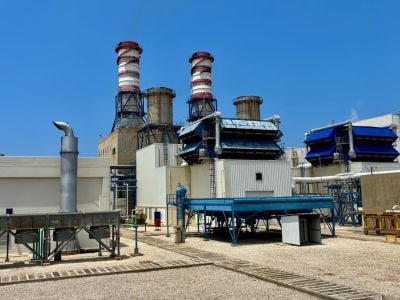
The energy minister also said rising oil prices had sharply increased production costs at the two operational thermal plants, Deir Ammar in north Lebanon and Zahrani in south Lebanon, during his Friday press conference, where he announced an audit of the former power ships. According to EDL estimates, the extra cost now stands at $30 million per month just to maintain 2 to 4 hours of electricity per day — the bare minimum for network stability — bringing the total cost to $66 million. The cost ranges from $45 to $50 million for 4 to 6 hours (a total of $95 million), and over $60 million for 7 to 9 hours ($126 million). These are huge expenses for a country like Lebanon, but they justify a change in the country’s energy policy.
The production cost at the two plants currently reaches 16 to 21 cents per kWh due to rising fuel prices, while rates, unchanged since 2022, remain at 10 cents below 100 kWh per month and 27 cents for consumption above that. Since the government is currently neither willing to increase these rates nor able to fund more efficient power plants, collecting arrears remains the quickest way to raise enough funds.
Amount of arrears
Earlier this month, during a tour in northern Lebanon, Saddi said that public sector debts owed to EDL reached $250 million as of Dec. 21, 2025, and are increasing by about $12 million a month. The war in south Lebanon also had a major impact: according to EDL management, contacted by L’Orient-Le Jour, uncollected bills from public and private customers due to the wars in 2024 and 2026 reached $50.7 million, plus another $30.3 million due to the exemption granted to subscribers in south Lebanon in 2024, and nearly $115 million in war-related damages, though no further breakdown of these figures was provided.
In addition to this shortfall are the increase in unpaid bills and electricity theft in the private sector, for which no consolidated data has yet been published. Collection from individuals and companies is handled by four EDL subcontractors — BUS, NEU, KVA, and Mrad — that divide the territory. “It’s not households, but large companies or private entities that don’t pay their bills. They’re known, but EDL doesn’t use the necessary tools to pursue them,” a source close to one of these companies said. This accusation is denied by EDL, which cites a binding procedure before any cutoff: several warnings, then a change in the meter’s status opening a six-month window for informal collection before any real legal action is taken.
The efficiency and cost of EDL’s service providers have been a regular subject of debate since their arrival in 2012. These companies cite the succession of crises in the country since 2019, as well as their dependence on EDL's decisions, which they say has hampered their work. According to a source at one of these companies who wished to remain anonymous, progress made before 2019 in reducing outages and unpaid bills has evaporated with the crisis. Of the 1.2 million subscriptions traditionally claimed by EDL, “losses rose from 15 to 20% among the best-performing firms and from below 30% in the laggards to over 50% for all now,” the source lamented, calling for more autonomy.
This article was originally published in French in L'Orient-Le Jour.

 1 p.m. recap: Third death in 2 days in Israeli-occupied south Lebanon, Salam comments on the Dahr al-Baidar case, Saudi Arabia bombs Yemen