






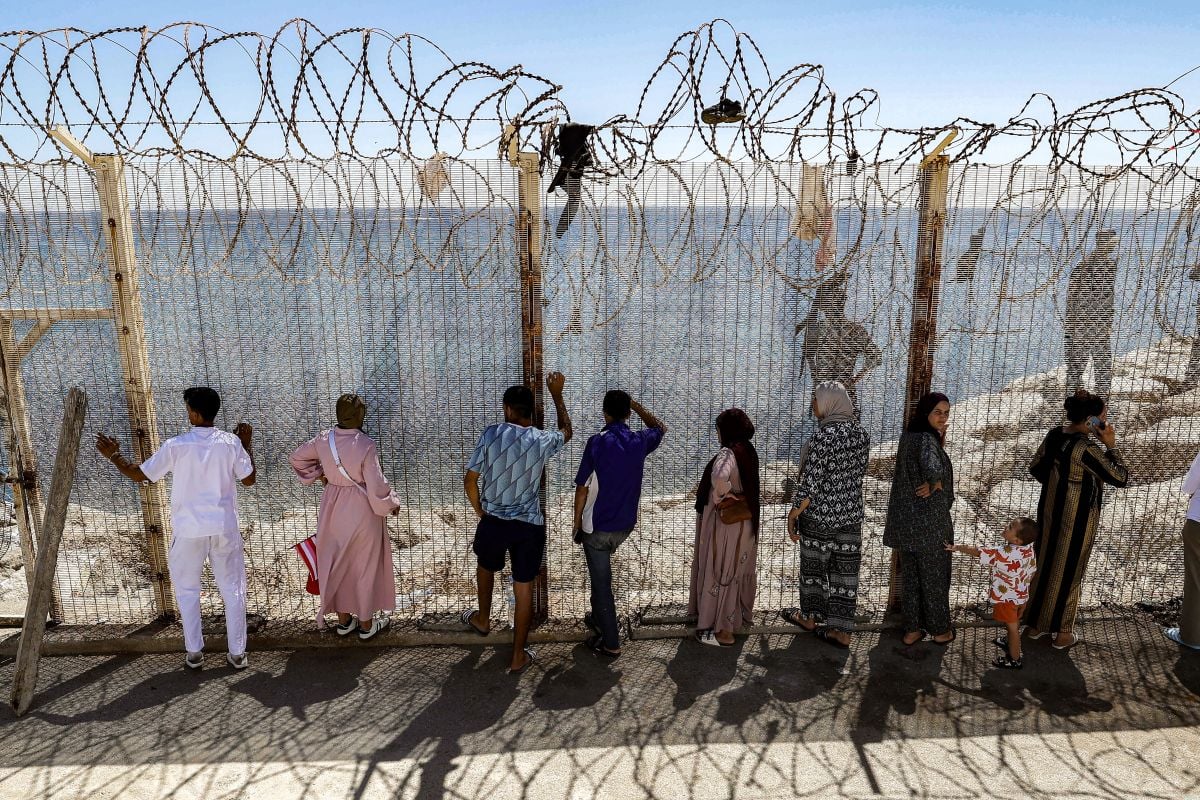
Relatives of Moroccans who illegally crossed the border into the Spanish enclave of Ceuta wait behind boundary barriers on the outskirts of the Moroccan city of Fnideq, Aug. 2, 2026. (Credit: Abdel Majid Bziouat/AFP)






Bilal E. stares out at the horizon, seated on the rocks along Fnideq beach with a plastic bag containing nothing more than a piece of bread.“You see? This is all I have left,” he says.On this August day, the deep blue of the Mediterranean mirrors the minaret of the town’s mosque rising just behind him. Despite the scorching sun, he cannot take his eyes off the sea.“I saw death,” he says. “A woman drowned right beside me. Her face still haunts me.”Bilal is one of nearly 72,000 people who crossed the land and sea border between Morocco and the Spanish enclave of Ceuta on July 30 and 31. In what may have been the largest mass unauthorized border crossing in Morocco’s history, at least 141 people drowned, according to the latest figures from the Spanish NGO Caminando Fronteras. Other estimates put the death toll at 77 on the Spanish side,...
Bilal E. stares out at the horizon, seated on the rocks along Fnideq beach with a plastic bag containing nothing more than a piece of bread.“You see? This is all I have left,” he says.On this August day, the deep blue of the Mediterranean mirrors the minaret of the town’s mosque rising just behind him. Despite the scorching sun, he cannot take his eyes off the sea.“I saw death,” he says. “A woman drowned right beside me. Her face still haunts me.”Bilal is one of nearly 72,000 people who crossed the land and sea border between Morocco and the Spanish enclave of Ceuta on July 30 and 31. In what may have been the largest mass unauthorized border crossing in Morocco’s history, at least 141 people drowned, according to the latest figures from the Spanish NGO Caminando Fronteras. Other estimates put the death toll at 77 on the...

 8 p.m. recap: Israel again threatens Beirut’s south suburbs; 2 ships hit near Hormuz; Riyadh football matches canceled