







Lebanese Parliament Speaker Nabih Berri during a session in Beirut on July 16, 2026. (Credit: Hassan Ibrahim/Lebanese Parliament)






BEIRUT — Parliament Speaker Nabih Berri highlighted his good relations with Saudi Arabia and Syria in an interview with the outlet Asas, saying that Beirut needs "tripartite sponsorship" from Riyadh, Washington, and Tehran, rather than moving closer to one axis at the expense of another.
Berri, the head of the Amal Movement and a close ally of Hezbollah, expressed a pessimistic view of the U.S.-sponsored Lebanon-Israeli framework agreement reached in late June. The agreement envisions a gradual withdrawal of Israeli forces from southern Lebanon in exchange for the deployment of the Lebanese Army and the disarmament of Hezbollah.
With regards to his relationship with Saudi Arabia, the parliament leader since 1992 said that it has been "constant." "Throughout my political career, I have never spoken a single offensive word against the Saudi Kingdom, because I am convinced of its attachment and goodwill toward Lebanon and the central role it plays in maintaining national stability."
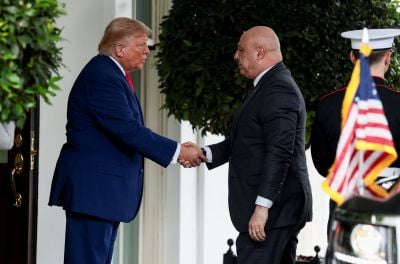
Berri assured that contacts with Saudi officials have "intensified" lately, especially with envoy Yazid bin Farhan. For him, "those who are appreciated by Saudi Arabia are appreciated by the entire world, and it seems that the kingdom appreciates me more than some Lebanese do," he continued. He also believed that it was thanks to his good contacts with Riyadh that U.S. President Donald Trump described him as a "good man" in front of Lebanese President Joseph Aoun last week in Washington. "I have always said it and I repeat: in Lebanon, we need a tripartite sponsorship composed of Saudi Arabia, the United States, and Iran," he declared.
Lebanese-Syrian relations
Berri also reiterated that he is in "constant contact" with Aoun and that the atmosphere between the two men is "excellent," despite some "differences on matters of political analysis." Within this context, he recalled his pessimism regarding the framework agreement with Israel, specifically commenting on the "pilot zone" of Zawtar Gharbieh, north of the Litani River, where the Lebanese Army was deployed last week. "Residents had to wait several days before being temporarily allowed back into their villages, while Israeli attacks continued." "How much longer will it take to achieve a total Israeli withdrawal and for the people of the South to return to their lands?" he asked.
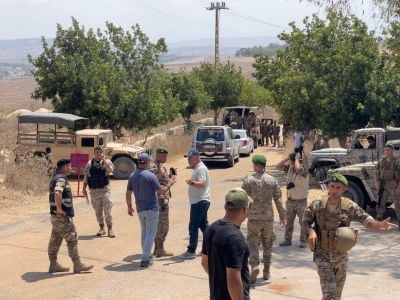
Regarding Syria, Berri said that in order to establish "healthy" relations with Beirut, these ties must address three issues: border control to prevent smuggling, demarcation of the land and maritime boundaries, and non-interference in the internal affairs of both countries. He said he had told Syrian Foreign Affairs official Assaad al-Shaibani that "Lebanon is bordered to the south by the [occupied] Palestinian territories, to the west by the sea, and to the east by Syria. If relations between Lebanon and Syria are not excellent, we will all end up throwing ourselves into the sea and drowning."

Lebanon and Syria opened a new chapter in their relations after the fall of Bashar al-Assad's regime, which was overthrown by a coalition of jihadist rebel groups in December 2024. Relations between the two countries had been poisoned by years of tensions related to Syrian tutelage over Lebanon until 2005, followed by the Syrian civil war in which Hezbollah became involved. On this subject, Berri pointed out that he was one of the only Arab leaders to have refused to get involved in the conflict, which, according to him, "strained" his ties with the Assad regime.
