






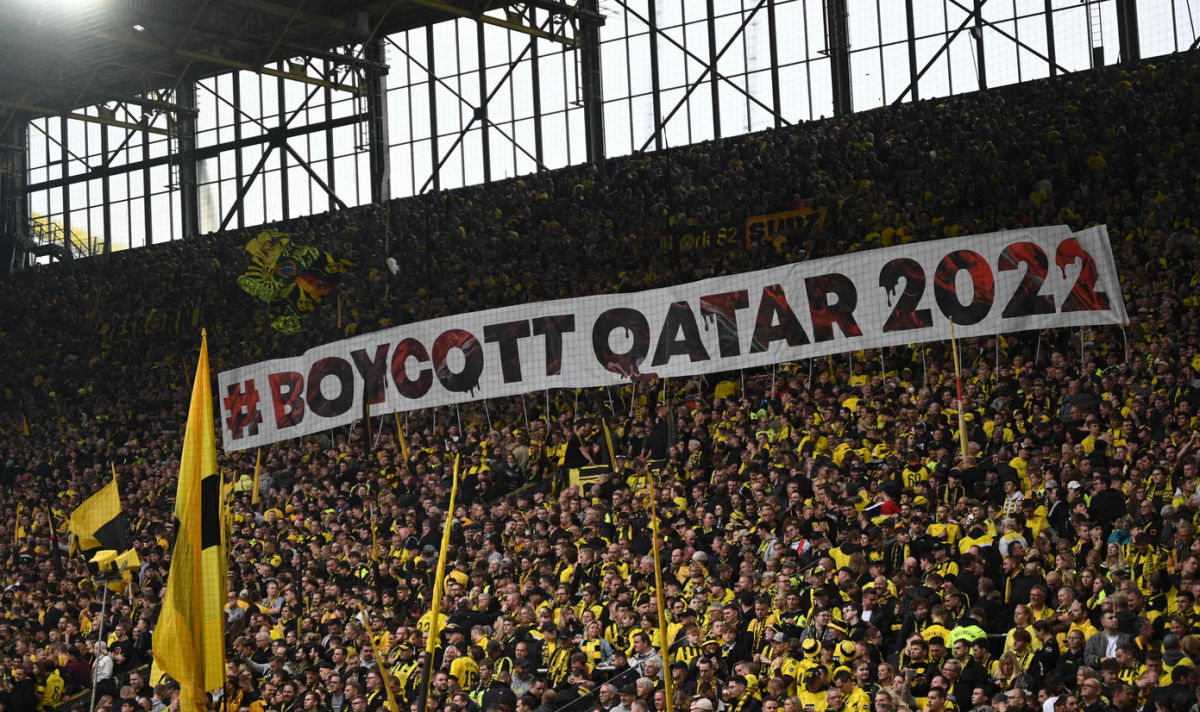
Supporters of the German club Borussia Dortmund holding a banner calling for a boycott of the 2022 FIFA World Cup in Qatar. (Credit: Ina Fassbender/AFP)






After 1978, 1982, 2006, and many others, Lebanese audiences are preparing to experience yet another World Cup in the middle of a summer marked by a war with Israel. As the tournament kicked off Thursday in Mexico, Canada, and the United States, the pattern appears likely to repeat itself, with parties involved seemingly more inclined to start a second half than to blow the final whistle.
While a few muted flags of Lebanese favorites (Brazil, Germany, and, thanks to Lionel Messi, Argentina) are appearing here and there, it is nothing like the atmosphere that normally takes over the country’s streets every four years.
In 2022, despite already difficult circumstances, Lebanon went all in for the first World Cup held in the Middle East. The spotlight the tournament brought to Qatar, then at the height of its soft power, ultimately turned against it.
There were waves of criticism in headlines, boycott calls displayed on banners in stadiums, and European teams wearing shirts reading “Human Rights.” At the time, Qatar was presented as everything a host nation should not be: an authoritarian state with little football culture, accused of trampling on the rights of thousands of migrant workers, many of whom died on stadium construction sites, and of securing the tournament under dubious circumstances.
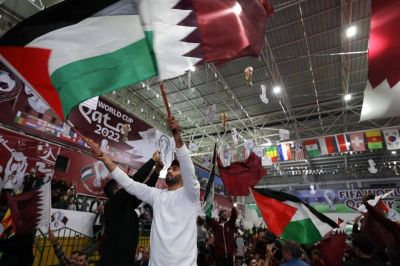
Consolation prize
Four years later, that set of standards once used to portray Qatar as one of the worst hosts ever seems to have been set aside. Already weakened by the relative silence over the 2018 edition in Russia, these waves of outrage appear to have faded, echoing the “double standards” that have become more visible since the start of the Israeli war in Gaza.
Could Emir Tamim al-Thani have been right when he attributed the campaign against his country to “people who do not accept that a Muslim Arab country is hosting the World Cup”?
U.S. President Donald Trump, the recipient of FIFA’s “Peace Prize” (a consolation prize for the Nobel, handed out by neo-Lebanese FIFA President Gianni Infantino), has struggled to extinguish the fire he himself helped ignite in the region by aligning with Benjamin Netanyahu’s adventurism.
For the first time, and in the absence of an “Olympic truce,” a World Cup host must welcome the team of a country with which it is openly at war, even after a strange attempt to replace it with Italy.
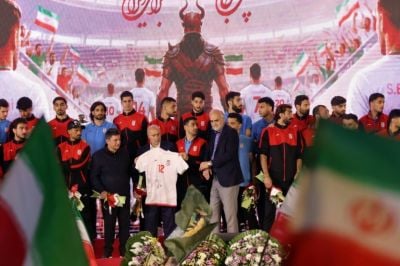
It remains to be seen what awaits the Team Melli players, who have been forced to set up their base camp in Mexico. Upon arrival on U.S. soil, 15 members of their delegation already had their visas canceled.
The issue is all the more striking given the treatment of their Iraqi neighbors. Striker Aymen Hussein was subjected to seven hours of questioning at U.S. customs, while accredited photographer Talal Salah was turned away. So was Somali referee Omar Abdulkadir Artan, named Africa’s best referee in 2025, and other teams that endured humiliating searches on the tarmac, from Senegal to Brazil. It took the United States’ stricter immigration policy for outrage to resurface, even faintly.
The 2026 World Cup has barely begun, and it is set to become the most polluting tournament in history, with a carbon footprint scientists estimate is twice that of previous editions. ICE agents will patrol around American stadiums — temples of consumerism, themselves air-conditioned — their presence alone enough to discourage some fans from coming to support their national teams.
As for the awarding of the tournament, it sparked far less protest than Qatar, even though Trump had threatened retaliation against countries that did not support the U.S. bid during his first term. The 2026 World Cup has barely started, and already it is clear that no host country has so brazenly disregarded the basic rules it is supposed to uphold, without so much as a reprimand from the FIFA president.
All that remains is to hope that in Lebanon, for 90 minutes, the rhythm of Israeli bombings and the hum of its aircraft will also pause — just as in those brief moments of respite remembered by those who lived through the World Cups of 1978, 1982, 2006, and so many others.

 8 p.m. recap: Israel again threatens Beirut’s south suburbs; 2 ships hit near Hormuz; Riyadh football matches canceled