








There are currently three dynamics at play in the Middle East. The first is Israeli: since Oct. 7, 2023, it has been characterized by an open-ended war with no political horizon, underpinned by the belief that victory can only be achieved through the complete “eradication” of the enemy. However, given that the enemy in question will never surrender, and that the State of Israel is unwilling to make any compromise with either itself or any other actor — starting with the Palestinians — it may achieve numerous tactical successes and even several strategic developments in its favor, but nothing truly sustainable.
This pattern goes far beyond the case of Benjamin Netanyahu, although it is not without electoral calculations, and the Israeli prime minister embodies more than anyone else this idea of submission (rather than peace) through force. It has terrible consequences for those affected — whether in Gaza, the West Bank, or Lebanon — but also for Israel itself, both domestically and in its relationship with its allies. By offering nothing but war or capitulation, not only to the Iranian axis but also to the Palestinians, Syrians, Lebanese and more broadly the Arab world, Israel condemns itself to never truly winning.
The second dynamic is Iranian. Like Israel’s, it rejects compromise in favor of prolonged confrontation. But its version of victory lies paradoxically in its ability to avoid defeat. Whatever its losses or setbacks, it is unlikely to ever acknowledge defeat. This is not merely a matter of posture, but reflects a core belief that survival — whatever the cost — is the highest form of victory. Iran’s leadership sees time as its main asset, and knows that what is destroyed by its enemies can eventually be rebuilt. The only imperative is to never capitulate. While it could be argued that an agreement involving the abandonment of its nuclear program and regional policy would bring greater prosperity, integration and long-term stability, in its view, concession is tantamount to suicide.
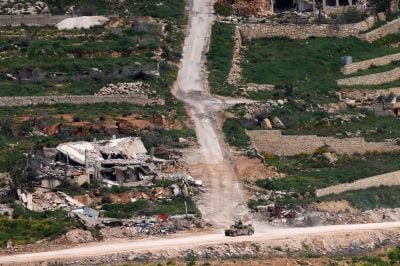
Israel doesn’t know how to win, and the Islamic Republic doesn’t know how to lose. That’s why the war between them is far from over.
A third actor, however, is also part of the equation. Although far less structured and more unpredictable than the other two, it is the American dynamic that continues to call the shots. It is characterized by a desire to strike hard and fast, and then secure agreements that are as empty as fragile, solely to satisfy Donald Trump’s ego.
The U.S. president is currently in a difficult position. He had hoped for a swift war marked by decisive gains that would secure his place in history. That has not materialized. He is now seeking a deal that he can present as an unprecedented victory for his country. But here too, there is every indication that this approach is unlikely to succeed.
Donald Trump must choose between a bad deal or an endless war. When he is not directly involved, such as in Gaza or Lebanon, he does not hesitate to choose the former. But in the case of Iran, that would mean acknowledging his defeat.
One could also point to a fourth dynamic: that of the Arab countries and Turkey, which are more serious and active than the U.S. in their desire to reach a comprehensive agreement, but which remains limited in its leverage to influence the other three.

The long-awaited U.S.–Iran grand bargain that many in the region — and particularly in Lebanon — have hoped would settle all outstanding disputes, including the question of Hezbollah, still appears as distant as ever.
The reality is far less appealing. Either the United States agrees to a flawed deal with Iran, which would in any case not be respected by either Tel Aviv or Tehran, and the region — like Gaza — could become a buffer of ruins for years to come, a war of attrition with no political horizon, until an internal or external factor triggers a turning point. Or Washington once again opts for escalation, which would come at a significant cost for the Middle East, without necessarily offering a credible or lasting way out of the crisis.
There will be neither peace nor stability in the region as long as the Iranian regime remains in place and the Palestinians do not have a fully fledged state. The problem is that these two goals, deeply intertwined, now appear in the minds of key actors more contradictory than ever.
This editorial was originally published in French in L'Orient-Le Jour and was translated by Joelle El Khoury.

 7 p.m. recap: 1 person killed near border with Lebanon; 200 kilos of explosives carried by mules; Riyadh shuts its airspace