






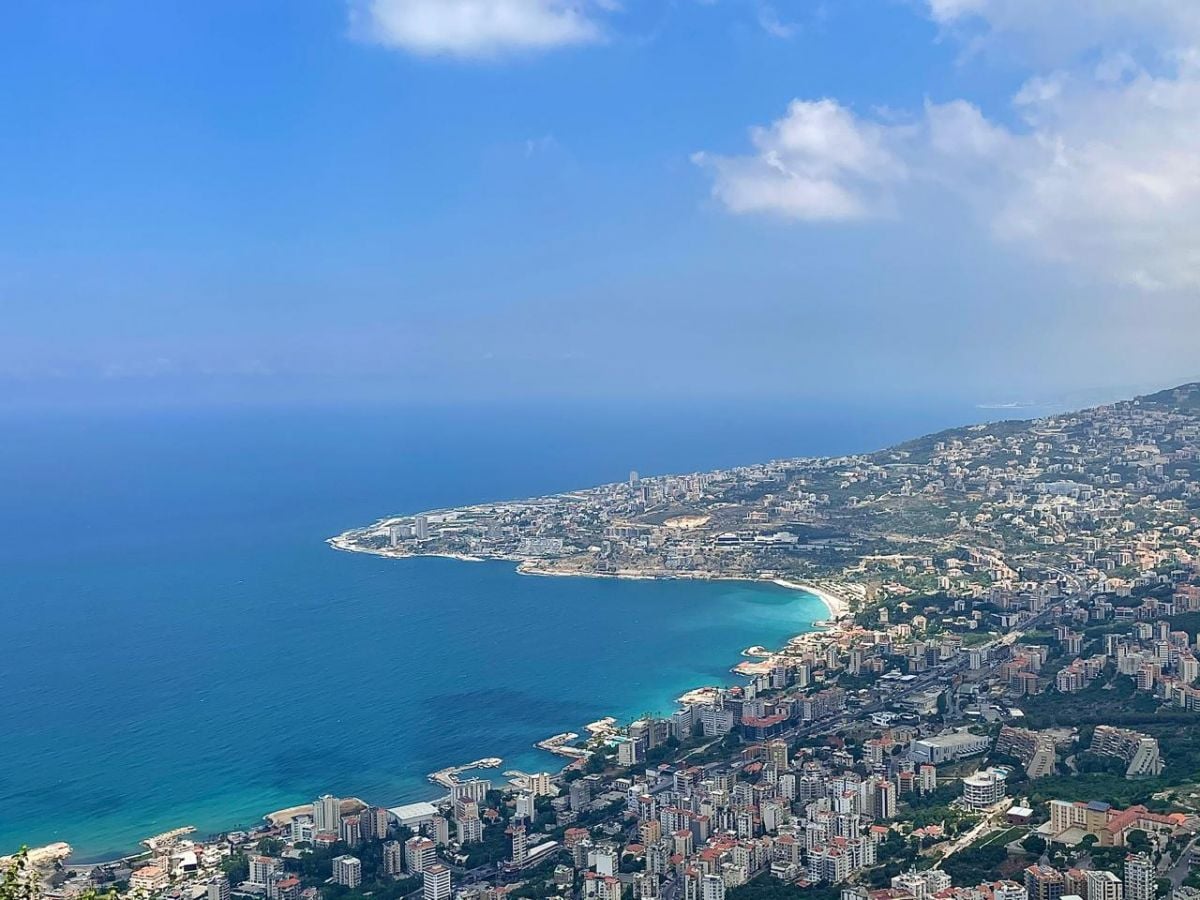
The bay of Jounieh on June 21, 2022. (Credit: Archive photo Philippe Hage Boutros/L'Orient-Le Jour)






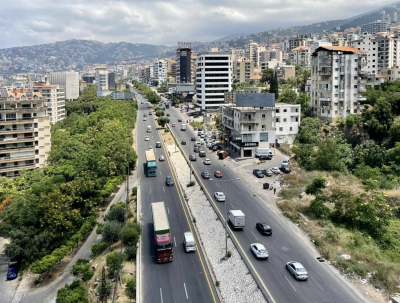
Public Works and Transport Minister Fayez Rassamny denied in a statement Wednesday the reports claiming that the project to widen the coastal highway in Jounieh, in Kesrouan, was canceled, assuring that the ministry was "ready to contribute to its funding as soon as the file is finalized."
The minister was responding to an article in Nidaa al-Watan, published this week, which said that several major infrastructure projects in Lebanon — including the widening of the Jounieh highway and a sanitation project in the Qadisha Valley — had been compromised following the cancellation of loans and grants by the European Investment Bank (EIB) and the French Development Agency (AFD), amounting to a total of around 494 million euros.
According to information from Nidaa al-Watan that has been have cross-checked, the affected projects include: the widening of the Jounieh highway (€70–75 million), Kesrouan sanitation (€70 million), the Qadisha Valley sanitation project (€34 million, financed by the AFD), the extension of the Ghadir basin wastewater treatment plant (€68.5 million), a road and employment project (€151.1 million), as well as Tripoli's sanitation networks (€96 million), all financed in euros and fully documented.
Nidaa al-Watan, whose article was picked up by several media outlets, adds that at the end of January 2026, the Lebanese government reportedly approved the Council for Development and Reconstruction’s (CDR) request to cancel these funds instead of postponing them, since the funds could not be reallocated to other projects.
Administrative delays
In his statement, which focuses mainly on the Jounieh project, Rassamny points out that the CDR is responsible for preparing the "technical, administrative and financial file," with the ministry providing "monitoring and coordination."
He adds that while he does not dispute the loan cancellation, "it is not his responsibility, but depends on the contractual mechanism and the terms of the loan between the CDR and the financing party, as well as the subsequent commitments and procedures," and that the latter, namely the EIB, reportedly requested the cancellation.
The minister did not specify how he plans to fund the project, considering that the 2026 state budget, passed last January, largely ignored investment expenses even before the outbreak of the war, with its human, material and financial consequences still unknown.
A source close to the matter told L’Orient-Le Jour that the cancellation of the various loans was mainly linked to the expiry of their validity with regard to project implementation on the ground, combined with Lebanon’s failure to honor repayments of other similar international commitments, amid the ongoing crisis since 2019 and intermittent war since 2023.
"In the case of Jounieh, the allocated funds were no longer updated, the state was unable to finance expropriations, and the process took far too long between the project's initial stages, dating back to 2012, and today. For the AFD project in Qadisha, the loan reached maturity without any achievement on the ground.
"In summary, sources indicate that the work needs to be redone from scratch and that Lebanon’s financial and administrative difficulties are the cause of these loan cancellations rather than the war," the source added. The source concluded that one of the main problems in executing these projects is the "incredibly long" amount of time that passes between the moment an international organization decides to grant a loan or donation to Lebanon and the ratification process for those loans or donations.
Recently, the World Bank threatened to suspend Lebanon's loan projects following delays in their adoption by Parliament.