






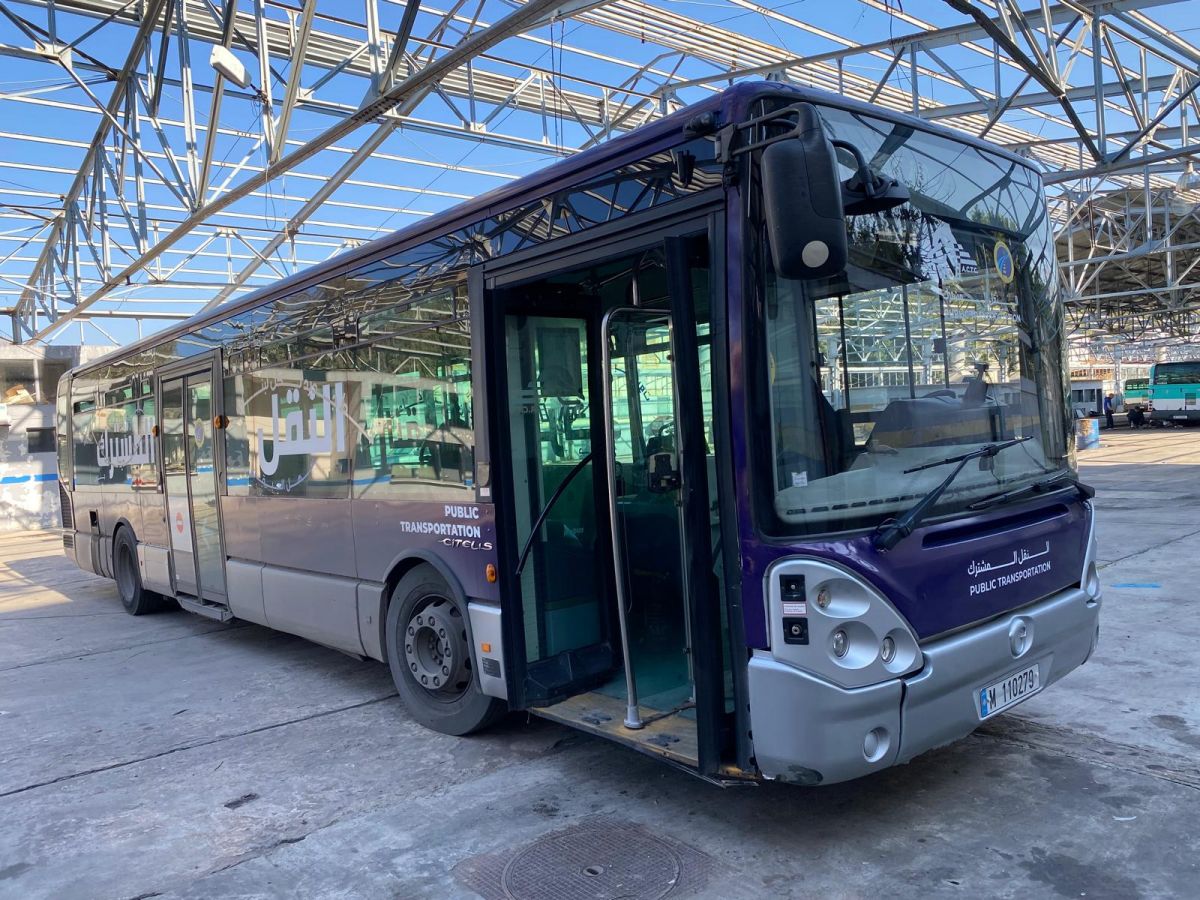
One of the 49 buses donated by France to the Lebanese state, parked at the ACTC company's headquarters in Mar Mikhael. (Credit: Nemtala Eddé/L'Orient-Le Jour)






BEIRUT — Public transportation continues to expand in Lebanon. The Ministry of Public Works and Transport confirmed the opening on April 22 of three new bus lines, which have been anticipated since new public buses were brought in, and which will now connect Beirut to Tripoli in the north, Sour in the south, and Chtoura in the Bekaa Valley.
These new routes are distributed as follows:
- Line ML1 to Chtoura in the Bekaa leaves from the Palace of Justice roundabout, in Beirut's Adlieh district, for LL200,000
- Line ML4 to Tripoli leaves from the National Museum of Beirut in Badaro, for LL150,000
- Line ML2 to Sour leaves from Khaldeh, south of Beirut, for LL170,000
It's not clear how often buses will run along the new routes are or how the schedules can be found. According to an earlier report from L'Orient-Le Jour, passengers seeking timing or exact routes will have to call the Ahdab Commuting & Trading Company (ACTC) operational center, where four to five employees work during bus operating hours (from 6 a.m. to 7 p.m.). ACTC is the private company that was tasked with management and maintenance of the bus routes. The fares are set by the state, two whom ACTC sends 10 percent of its gross revenue.
This is the first time since the new public transport service was inaugurated on Dec. 20, 2024, that it is covering regions outside of Beirut. Until now, the buses, which were introduced less than a month after the cease-fire with Israel came into effect, ran six lines that functioned largely to connect Beirut to its southern and eastern suburbs.
The six initial lines are serviced by 49 buses, donated by France in May 2022. The overall project involves the progressive rollout of 93 state-owned buses.
A total of eleven routes are planned as part of the ongoing implementation plan. The two remaining to be implemented are B6, connecting Beirut (leaving from Martyr's Square) to Damour, 20 kilometers south of the capital; and B7, connecting Beirut (leaving from Mar Mikhael) to Khalde, located at the southern tip of Beirut's international airport.
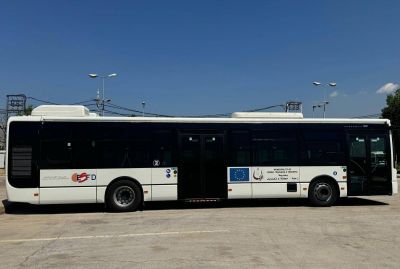
To inaugurate the new lines, the Railways and Public Transport Authority (OCFTC) released a statement announcing that the expansion is part of broader efforts by the ministry to develop Lebanon's largely nonexistent public transport network system and ease car traffic, which plagues Lebanon's north-to-south coastal highway and all of Beirut's main roads.
"In the coming days, these lines will be reinforced with more modern buses to meet the growing demand and ensure the regularity of the routes," the OCFTC statement reads.
Lebanon's Civil War and the war of 2006 decimated the country's public transit system. In its place, an informal network of privately owned vans and buses constituted the closest thing to public transit until the recent developments. These vans, which connected various cities and regions within Lebanon and ran extensively throughout Beirut, continue to operate.
