





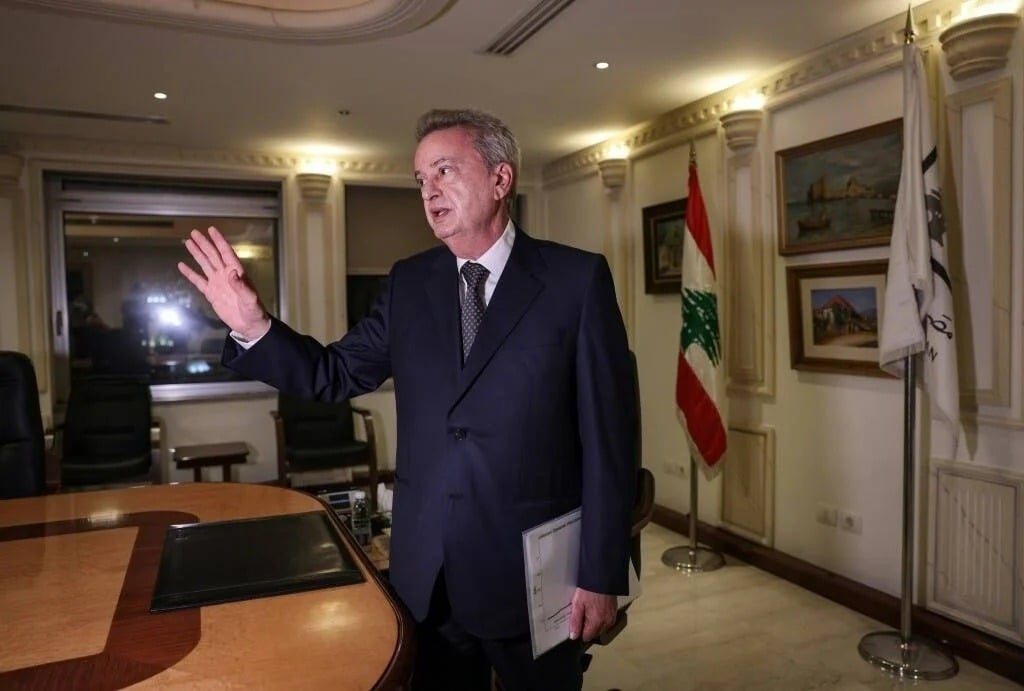
The former governor of the Bank of Lebanon, Riad Salameh, during an interview with AFP in Beirut, Dec. 20, 2021. (Credit: Archive photo Joseph Eid / AFP)






BEIRUT — Former Banque du Liban (BDL, Central Bank) governor Riad Salameh will return to Roumieh prison to continue his pretrial detention in the investigation opened following a complaint filed in January by current BDL Governor Karim Souhaid.
The Beirut Indictment Chamber, presided over by Judge Nassib Elia, has rejected an appeal filed by Salameh’s lawyer. On the same day, Public Prosecutor at the Court of Cassation Ahmad Rami al-Hajj also rejected Salameh’s request to be transferred to Bhannes Medical Center, following the findings of the medical commission he had appointed to assess the request.
The prosecutor also ruled, based on the doctors’ report, that the former governor could be transferred from Dahr al-Bachek hospital to Roumieh prison, where he was initially held following his first arrest at the end of July, at the request of his legal team. As before, Salameh will be held separately from other detainees, possibly in the Internal Security Forces’ Intelligence Branch building inside the prison, where he was previously detained. His family protested the decision, citing detention conditions they consider unsuitable for his health, which has deteriorated after more than a year in detention in 2024 and 2025 in a separate case.

Since last week, the former governor has been subject to a new arrest warrant issued by Investigating Judge Sheherazade Nasser in a case involving financial operations related to Bank Audi, in which he and former Bank Audi CEO Samir Hanna are being prosecuted. Prosecutor Ahmad Rami al-Hajj had issued a previous search warrant on July 31 after Salameh failed to appear at a scheduled hearing in the case.
The complaint filed in January concerns, among other things, securities that BDL allegedly subscribed to through companies, with Bank Audi shares serving as collateral. The alleged transactions reportedly caused significant financial losses, as central bank funds were placed with entities that were later found to be either fictitious or in financial difficulty.
Salameh, who served as BDL governor from 1993 to 2023 and is considered one of the main figures responsible for Lebanon’s financial collapse, is facing prosecution in several other cases involving alleged embezzlement, illicit enrichment and money laundering, both in Lebanon and abroad. He has consistently denied any wrongdoing.

 7 p.m. recap: Iran warns Egypt, Israeli soldiers vote in south Lebanon, Haret Hreik responds to Kataeb