







Ali Berro. Photo taken from his Instagram account.






BEIRUT — Beirut’s public prosecutor, Raja Hamoush, on Monday filed charges against Ali Berro, a journalist with the Hezbollah-affiliated channel al-Manar, and referred the case to Beirut’s first investigative judge, Roula Osman.
According to a judicial source interviewed by L'Orient-Le Jour, Judge Hamoush based his decision notably on articles of the Penal Code punishing detention of anyone who engages in "propaganda tending to stoke sectarian strife" (articles 295 and 317), and who "undermines the prestige of the state or its credit" (article 297).
The charges are also based on criminal provisions concerning insulting and defaming the president of the Republic, insulting the prime minister and ministers, and making death threats against them, as well as rebellion against governmental decisions.
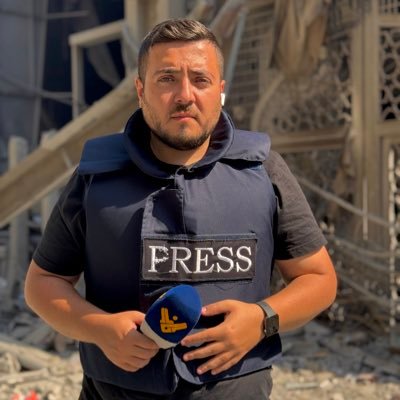
Recently, immediately after the March 2 decision by Cabinet regarding the withdrawal of Hezbollah's weapons, Berro threatened the ministers and Prime Minister Nawaf Salam, as well as President Joseph Aoun, to "remove their souls" if they wanted to "remove the weapons" of the Shiite party.
He labeled Cabinet a "government of dogs."
Last September, during the commemoration of the assassination of former Hezbollah leader Hassan Nasrallah (September 2024), Berro filmed himself in a video during the gathering organized on the corniche, facing the Pigeon Rocks.
In this provocative video, the journalist close to Hezbollah mocks Nawaf Salam by showing him the projection of Hassan Nasrallah's portrait on the rock. Next to him is Wafic Safa, former head of Hezbollah security.
Berro highlighted that the site was illuminated despite the ban, while declaring: "Even after his martyrdom, his finger broke your head, your neck, and your decision," referring to Nasrallah. A few days earlier, authorities had permitted a gathering at this site, while banning light projections.
This past January, Berro posted a video on Instagram, filmed on the road leading to the Baabda presidential palace. In it, he provocatively called on residents of the South, whose houses were destroyed by Israeli bombings, to "move into the Baabda palace," saying it "needs a bit of cleaning." "Your houses in the South are cleaner, but it'll do," he quipped.
The public prosecutor at the Court of Cassation, Jamal Hajjar, then summoned him, but he did not appear, invoking freedom of expression and the jurisdiction of the print media court. Due to his absence, a search warrant was issued for him.
On Judge Hajjar's orders, he was eventually arrested on Friday and questioned by the ISF Intelligence Branch, which forwarded his case on Monday to Judge Hajjar, who in turn sent it to Beirut Chief Prosecutor Hamoush, who is authorized to bring charges within his territorial jurisdiction.