



Members of the Islamic Revolutionary Guard Corps (IRGC) attend an exercise in southern Iran, in this handout image obtained on Feb. 16, 2026. (Credit: IRGC/WANA (West Asia News Agency)/Reuters)






"Several dozen officers" from Iran's Revolutionary Guards have reportedly left Beirut over the last two days, according to information obtained Friday by U.S. news outlet Axios from two senior Israeli defense officials and a third source familiar with the situation.
Only a "small contingent" of these officers is thought to have remained in Lebanon, but an Israeli official expects these departures to continue in the coming days.
The departures come as the Israeli military issued an ultimatum Tuesday and threatened to strike any Iranian official or Revolutionary Guards member in Lebanon as part of its offensive against Hezbollah. In response to those threats, the Lebanese government announced Thursday it would "arrest and repatriate" to Iran anyone in Lebanon connected to the guards.

According to Axios reporter Barak Ravid, the Iranian officers who left Lebanon were mainly members of the Quds Force, the elite unit of the guards, who "worked as military advisers to Hezbollah and exerted significant influence over its operations." Some operated from the Iranian embassy.
The Islamic Revolutionary Guards Corps increased its role alongside Hezbollah after Israel killed the party’s former chief, Hassan Nasrallah, on Sept. 27, 2024. Tehran’s influence also weighed heavily on the party-militia’s decision to enter the war, including a rocket attack on Israel on Sunday night into Monday.
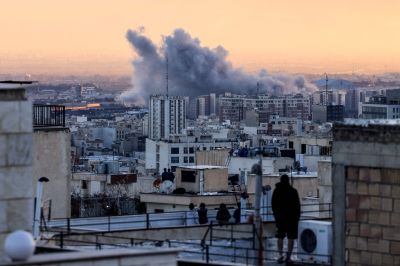
Since the onset of the war in the Middle East Saturday morning, launched by an U.S.-Israeli airstrike campaign on Iran, Axios says the Israeli military has claimed responsibility, for the assassination in Tehran of the head of the Quds Force's Lebanese unit, as well as his deputy in Beirut.
Diplomatic tensions between Tehran and Beirut have been running high since Nawaf Salam's government was formed in February 2025, and a series of Lebanese government decisions regarding Iran, including the suspension of all flights between the two countries. These decisions were made in an attempt to limit supplies – especially cash – from Tehran to Hezbollah. Iran had also repeatedly opposed Hezbollah’s disarmament as announced by the Lebanese government, sparking bitter exchanges with Lebanese officials, who accused Tehran of interference.