






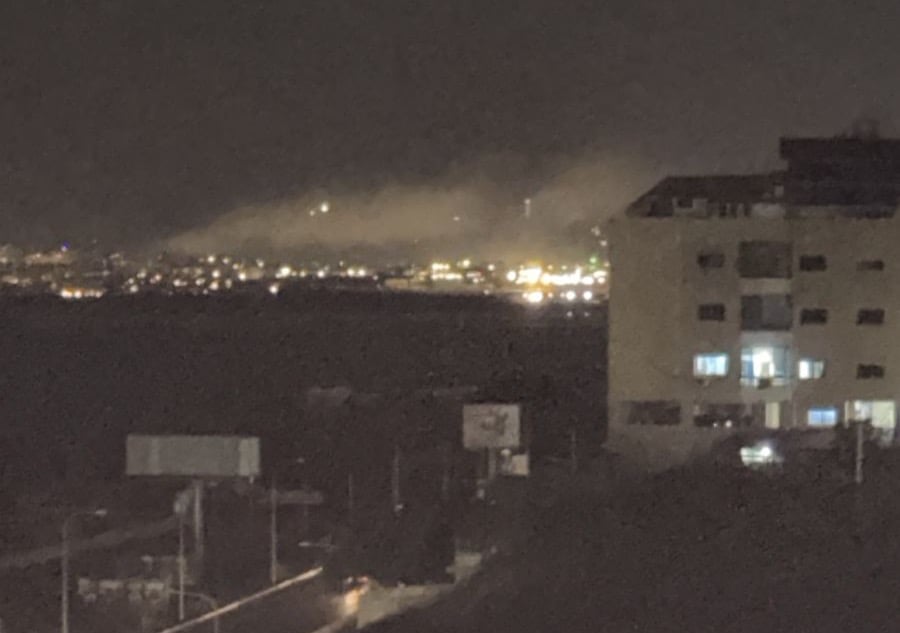
Israeli strikes on the southern suburbs of Beirut, March 2, 2026. (Credit: L'Orient-Le Jour)






Beirut’s corniche looked suspended in time on Sunday morning. For once, the war overtaking the region, including Gulf countries, felt far away.
Even though Hezbollah had threatened to intervene if Iran’s Supreme Leader Ali Khamenei was assassinated, no one took that threat seriously. The party was sending other reassuring messages, both to the government and journalists who were in contact with it.
But the ayatollah was their ultimate authority, a sacred figure whose assassination could not go unpunished. They could hardly stand idly by while their progenitor, the Islamic Republic, faced an existential war. But what did they stand to gain by entering a war where they had everything to lose and nothing to gain?
It became a general consensus that Hezbollah would not engage. That would be madness, even for the party's standards. But Hezbollah always has its reasons that reason itself ignores.
The nightmare resumed overnight from Sunday to Monday. We woke in the middle of the night the same way we did in 2024, and the same way we write these headlines, "by a series of Israeli strikes on Beirut’s southern suburbs."
Hezbollah has entered the war. It fired several rockets at Israel and claimed the attack.
Why? Why embark on a suicidal operation that will cost the party, its popular base and Lebanon so dearly, when it is not even in a position to save its Iranian patron?
We can always try to rationalize. Tell ourselves that it had no choice but to respond to the assassination, that Iran is the one controlling the party’s military operations, that Hezbollah might still possess an arsenal capable of complicating Israel-U.S. plans, or that it believes it will be able to take the brunt of a limited Israeli response and leave it at that.
For now, we do not know. Just as we do not know who the Israeli strikes targeted last night or what Israel's plan even is.
All we know is that the split between Hezbollah and the rest of Lebanon is now final. That all arguments aiming to downplay its harm are no longer credible. That all strategies calling for dialogue with Hezbollah to find a compromise and avoid “humiliating” it now sound like a provocation.
All published analyses that highlighted the party's change, that it is ready to relinquish its weapons but cannot admit it publicly, are completely disconnected from reality.
Hezbollah has decided to drag Lebanon into a new war, already forcing thousands of Lebanese to flee their homes. This time, there must be no excuses for it, whatever the Israeli response may be. This time, Lebanese authorities need to treat the militia for what it is: a growth of the Islamic Republic that must be done away with, before it ends up wiping out what's left of Lebanon.

 8 p.m. recap: Israel again threatens Beirut’s south suburbs; 2 ships hit near Hormuz; Riyadh football matches canceled