







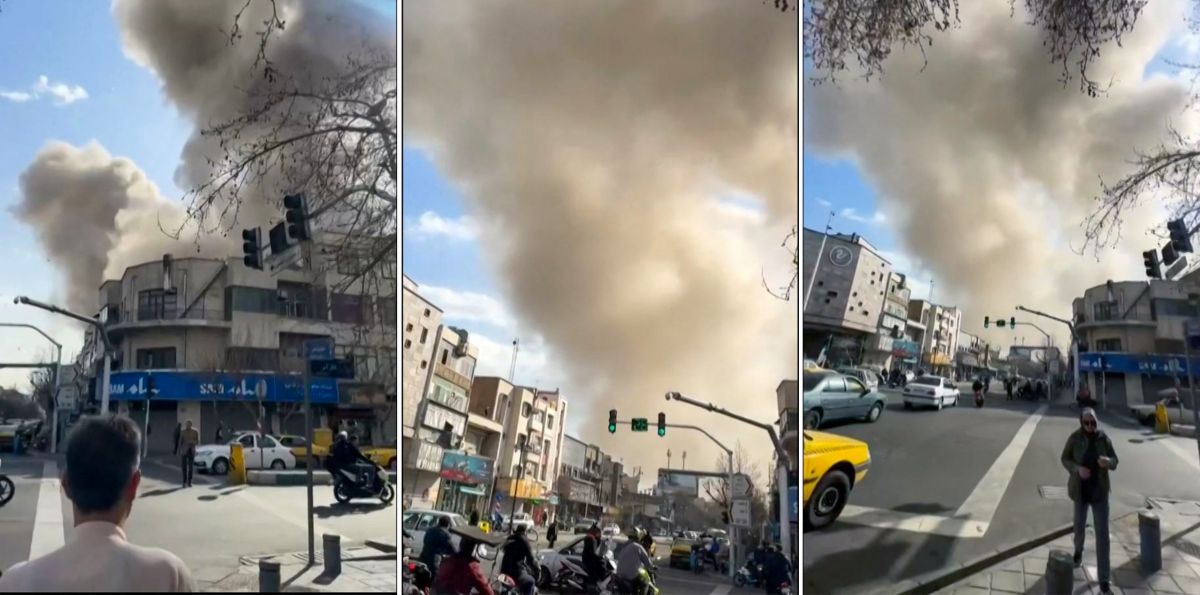
This combination of video clips from user-generated content (UGC) published on social media on February 28, 2026, and verified by AFPTV teams in Paris, shows an explosion reported in Tehran. AFP photo / UGC images






This time, there was little surprise. War had seemed inevitable for weeks, and imminent for days, as the U.S. aircraft carrier Gerald Ford approached the Israeli coast. The level of coordination between the United States and Israel was also expected, both for political and strategic reasons. Israeli involvement not only enhances operational efficiency but, in the view of American officials, also helps make the conflict more justifiable to the U.S. public.
The Middle East therefore awoke this morning to a new war — the second against Iran in less than a year. It is still too early to know whether this will be the final chapter in the major regional reshaping that has been underway since Oct. 7, which, strategically, has largely cemented Israeli military dominance while significantly weakening the Iranian axis.
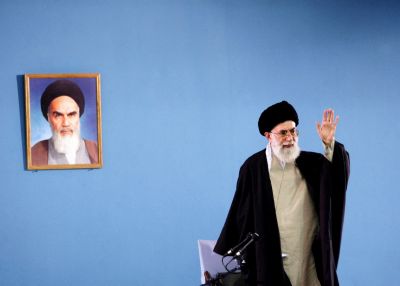
On Saturday morning, Israel, followed by the United States, carried out strikes targeting both senior regime officials — Supreme Leader Ali Khamenei and President Massoud Pezeshkian were among those targeted, though it is unclear whether they were killed—and key military sites.
The war objectives — which were the main question raised during preparations for this operation — were central to Donald Trump’s first speech, even if they were not fully clarified. They aim to partially or completely dismantle Iran’s nuclear and ballistic missile programs, weaken its navy, and decapitate the regime.
The goal of regime change was also referenced by both Donald Trump and Benjamin Netanyahu, each time urging Iranians to seize the opportunity to overthrow the regime themselves.
The U.S.-Israeli strategy appears to be to strike the regime hard enough to force it to change course, accept some form of capitulation, or face the threat of internal overthrow. While the events since Oct. 7, 2023, have taken all analysts by surprise and demand humility, this approach still carries significant risks given the extreme resilience of the Iranian regime.

Two main questions
The Iranian regime is not about to comply without responding, even though the power imbalance is even more pronounced than it was last June.
Unlike previous occasions, Iran’s reaction was faster and broader, launching an initial salvo of missiles at Israel and U.S. bases in the Gulf — including Kuwait, the Emirates, Bahrain, and Qatar.
In his speech, Donald Trump warned the American public, which is largely opposed to the war, that there would be American casualties.
What happens next? The U.S.-Israeli partnership has an interest in striking quickly and decisively — to outpace the regime, neutralize its ballistic missile capabilities, and achieve as many objectives as possible before the war becomes politically or economically costly for the U.S., its Gulf allies, or the global economy if oil prices spike.
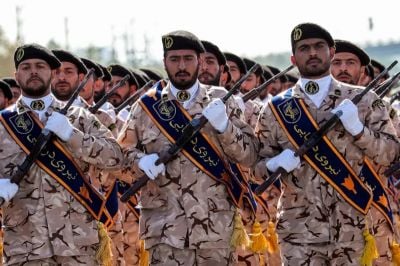
The Iranian regime, in turn, has an interest in making the war as costly as possible before its own survival is threatened. The higher the American casualties, the more strikes in the Gulf, and the more Iranian and allied reprisals in the region, the greater the pressure on Donald Trump to back down. Yet paradoxically, these pressures could also push the U.S. president to escalate further.
Two key questions will shape what comes next. The first is about the U.S.-Israeli exit strategy: will they be satisfied with the — quite likely — scenario of inflicting significant damage on their opponent without being able to overthrow the regime or force its surrender? The duration and consequences of the conflict will hinge largely on this question.
The second concerns Iran’s capacity to retaliate. Will it have the will and the means to escalate the conflict — by closing the Strait of Hormuz, mobilizing regional allies, or carrying out terrorist attacks in the Middle East or beyond? If the regime feels its survival is at stake, it is reasonable to assume it would be willing to play all its cards — provided it still has the means to do so.
Its strongest card, Hezbollah, is no longer what it once was. Yet the group has threatened to intervene if senior Iranian officials are targeted or if the war poses an existential threat to the regime. Such an intervention would be tantamount to a suicide mission for Hezbollah, both militarily and politically.
The entire Lebanese political spectrum — including the party’s remaining allies — opposes it, as does the majority of the population, including Hezbollah’s own base. The Israeli response would be devastating for the party, its supporters, and for Lebanon as a whole. But can Hezbollah refuse an Iranian order — especially when all indications suggest that Iran itself maintains operational control on the ground?
During the last war, Hezbollah and its affiliates claimed they still possessed very long-range missiles that had not been used, intended only as a last resort if the survival of the Iranian regime were threatened. Any suicide operation would therefore only make strategic sense if Hezbollah still retained enough capability to make the conflict significantly more costly for Israel and the United States.
Sacrificing Lebanon to protect its Iranian patron? Even by Hezbollah’s own logic, that would seem pointless.

 8 p.m. recap: Israel again threatens Beirut’s south suburbs; 2 ships hit near Hormuz; Riyadh football matches canceled