



The water retention basin upstream of Falougha, in the district of Baabda, in Mount Lebanon on Feb. 20, 2025. (Credit: Philippe Hage Boutros/L'Orient-Le Jour)






BEIRUT — A political debate that first erupted in 2015–16 over the masha’at (common or unregistered lands) of the former Mount Lebanon has resurfaced after the Minister of Finance, a member of the Shia Amal Movement’s cabinet share, issued a circular on Wednesday. The circular calls for the registration of “common and unregistered land” across Lebanon, prioritizing the State’s ownership before that of municipalities.
The move sparked a wave of criticism, particularly from Christian parties, who insist that masha’at in the former Mount Lebanon – territories that existed before the creation of Greater Lebanon in 1920 – legally belong to the residents and natives of these villages, not to the State.

"All land judges, surveyors, mukhtars, and land registry clerks, within the scope of their work, should refrain from registering unregistered lands and masha'at directly under the name of municipalities or individuals in registration records. These properties should first be registered in the name of the State and only later transferred to the relevant municipalities in the land registry, unless the legal documents proving ownership are available," reads the initial circular released by the ministry on Wednesday.
The ministry also requested all land registry clerks not to transfer ownership of abandoned properties and commons to municipal property before submitting the transaction file to the General Directorate of Real Estate Affairs, so that the Minister of Finance can make the final decision.
In a subsequent statement on Thursday, the ministry clarified that the term masha'at used in its statement a day earlier refers to "neglected lands located outside municipal boundaries. " The ministry added that the circular comes after a rise in recent cases where unsurveyed lands were transferred to municipalities improperly, without providing further explanation. This clarification was not enough to convince local politicians and other inhabitants who criticized the circular.
Opponents of the decision argue that the lands of former Mount Lebanon belong to local residents under a 1920 law, which remains in force and excludes the area from standard land registry surveys. Following criticism from numerous politicians, the ministry clarified that neglected lands located outside municipal boundaries cannot be registered under the names of individuals or municipalities without an explicit and legitimate legal document. Commons located within municipal boundaries that belong to villagers or municipalities, the ministry added, remain subject to their specific legal regime.
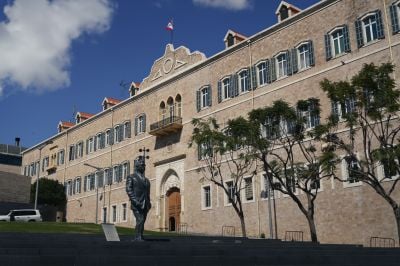
A similar debate unfolded nearly ten years ago, when former Minister of Finance Ali Hassan Khalil issued an administrative note to officials in the Land Department, calling for the conversion of lands belonging to all the inhabitants of a village into state property. At the time, the decision also provoked backlash, with several politicians contacting Khalil and urging him to reverse it for the same reasons cited today.
Ali Hassan Khalil had clarified in 2016 that the note he issued did not apply to jointly held lands in former Mount Lebanon, which remain governed by the 1920 law. He added that the note’s purpose was to assign an official to carry out cadastral registration for certain abandoned lands that should fall under state ownership. However, Khalil’s explanation failed to satisfy his critics, who continued to call for the note’s cancellation.
Lebanese Forces: 'Vague clarification'
Constitutional expert Said Malek criticized the memorandum in a call with L'Orient Today: “Since the Ottoman Empire, the old borders of Mount Lebanon — from Bsharri to Jezzine — have been owned by the residents of these villages. Today, the minister’s decision seeks to register these masha’at in the name of the State, giving it the authority to decide whether to transfer them to municipalities.”
"This is considered an aggression on the ownership of the masha'at and a violation of Article 15 of the Lebanese constitution, which stresses the ownership of these lands, and Article 5 of the decision number 3339/1930, which stipulates that these lands are owned by the residents and natives, not the State," the constitution expert added.
Article 15 stipulates that rights of ownership shall be protected by law. "No one's property may be expropriated except for reasons of public utility, in the cases established by law and after fair compensation has been paid beforehand," it reads.
Meanwhile, Article 5 of the decision number 3339/1930 refers that privately owned properties are those over which absolute ownership rights apply, except for properties located in the lands of the former independent government of Mount Lebanon, which remain subject to the provisions of local customs and traditions.
"The minister should retract his decision. There is also a role that could be played by the state Shoura council to annul this memorandum," he noted.
Charles Jabbour, the Lebanese Forces' Spokesperson, told L'Orient Today on Friday that the ministry's clarification needs even more clarification because it is vague. "There are fears and that it is the same party that issued the memorandum before", he added, referring to the fact that Ali Hassan Khalil was also a minister who was part of Amal Movement's share in the cabinet.
"This topic should not even be open for discussion, as it is an existential issue related to the roots of the people living in these areas. We will go into this confrontation until the end," he added.
Other local figures have also expressed anger over Jaber’s circular. Local media reported on Friday that the Secretary-General of the Maronite League, Paul Kanaan, called on the Ministry of Finance to clarify its decision. Echoing these concerns, Kataeb MP Salim Sayegh wrote on X: “Jaber’s recent clarification is not enough, as it does not override the circular that caused confusion and social unrest. Therefore, a clarifying circular must be issued to address the public’s concerns.”
When contacted by L’Orient Today on Friday, Jaber was not immediately available to comment on the circular or the subsequent clarification.
