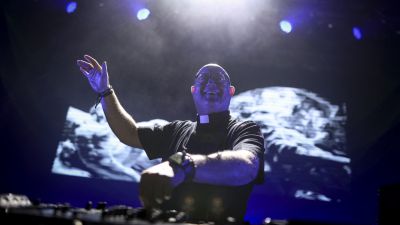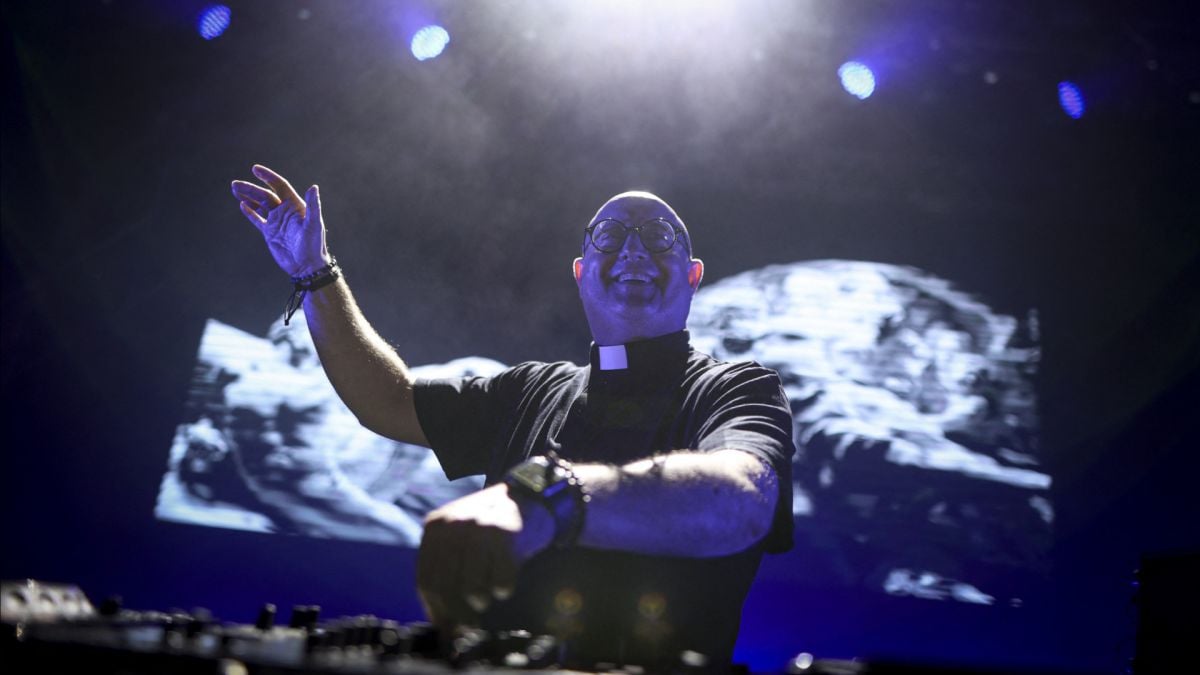
Techno and religion around the controversy of Padre Guilherme's concert in Lebanon. Photo AFP






Known for blending religious music with techno, D.J. Padre Guilherme, an internationally recognized figure supported by the Vatican, is scheduled to perform in Beirut on Saturday after finding himself at the center of a scandal that risked getting his concert banned.
And this is by no means the first time. The list of bans followed by controversies, or vice versa, widely circulated on Lebanese social media, keeps growing. Every year, a comedian gets hounded and threatened over some sketch filmed in a private club where recording is usually forbidden, and then deliberately edited and published to stoke reactions. Today, it's a priest paying the price. His alleged crime? Associating techno with religion.

Yet this association is nothing new, especially in Lebanon. Recall that Oussama Rahbani, like many members of his family who wrote for the liturgy, staged his musical Wa Qama fil Yawm al-Thaleth (He Has Risen on the Third Day) at Casino du Liban in 2000. Designed as a “musical,” it blended techno, gospel, jazz and rock. Performed for six consecutive months, the show found its audience.
Moreover, this type of musical crossover is far from unprecedented internationally: how many times has the story of Jesus been told through theatrical productions borrowing precisely from these musical genres? A gospel lover, Oussama Rahbani also included a gospel song in Arabic, O Lord of Time, in his 1997 album Le Nouvel Ordre. That album in fact disturbed the political authorities of the time even more, especially because of its lead track: “The system must be overthrown.”
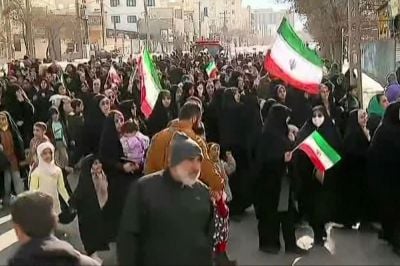
Who defines what is sacred, or conversely profane? In these kinds of controversies, where some conservatives come out with calls of banning a concert altogether, even going so far as to call the priest a “hidden devil” and would-be attendees “apocalyptic biblical beasts,” the outrage reveals not just confusion of terms, but also a dichotomous and extremist mindset: “Techno? Therefore, orgies!” “Hymns? Only in church!” “It’s the end of the world.” “Now comes the time of tribulation.” “Where there is a DJ, there are sexual and psychedelic practices.”
The danger of this kind of discourse, which lump together all musical genres and supposed behaviors in clubs — as if harassment depended solely on the venue, or as if all worshipers were pious in church — stems above all from a profound ignorance of music. Why limit religious music to Bach or Schubert? It is also a form of arrogance to impose one’s own truth on others by labeling them blasphemers — a takfiri logic — to the point of wanting to ban a concert under the pretext of “defending the Church’s values,” which are violated thousands of times daily in Lebanon.
It would be helpful first to look into Padre Guilherme’s concerts, but also the so-called “sacred” religious music, which never really had strict boundaries between genres: from ancient polytheistic times to psalms, from European classical music to American gospel and blues, to British rock and the techno of the 1980s... Even so-called “secular” music carries magnificent prayers for anyone who knows how to listen. Le Sacre du Printemps is a prime example.
By fighting so hard to defend their values, some people miss the point, as one online commenter aptly noted: “Mixing religion and music is forbidden in Lebanon, but mixing religion and corruption is a tradition.”
This article was originally published in French on L'Orient-Le Jour.