






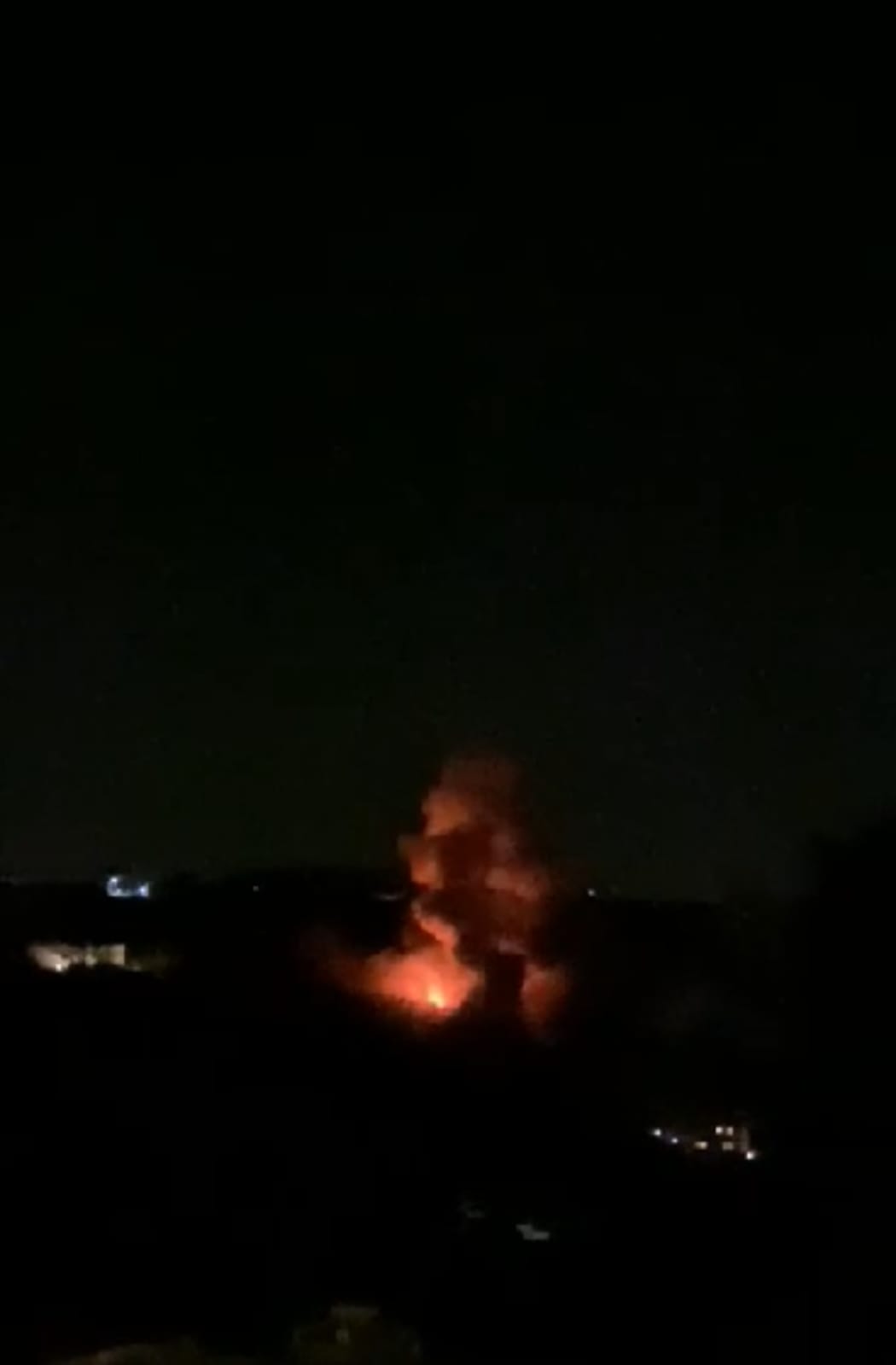
Israeli strike on Anan (Jezzine), Jan. 5, 2026. Photo provided by Mountasser Abdallah.






SOUTH LEBANON/BEKAA — The Israeli army carried out strikes on Monday in the Bekaa Valley and southern Lebanon, around an hour and a half after issuing evacuation warnings.
Earlier in the afternoon, its Arabic-language spokesperson, Avichay Adraee, had announced evacuation orders for four localities in these regions ahead of strikes.
In West Bekaa, the army first carried out four strikes on Ain al-Tineh, according to our correspondent in the region.It then struck Manara, also in the Bekaa.
The targeted house belonged to Sharhabil al-Sayyed, a Hamas official responsible for the Bekaa region, who was killed in an Israeli strike in May 2024.
The strikes then shifted to the South. Israeli warplanes targeted the site that had been threatened in the locality of Anan (Jezzine). Two explosions were heard as far away as Sidon, our correspondent in the region reported.
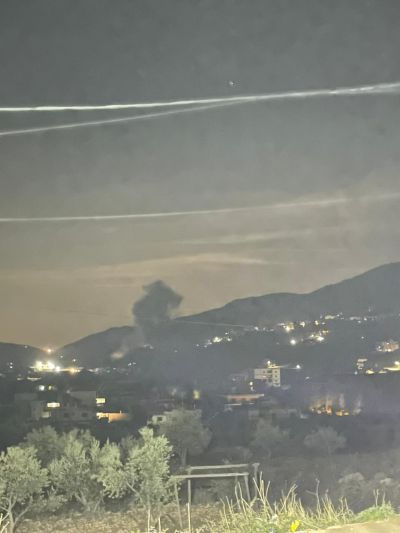
A resident of Kfar Falous said: “It’s the first time I’ve heard such violent explosions caused by Israeli warplanes. It’s the first time I’ve felt that the war is close to me. Throughout the conflict, we were far from it. Today, I realized how dangerous it is and the terror these explosions cause.”
The Israeli army later bombed a site in Kfar Hata (Saida district) using five missiles.
In its warnings, the army had said it intended to attack “military infrastructure belonging to Hamas” in Anan and Manara.
This marked the first time that evacuation notices of this kind had concerned Hamas in Lebanon. It had also announced strikes against “military infrastructure belonging to Hezbollah” in Kfar Hata and Ain al-Tineh.
Shortly afterward, the road linking the localities of Anqoun and Kfar Hata was closed, as was the road connecting Saida to Anan toward Jezzine, in both directions, our correspondent reported.
Deployment of the Lebanese Army and UNIFIL
Earlier on Monday, following a night marked by a mobilization of the Lebanese Army after an Israeli infiltration near Mais al-Jabal (Marjayoun), two men were wounded in a drone strike carried out by the Israeli army on a pickup truck in Breikeh, in southern Lebanon (Nabatieh district).
The strike, which took place in the early afternoon, injured two people, according to the Lebanese Health Ministry.
A few hours earlier, the Israeli army had carried out a raid on a chicken farm in Khiam (Marjayoun) near a residential home, without causing injuries, according to our correspondent in the South.
The strikes followed an incident overnight in which Israeli soldiers crossed the technical border fence east of Mais al-Jabal (Marjayoun) and entered Lebanese territory toward the al-Assi hill, using floodlights.
This nighttime incursion, followed by troop movements, prompted a joint deployment and heightened alert by the Lebanese Army and the United Nations Interim Force in Lebanon (UNIFIL).
At the end of October, after an infiltrating patrol in Lebanese territory killed a municipal employee in Blida, President Joseph Aoun had asked the army to oppose any Israeli incursion.
A medic and a Hezbollah fighter killed
Meanwhile, the two victims of a strike carried out the previous day on a car traveling on the road linking Tebnine and Safad al-Batikh were identified on Monday.
The first was Ali Hussein Rizk, a medic with the Islamic Health Committee (Hezbollah’s civil defense), originally from Houla, who happened to be at the scene. The second was Rabih Mohammad Jaber, a Hezbollah member from Yater, according to a statement released by the party announcing his funeral.
The Israeli army, for its part, said in a message published Monday by its Arabic-language spokesperson Avichay Adraee that it had eliminated, in a strike on southern Lebanon on Sunday, “two Hezbollah terrorists” accused of working on the “reconstruction of military infrastructure” for the group in southern Lebanon.
Despite the truce that has officially been in force since Nov. 27, 2024, the Israeli army continues to bombard southern Lebanon and the Bekaa, saying it is targeting movements and attempts by Hezbollah to rebuild its capabilities.
Hezbollah, which has agreed to disarm south of the Litani River, refuses to hand over its arsenal in the rest of the country, as stipulated in the cease-fire agreement and U.N. Security Council Resolution 1701 (2006).
The Israeli army also continues to occupy positions in Lebanese territory and regularly carries out incursions north of the Blue Line.
Earlier in the day, Lebanese President Joseph Aoun received Defense Minister Michel Menassa at Baabda Palace, where they discussed the security situation in the South and the army’s missions to dismantle Hezbollah’s arsenal south of the Litani.
Reporting by our regional correspondents Muntasser Abdallah, in south Lebanon and Sarah Abdallah in the Bekaa.

 8 p.m. recap: Israel again threatens Beirut’s south suburbs; 2 ships hit near Hormuz; Riyadh football matches canceled