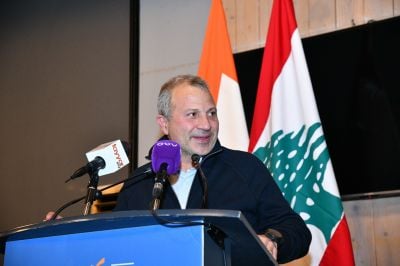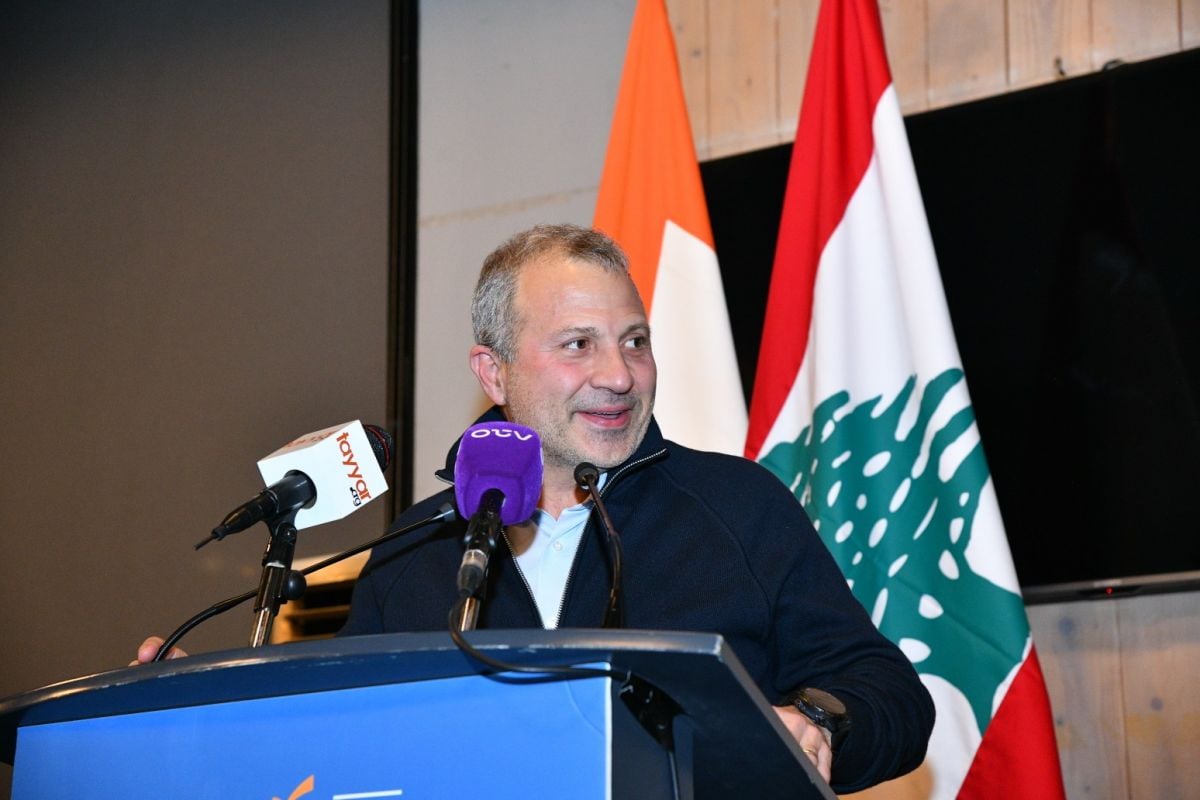
The leader of the Free Patriotic Movement, Gebran Bassil, during a dinner in Baabda on Dec. 11, 2025. (Photo: Facebook / @tayyar.org)






Drawing on his role as an opposition figure, and in line with his consistent criticism and concerns about the new regime in Syria, the Free Patriotic Movement (FPM) leader Gebran Bassil took aim at Lebanese authorities in a televised interview aired Thursday night, accusing them of a lack of firmness in discussions with Damascus.
The interview on Russian state TV channel Russia Today was aired the day after a Lebanese judicial delegation visited Syria to address the issue of Syrian prisoners in Lebanon, during which Beirut's stance reportedly disappointed the Syrians, raising fears of diplomatic tensions.

According to Bassil, the authorities are "submissive, negligent,and they act from a position of inferiority in all their relations with Syria." He denounced a "concession" by the government of Nawaf Salam in merely agreeing to negotiate over the issue of Syrian detainees.
"Prisoners who have killed, kidnapped or attacked army soldiers should not be subject to bargaining," he said. Syria wants the accelerated release of thousands of Syrians in overcrowded Lebanese prisons, some of whom have never stood trial.
But Lebanon insists on respecting the legal framework set by Justice Minister Adel Nassar: all those accused of "terrorism," rape or attacks on the army will not be transferred to Syria. This firm stance "disappointed" the Syrians, according to a Lebanese government source who spoke to L’Orient-Le Jour.
Authorities’ 'silence' over tense celebrations of Assad’s fall
The Batroun MP, known for his staunch anti-refugee and anti-migrant politics, denounced gatherings held in Lebanon on Monday in celebration of the one-year anniversary of the fall of the Bashar al-Assad regime. On Dec. 8, 2024, jihadi rebel groups, led by Syria’s new and current president Ahmad al-Sharaa (previously known by his moniker Mohammad al-Jolani), took over the country city by city, causing Assad to flee and his army and regime personnel to defunct.
Referring to the "landing" of an "army," he said that the scenes of jubilation observed — marked in the evening by tensions with the army in Beirut and clashes with supporters of the Shiite duo in Saida (South) — "could have led to discord." Once again, he condemned the government’s "silence" in the face of these tensions and called for the "immediate" repatriation of Syrian refugees and migrants, a theme Bassil and Aounist officials have pushed for years.

Since the fall of the Assad regime, nearly 400,000 Syrian refugees and migrants have returned from Lebanon to their homeland since 2025, according to figures published December 4 by the United Nations High Commissioner for Refugees (UNHCR).
Hundreds have returned through repatriations organized by General Security and international organizations, allowing returnees to receive $100 in assistance and exemption from fines for irregular stay.
Bassil also criticized a statement made Sunday in Doha by the US envoy to Syria, Tom Barrack, who said it was necessary to "bring Lebanon and Syria together", without elaborating, echoing other controversial remarks from last summer about a return to Bilad al-Sham.
"Some live with the idea of annexing Lebanon to Syria; this impulse has also existed among some Syrians throughout history, as well as in Lebanon itself." But, claiming the "idea of freedom, sovereignty, and independence, we cannot accept this discourse, whether it comes from American, European, Arab, Syrian, or Lebanese sources."
Hezbollah 'no longer able to protect Lebanon'
The FPM leader also addressed the issue of Hezbollah’s disarmament, arguing that the party — a former ally with whom ties have now been broken — "must recognize that it is no longer able to protect Lebanon, as its deterrence formula no longer exists."
Hezbollah emerged heavily weakened after last autumn’s massive Israeli offensive, during which it lost part of its arsenal and, above all, its iconic leader Hassan Nasrallah. He accused the Shiite duo of lacking "honesty with the people and the government" by failing to clarify what it intends to do with its weapons.
According to U.N. Resolution 1701 (2006), which underpins the November 2024 cease-fire agreement, Hezbollah is obliged to disarmed country-wide. While it agrees for the army to implement the dismantling of its arsenal in the South, it has so far categorically refused to do so elsewhere in the country.
This stance has led Israel to criticize Beirut for the slow pace of disarmament and to threaten a new offensive. Speaking on this, Bassil said the appointment of Simon Karam — a civilian diplomat brought on board for negotiations with Israel as part of the cease-fire monitoring committee — bought time until the end of the year, but did not defuse the threat of a new war.
If war were to break out, he predicted, "it would be of a different kind."