






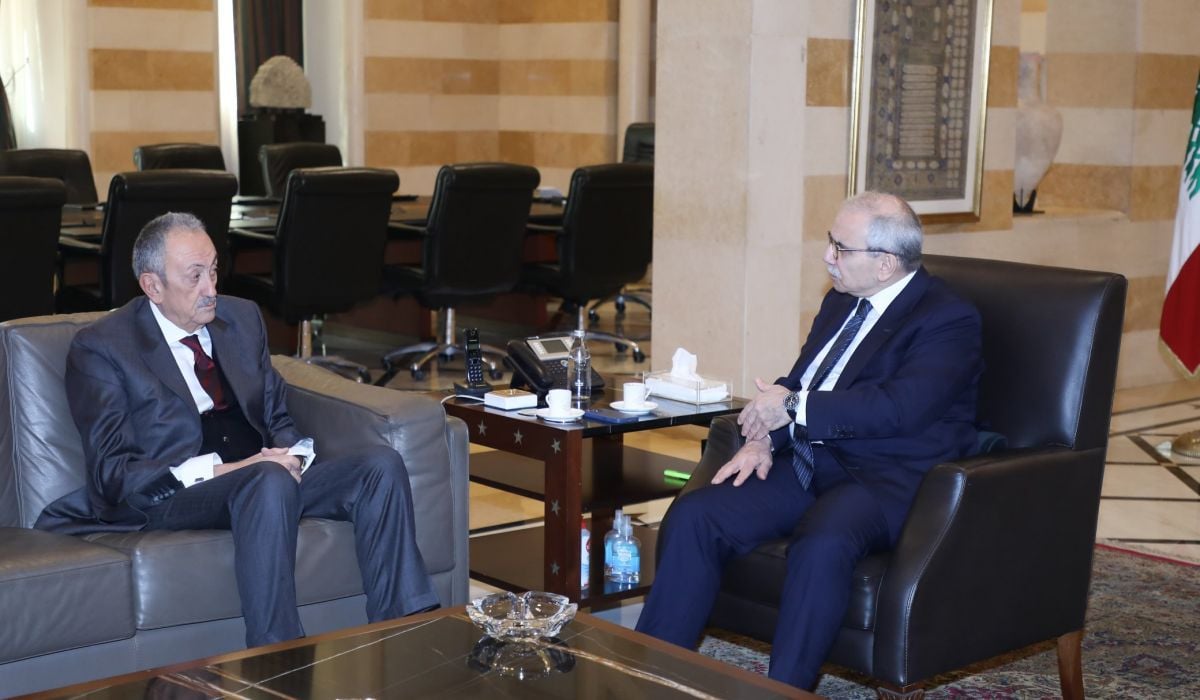
Prime Minister Nawaf Salam (on the right) alongside Simon Karam, Lebanon’s civilian representative at the negotiations with Israel, on Dec. 4, 2025. (Credit: Photo taken from the Grand Serail’s X account)






BEIRUT — Prime Minister Nawaf Salam on Thursday received former ambassador Simon Karam at the Grand Serail.
Karam was appointed the day before as Lebanon's civil representative at meetings of the "mechanism," the cease-fire monitoring committee, that take place in the presence of Israeli representatives.
Salam assured Karam that his appointment "constitutes an important step to advance the work" of this committee.
According to a statement from the Serail, Karam "informed" the head of cabinet "on the results of Wednesday's meeting of the cease-fire monitoring committee" between Israel and Hezbollah in Naqoura, South Lebanon — the first direct talks in more than 40 years between the two countries, which remain in a state of war.
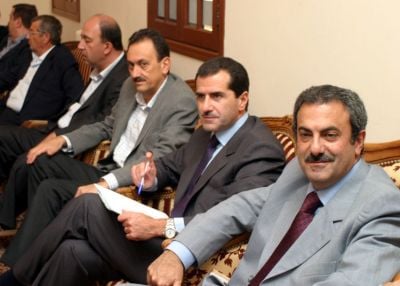
The "mechanism" was established at the same time as the truce that went into effect on Nov. 27, 2024, following the latest war involving the two sides since Oct. 8, 2023.
Until yesterday's meeting, which included U.S. envoy Morgan Ortagus, the committee only brought together military representatives from Lebanon, Israel, the United States, France, and the United Nations Interim Force in Lebanon (UNIFIL).
The U.S. ambassador to Beirut, Michel Issa, welcomed in a statement the "courageous decision by Lebanon and Israel to open a dialogue channel at this sensitive moment."
According to him, this approach reflects "a sincere will to seek peaceful and responsible solutions, based on good faith." He also praised the Lebanese government's decision to "choose the path of dialogue after decades of uncertainty." He called this step "constructive" and likely to pave the way "to identifying pathways that one day could enable both countries to coexist in peace, respect, and dignity."
Separate meeting between the diplomats and Ortagus
According to Axios, after Wednesday's discussions in the presence of officers and military officials, Morgan Ortagus and the Israeli and Lebanese diplomats held a separate meeting Thursday in Naqoura.
According to a well-informed source cited by the media, the meeting mainly served to allow the different parties to get to know each other.
The same source said the most substantial issue addressed during the first meeting concerned economic cooperation between the two countries in South Lebanon, particularly the reconstruction of areas destroyed by the recent war.
According to several Israeli outlets, including the Jerusalem Post and i24NEWS, the next "mechanism" meeting could take place on Dec. 19.
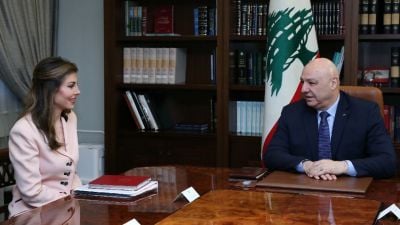
This meeting with the presence of Israeli and Lebanese civil representatives, requested by Washington and Tel Aviv for months, appears to have reduced the threat of an Israeli escalation in Lebanon, which many observers have feared, as Israel and the United States criticize Beirut for the slow disarmament of Hezbollah.
This was confirmed by an American official, speaking anonymously to Axios. "The Trump administration believes that despite the rhetoric of some Israeli political and military leaders, Israel is not considering resuming the war in the coming weeks," reported the news site, quoting an American official.
Major operation in Lebanon 'delayed'
The same source told Axios that the U.S. administration believes that Israel's assassination of Hezbollah military chief Haytham Ali Tabataba'i on Nov. 23 in Beirut's southern suburbs has given the Israeli government "greater political room for maneuver" and "delayed any major operation on Lebanese territory."
Accusing Hezbollah of violating the terms of the truce by rearming in the south of the country, the Israeli army has in recent weeks increased airstrikes on what it claims are members or infrastructure of the group in South Lebanon.
There will be "no calm" in Lebanon without security for Israel, Israeli Defense Minister Israel Katz warned on Nov. 26.
"We will not allow any threat against residents of the north [of Israel], and maximum pressure will continue to be exerted and even intensified," he told the Israeli Parliament, claiming "the elimination" of Tabataba'i as proof.
